
Image: The Ultimate Bird Drawing Throwdown Showdown Graphic featuring images of David Sibley and H. Jon Benjamin

Join BirdNote tomorrow, November 30th!

Illustrator David Sibley and actor H. Jon Benjamin will face off in the bird illustration battle of the century during BirdNote's Year-end Celebration and Auction!
RESERVE YOUR SPOT

Shows With Contributions by Ariana Remmel

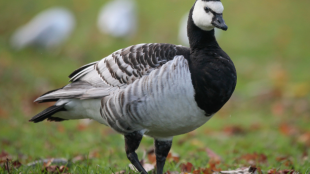
A Barnacle Goose standing in a green field. The bird has a white face and its body is black, white, and gray.

How the Barnacle Goose Was Named

Boldly patterned in black, white, and silver, Barnacle Geese are stunning birds. In Europe, huge flocks gather in pastures and mudflats where the geese feast on grasses and moss — but not barnacles. So where did they get that name?
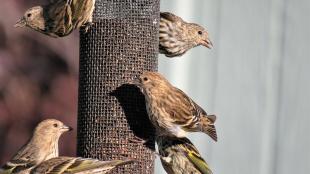
A flock of Pine Siskins at a birdfeeder

Migrations: Pine Siskin Irruption

Do you ever see flocks of birds in your yard that show up in droves one year, but are completely absent the next? Some nomadic species such as Pine Siskins move based on the availability of food and habitat. It’s called irruptive migration, and it sometimes leads to backyards full of…
A group of about six pine siskins share a feast at a feeder

eBird: Contribute to Science While Birding

eBird, a project of the Cornell Lab of Ornithology, lets you log the bird species you observe on a smartphone app or on the web. Whether you’re going on a birding trip or enjoying birds near home, you can list the species you found on eBird. Millions of people all over the world help eBird…
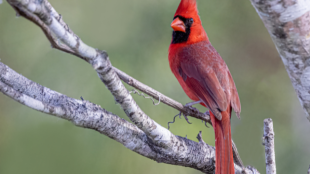
A male Northern Cardinal perches on a grey tree branch. The bird has red feathers, a black face patch, orange bill, and head crest.

Finding Mom's Favorite Bird

Author and illustrator Becca Rowland likes to keep an eye out for cardinals. Her mom loves them and is pretty good at finding them, too. Becca didn’t know how she did it, until they realized their mom was birding by ear! Now Becca has written a new book called, Bird Talk: Hilariously…
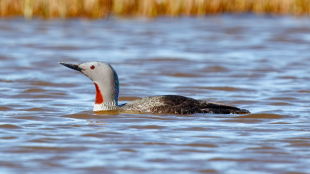
A Red-throated Loon swimming on a pond

Family Time with Red-throated Loons

Millions of birds from around the world begin their lives in the Teshekpuk Wetlands of northern Alaska. In 2025, author and environment reporter Lynda Mapes visited the region to see how new fossil fuel developments are impacting wildlife in America’s Arctic. In this episode, Lynda recalls…
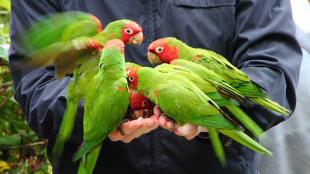
A small flock of Cherry-headed Conures eating birdseed from the cupped hands of a person wearing a dark blue jacket.

The Wild Parrots of San Francisco

Flocks of Cherry-headed Conures, a species native to South America, are now found throughout San Francisco. While a local legend claims that a pet shop owner introduced them by burning the shop down, it’s more likely that that a few of these loud-mouths exasperated their owners until they…
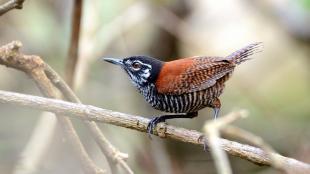
A Bay Wren perched on a branch, displaying its striped black and white breast, red wings and red eye.

Female Birds Sing in the Tropics

In temperate climates like North America, it’s often male songbirds that sing the most. Typically the males migrate north before females and establish territories for the short breeding season, using their songs as a way to claim a spot. But many female birds do sing, even in colder…
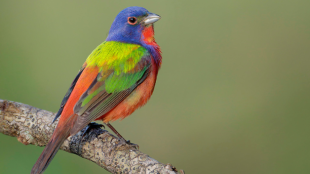
A colorful male Painted Bunting, perching. His feathers are blue, green, red, and yellow against a green background.

Spark Bird: Murry Burgess and the Painted Bunting

Urban ornithologist and children’s author Murry Burgess has always been interested in wildlife. But she first felt a spark for birds on a college field trip to Dauphin Island, a beach town on the Gulf Coast of Alabama that’s a famous stop-over site for migratory birds. There, she saw a…
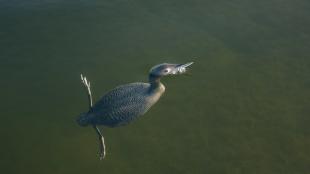
A Common Loon, with just its head breaking the surface of the water as its long legs propel its body underwater

Diving Birds Are Dense

While many birds have hollow bones that make flying a breeze, diving birds are built differently. The bones of divers such as Common Loons are denser than those of songbirds and other expert fliers. With a lightweight skeleton, they’d be too buoyant to dive and chase fish. Instead, loons…
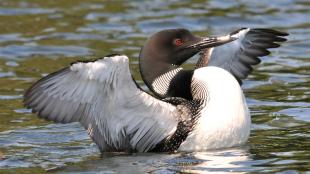
Common loon stretches its wings in water

Welcoming Back Common Loons

The call of the Common Loon is a symbol of the far north. But the species once nested as far south as southern New England, Ohio, Iowa, and California. Human activity and changes to the landscape in these more populated areas has made it harder for loons to persist. There have been…