
Image: The Ultimate Bird Drawing Throwdown Showdown Graphic featuring images of David Sibley and H. Jon Benjamin

Join BirdNote tomorrow, November 30th!

Illustrator David Sibley and actor H. Jon Benjamin will face off in the bird illustration battle of the century during BirdNote's Year-end Celebration and Auction!
RESERVE YOUR SPOT

Shows With Contributions by Ashley Ahearn

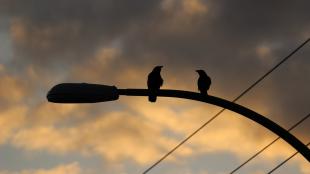
Crows on street light

Spark Bird: Birding from the Bus

Kelsen Caldwell drives a bus in and around Seattle for King County Metro. As a bus driver, sometimes there’s downtime if your bus is moving too fast. What do you do with all that extra time? If you’re Kelsen, you fall in love with birds.
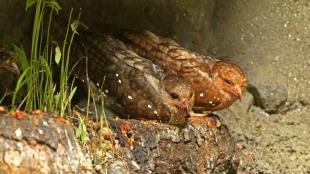
Oilbirds perched on rocks in cave

The Oilbird's Lightless Life

Nature has produced some exceptionally strange animals. One such creature is the Oilbird of northern South America. The Oilbird prefers a diet of wild berries and fruits, especially lipid-rich fruits like palm nuts and avocados (which leads to fatty young and the Oilbird's name). This…
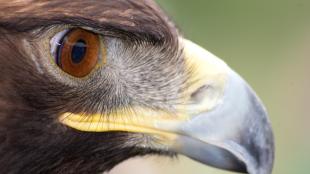
A Golden Eagle in profile showing large golden brown eye and sharp curved beak

The Eagle Eye

Ever heard the term “eagle eye?” An eagle’s vision is incredibly sharp, and its eyes can weigh more than its brain. The secret to the bird’s exceptional vision is the density of visual cells – the rods and cones – of its retina.
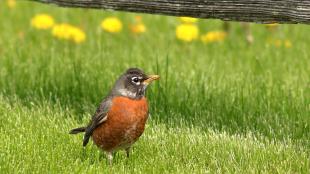
American Robin standing in sunny grass

Spark Bird: The First Robin of Spring

Rasheena Fountain studied environmental science and worked at her local Audubon Society. Now she writes about nature and diversity in the outdoors. And what got her interested in the first place? It all started in kindergarten, with a teacher named Miss Beak and the first robin of spring.
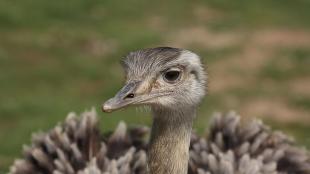
Rhea

Rhea Nesting Is Mind-boggling

A typical bird nest will have maybe four to six eggs neatly arranged by the parent to hunker down on. But in one Rhea nest, you may find between 50 and 80 eggs! And they’re not all from the same set of parents. Male Rheas mate with several females and then build a single nest on the ground…
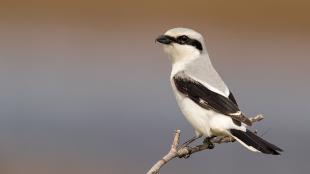
A Northern Shrike, showing black horizontal stripe "mask" across its eye, while perched on a twig

The Butcherbird

The Northern Shrike breeds in the tundra and taiga of the north, but migrates south into the lower 48 for the winter. It has a pleasing and rhythmical song, which it sings even in winter. But its song belies a rather bloodthirsty feeding habit. The shrike impales its prey on sharp thorns…
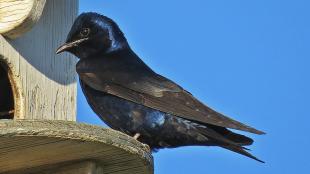
Purple Martin perched at a nest box

Purple Martins Head South to the Amazon

The Purple Martin is the largest swallow that nests in the US and Canada. During fall, Purple Martins from western North America migrate to a distinct wintering area in southeastern Brazil — a travel distance of more than 5,000 miles! Scientists believe that Purple Martins started out as a…
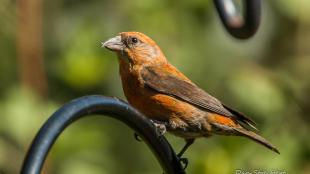
Red Crossbill showing it's reddish-brown plumage and sharp crossed beak

When Does a Crossbill's Bill Cross?

A young crossbill starts life with a wedge-shaped beak. As it grows up and starts to feed itself by removing conifer seeds from their tough packaging, the tips of its bill begin to grow rapidly — and then they cross. By the time the bird is a month and a half old, the tips of its bill…
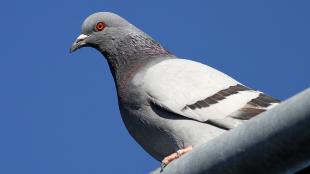
Closeup photo of Rock Pigeon in profile

You Could Take a Pigeon to the Movies

A movie runs at 24 frames per second, just right for humans to sense as normal speed. Pigeons process the visual world several times faster. The frantic car chase that puts us at the edge of our seats would likely appear—to a pigeon—more like a slideshow or PowerPoint. A bird’s rapid-fire…
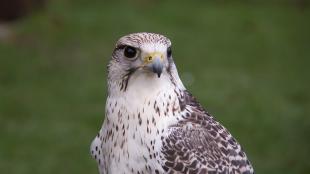
Closeup of a Gyrfalcon staring ahead

The Majestic Gyrfalcon

Gyrfalcons are the largest falcons in the world, with a wingspan of almost four feet and weighing almost five pounds. The name “Gyrfalcon” derives from an Old Norse word for “spear.” During the summer, you’ll find Gyrfalcons on the tundra, where they feed on arctic birds. But in the winter…