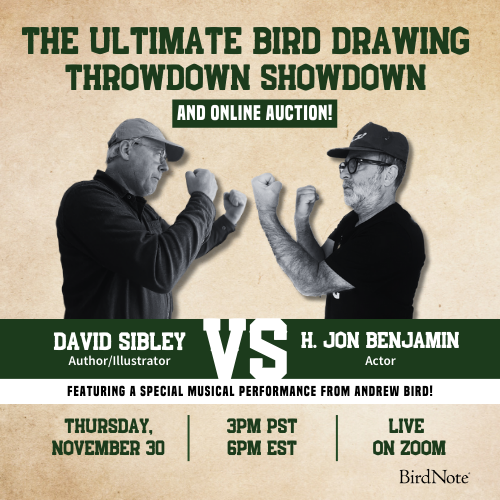
Image: The Ultimate Bird Drawing Throwdown Showdown Graphic featuring images of David Sibley and H. Jon Benjamin

Join BirdNote tomorrow, November 30th!

Illustrator David Sibley and actor H. Jon Benjamin will face off in the bird illustration battle of the century during BirdNote's Year-end Celebration and Auction!
RESERVE YOUR SPOT

Shows With Contributions by Mary McCann

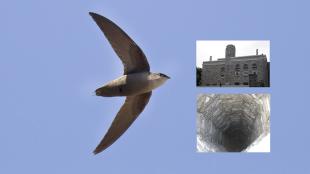
Chimney Swift with image showing chimney at Thompson Rivers University

Swifts Roost in Chimneys

What could bring crowds of people out after sunset on a September evening to stare at ... a chimney? Swifts, of course! Scores of swifts form a funnel-shaped cloud above the right kind of chimney, then they begin their descent. First one, then a few more, then dozens, then hundreds swirl…
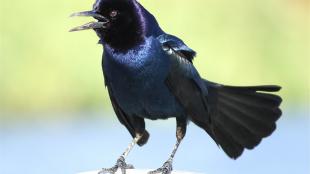
A Common Grackle perched in sunlight, looking to its right, the black plumage showing iridescent dark blue on the breast and purple on the head. The grackle's beak is open as it calls, and its tail is fanned out.

The Harsh Beauty of Grackle Songs

Ranging from metallic hisses to electronic yodels, sounds of grackles may not be music to our ears—but they have their own rough beauty, a distinctive, primal harshness. Grackle songs evolved to carry through their nesting habitats — dense marshes and brushy landscapes — where more lyrical…
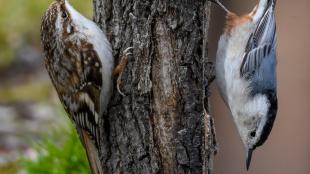
Photo comparing a Brown Creeper and a White-breasted Nuthatch

Watching Birds' Behavior

To distinguish one bird from a similar one, watch how the bird moves. Does it flick its wings? Bob up and down? Flip its tail? The White-breasted Nuthatch (right) works its way down the trunk of a tree, while the Brown Creeper works its way up. A field guide usually mentions these…
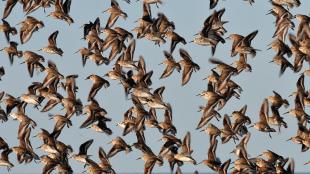
Flock of Dunlins in flight

Why Do Some Birds Flock?

When birds like these Dunlin form flocks, each individual is less likely to be captured by a predator. Some shorebirds that forage with their heads down, like godwits, will flock with birds that forage with their heads up, like curlews. Still other birds work together — like American White…
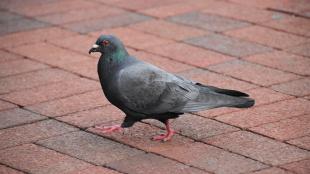
Pigeon seen in profile as it walks across paving stones

Pigeons and Head-bobbing

Pigeons seem to bob their heads as they move, like they’re grooving to an internal tune. But what look like head bobs are actually momentary pauses of the head while they walk. Their eyes are fixed in their sockets, so that pausing enables the pigeon to take a brief, steady view of its…
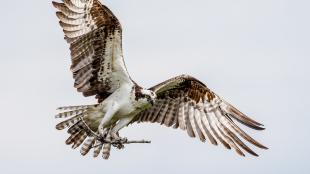
An Osprey flying back to the nest while carrying a stick in its talons. The Osprey's wings are outstretched, the feathers's colors ranging from dark brown to white with brown stripes.

Ospreys Never Stop Building

Ospreys are remarkable nest builders. Many reuse their massive stick nests from the previous year, but continue tinkering with it once the nesting season begins. And the nest transforms along with the growing chicks. It’s bowl-shaped at first, corralling the young birds, but it gets…
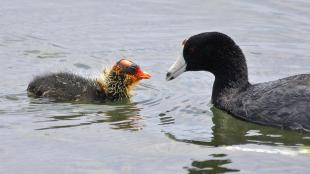
American Coot and its chick

Eavesdropping on Babies

Around this time of year, many baby birds are begging their parents for food. A Hairy Woodpecker chick calls from its nest carved deep within a dying tree. A Great Horned Owl juvenile reminds his parents "Hey! I'm over here! Feed me!" Moving from forest to water, we find this American Coot…
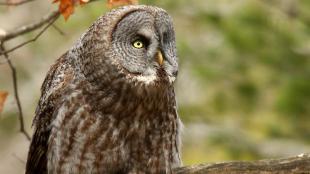
Great Gray Owl sitting on a branch

Why Do Owls Bob Their Heads?

If you were to stand face to face with an owl, including this Great Gray Owl, it would eventually move its head, bobbing rhythmically from side to side, then forward, then back. Or almost completely upside down. This head-bobbing action helps make up for an anatomical limitation: an owl’s…
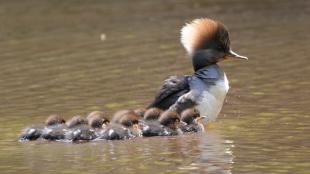
A female Hooded Merganser leading a brood of ducklings; the ducklings are very small and adorably fuzzy and swim close behind her on the sunlit water.

Just Whose Ducklings Are Those?

It’s spring, and a female duck swims across a pond with ducklings in tow. Some of the youngsters might not be her own. Wood Ducks and others may lay some of their eggs in other ducks’ nests — or in the nests of other kinds of ducks, like Common Mergansers and goldeneyes. Biologists call…
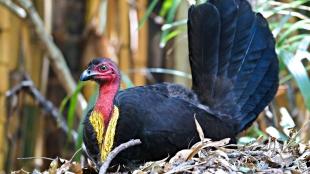
Australian Brush Turkey sitting on its nest on the ground

Megapodes - Mound-Builders

There’s a group of birds that lay their eggs underground — in geothermally heated burrows, or warm sands, or even mounds of organic material warmed by the heat of decomposition. These megapodes or mound-builders — like this Australian Brushturkey — are found in Australia, New Guinea, and…