

Join BirdNote tomorrow, November 30th!
Illustrator David Sibley and actor H. Jon Benjamin will face off in the bird illustration battle of the century during BirdNote's Year-end Celebration and Auction!
Cover Open Pipes To Protect Birds
'Death pipes’ are a danger to birds and other wildlife.

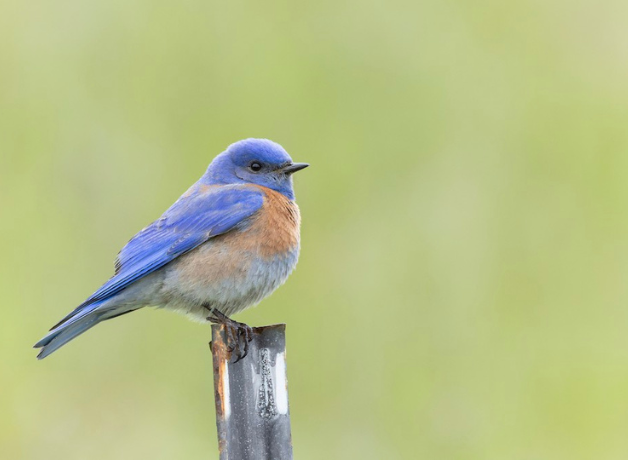

© Phil Thompson (Cornell Lab of Ornithology | Macaulay Library)
Open, vertical pipes are commonly used to build fences, anchor gates, and post signs. Inquisitive birds often inspect these cavities in their search for food and nest sites. But without enough room to turn around or spread his wings in the smooth pipe, the little bird will be trapped — and eventually die. It’s why conservationists call them death pipes.
Conservation groups like the Tucson Bird Alliance recommend covering any open pipe 1 inch in diameter or wider. You can use store-bought caps or make your own by plugging the hole with cardboard and back-filling the opening with cement mix. Find more information about protecting birds from death pipes here.
BirdNote®
Cover Open Pipes To Protect Birds
Written by Ariana Remmel
This is BirdNote.
Birds are clever creatures. It’s part of what makes them so fun to watch! But human infrastructure — like open pipes — can turn a bird’s natural curiosity into a death sentence.
[Western Bluebird]
Open, vertical pipes are commonly used to build fences, anchor gates, and post signs. Inquisitive birds often inspect these cavities in their search for food and nest sites.
[Western Bluebird]
For example, this Western Bluebird can comfortably fit through a hole just one and half inches wide. But without enough room to turn around or spread his wings in the smooth pipe, the little bird will be trapped — and eventually die. Open pipes not only kill birds. They also entomb insects, reptiles, and small mammals. It’s why conservationists call them death pipes.
[Gila Woodpecker]
Thankfully, there’s an easy way to protect birds from death pipes: cap them!
Conservation groups like the Tucson Bird Alliance recommend covering any open pipe 1 inch in diameter or wider. You can use store-bought caps or make your own by plugging the hole with cardboard and back-filling the opening with cement mix.
[Gila Woodpecker]
You’ll find more resources on how to cover death pipes safely — and other actions you can take for birds — when you visit our website BirdNote.org. I’m Ariana Remmel.
###
Senior Producer: Mark Bramhill
Producer: Sam Johnson
Managing Producer: Jazzi Johnson
Managing Producer: Ariana Remmel
Content Director: Jonese Franklin
Bird sounds provided by The Macaulay Library of Natural Sounds at the Cornell Lab of Ornithology, Ithaca, New York. Western Bluebird ML502130711 recorded by Nathan Pieplow, Gila Woodpecker ML337784671 recorded by Nick Athanas.
BirdNote’s theme was composed and played by Nancy Rumbel and John Kessler.
© 2026 BirdNote June 2026
Narrator: Ariana Remmel
ID# action-11-2026-06-05 action-11
Reference:
https://tucsonbirds.org/deathpipes/
https://nestwatch.org/learn/all-about-birdhouses/birds/western-bluebird/

Ariana Remmel
Writer NarratorSights & Sounds
Related Field Notes

Male Marsh Wrens will build several--as many fifteen--dome shaped shells in the reeds to woo fema
The Osprey is the only North American raptor to eat fish almost exclusively, and it's well adapte