

Join BirdNote tomorrow, November 30th!
Illustrator David Sibley and actor H. Jon Benjamin will face off in the bird illustration battle of the century during BirdNote's Year-end Celebration and Auction!
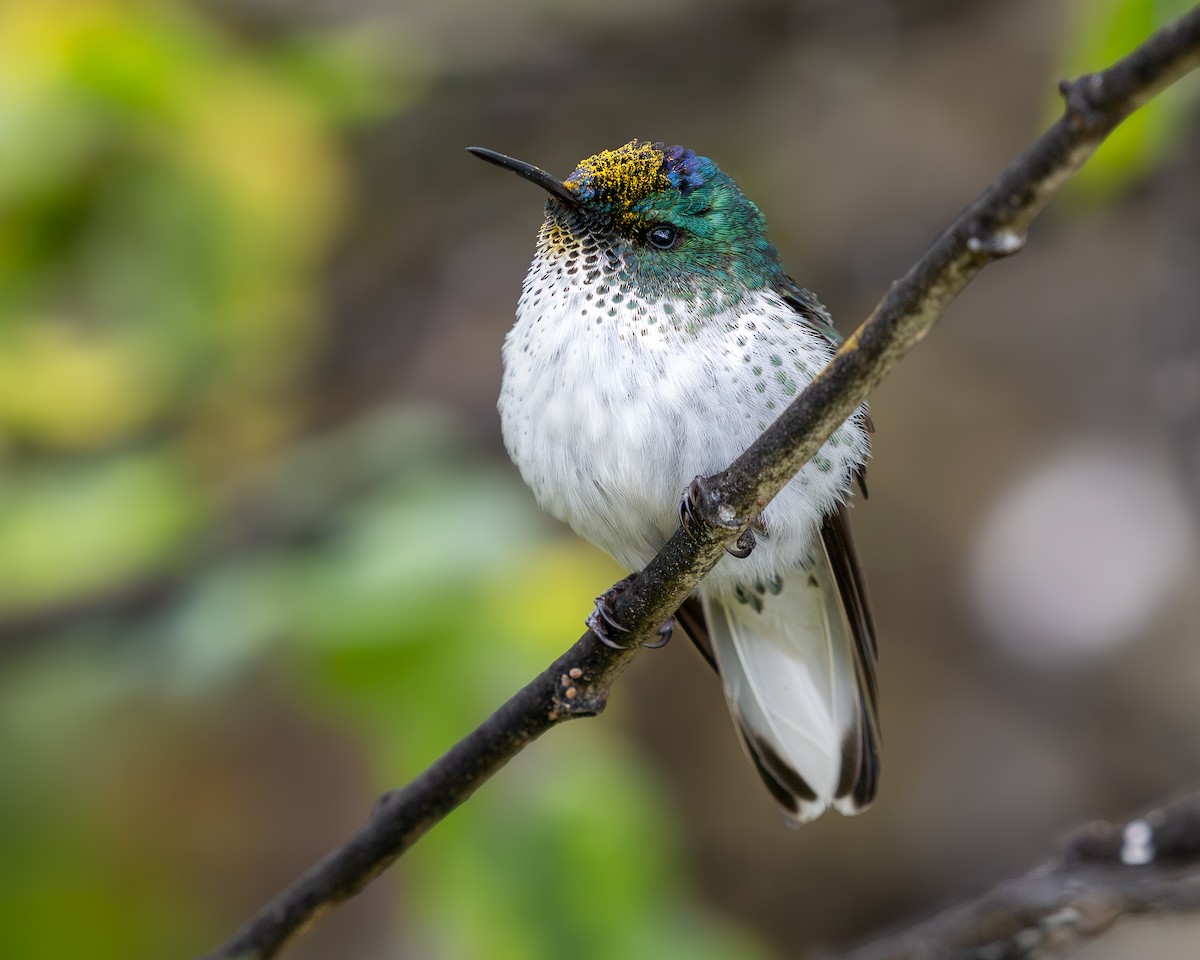
This piece was researched and written by a team of University of Washington students: Kade Smiley, Brayden L Davis, Kyle Devilbiss, Steven Marking, and Eni Peters. Read on to learn more about the Juan Fernández Firecrown and how invasive species, habitat loss, and isolation threaten one of the world’s rarest hummingbirds.
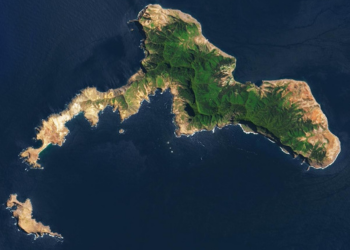
Just two and a half hours by plane from the coast of Chile lies the small mountainous Robinson Crusoe Island – or as it’s known in Spanish, Isla Robinson Crusoe – the second largest of the Juan Fernández Islands. Although its total area is a mere 18.5 square miles, Robinson Crusoe Island is home to nearly 100 species of plants and animals that are found nowhere else in the world.
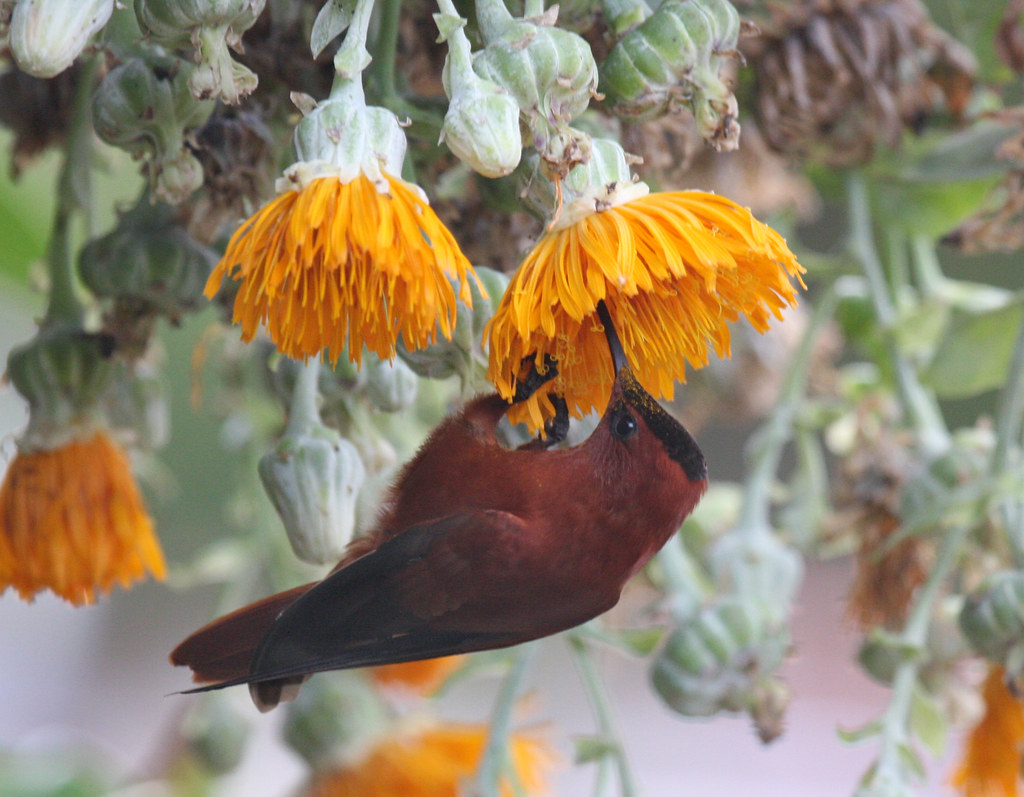
In the native forests of Robinson Crusoe Island, you might be able to catch a glimpse of one of these species whizzing by. A flash of fiery orange or deep blue jumping from one flower to the next, then for a moment, it stills. Wings a blur, body suspended in air, its crown catching the light like fire; this is the Juan Fernández Firecrown (Sephanoides fernandensis), a hummingbird found nowhere else on Earth.
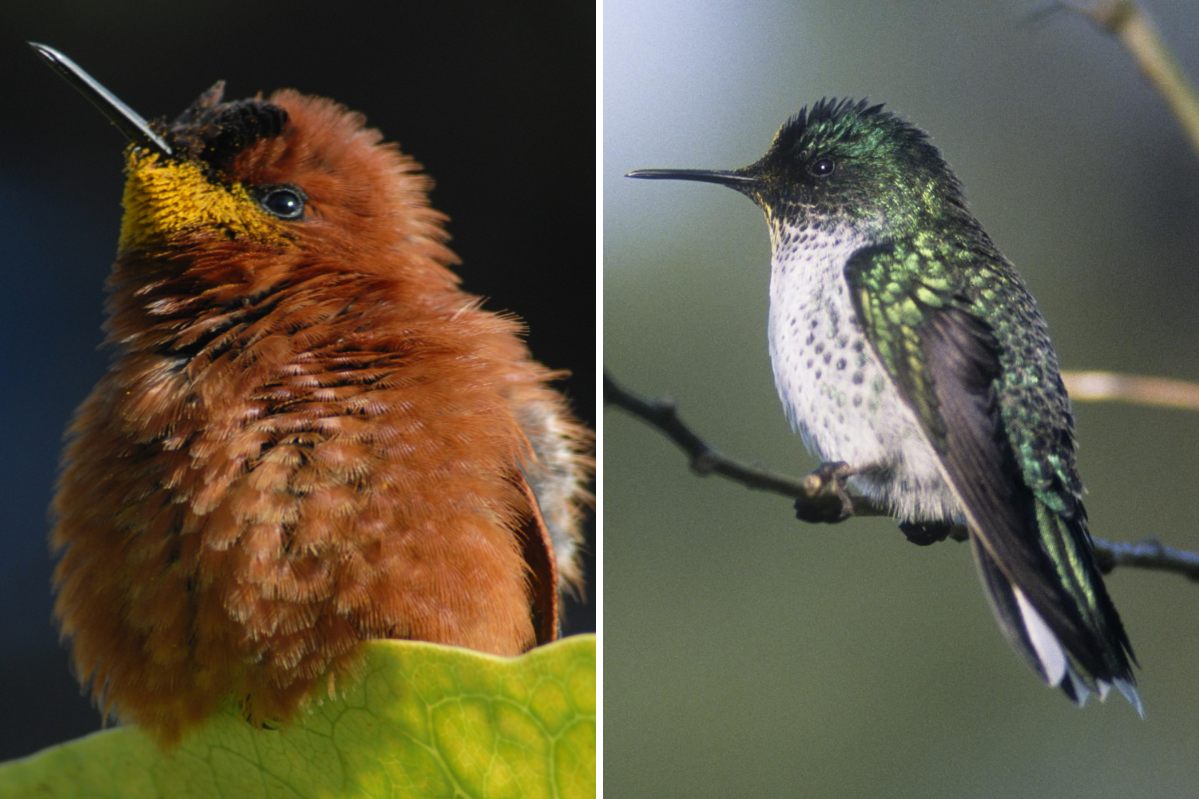
At just under four and a half inches long, the Juan Fernandez Firecrown is one of the largest hummingbirds in the world. The males live up to their name, with vibrant, bright orange plumage and a fiery, iridescent yellow crown. The females boast a bright green head and back, a white chest and belly, and a dark blue crown. They spend their days zooming through the island’s native forests, catching insects in their long black beaks, and hanging on to flowers to drink the nectar they produce. The Firecrown is considered an ‘endemic’ species because of their restriction to a single isolated geographical area.
Unfortunately, these spectacular hummingbirds are critically endangered. The best estimates suggest that there are only 1,000-3,000 of these birds left on Robinson Crusoe Island, and their population is currently declining. Their decline reflects a broader global pattern of vulnerability and decline among endemic island species. The Earth’s islands are home to half of the world’s endangered species, including 41% of threatened bird species, and have been the sites of three-quarters of recorded extinctions. Several factors of island life put endemic island species like the Juan Fernandez Firecrown at higher risk of extinction than mainland species, and habitat loss and invasive species are some of the main drivers of the decline of endemic island species. And on Robinson Crusoe Island, more is at stake than the fate of the hummingbird. The Juan Fernandez Firecrown is the island's primary pollinator, tying its survival to the survival of the very forests it calls home.
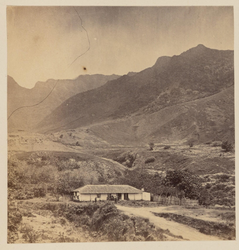
Habitat loss is the leading cause of biodiversity decline globally, and it is no different on islands. Surrounded by oceans, islands are inherently limited in space. Because there is only so much habitat to go around, endemic island species often have small populations that are more vulnerable to extinction.
When habitat is already scarce, minor habitat loss or degradation can have major consequences. The driving factor behind habitat loss on Robinson Crusoe Island is deforestation of native forests. In the past, deforestation was primarily driven by human activity, like land clearing and woodcutting, but it is now primarily driven by invasive species. Invasive herbivores such as feral goats and European rabbits strip the island of native plants, allowing for fast-growing invasive plant species to infiltrate and take over the forest.
For the Juan Fernandez Firecrown, the decline of native forests presents a threat beyond habitat loss. Native plant species and the Firecrown have co-evolved, meaning that the species have evolved in response to each other. Native plants depend on the Firecrown to pollinate their flowers, and the Firecrown depends on native plants such as the cabbage tree and the Luma tree for food and nesting sites. A decrease in native forest means less food and fewer nesting sites, which causes the Firecrown population to shrink, causing further decline in native forests in a vicious cycle.
Another threat to endemic island species is the presence of invasive predators, including rats and domestic cats. The Juan Fernandez Firecrown faces threats from invasive rats which eat their eggs, and cats and coati which prey upon adult birds. This type of predator hits endemic island birds harder than their mainland counterparts because they do not have a shared evolutionary history. Unfortunately for the prey species in these relationships, this often means that they have a very limited ability to defend themselves against introduced predators or adapt to protect themselves.
As is the case for other island species around the globe, dedicated groups are working to secure the long-term survival of the Juan Fernandez Firecrown. One such group is Oikonos Ecosystem Knowledge (OEK), a long-term, community-based conservation effort started in 2001. They provide volunteer opportunities, environmental education, and focus on involving local communities in the conservation of endangered species. On Robinson Crusoe Island, OEK is striving to restore the native forest habitat of the Firecrown by controlling invasive plants and eradicating rabbits from the island.
Unfortunately, these projects are expensive. The estimate for removing invasive mammals from the island was about $17 million in 2011, and as of 2022, efforts to eradicate invasive coati were started by the NGO Island Conservation. Efforts by organizations such as Oikonos Ecosystem Knowledge and Island Conservation are not limited by willpower or skill, but by funding. The best way to support these conservation efforts is through direct financial contribution, whether by donating to trusted conservation organizations, sponsoring specific restoration projects, or supporting broader island conservation initiatives. Individuals can also help by spreading awareness, advocating for biodiversity funding, and supporting policies and programs that prioritize habitat protection and invasive species management. For more information, follow the links at the bottom of this page to find out more about how to help.
Even small contributions, combined across many people, can help critically endangered island species like the Juan Fernandez Firecrown have a fighting chance.
Resources
https://albatross-birding.com/birds-and-culture-of-robinson-crusoe-island/
https://dx.doi.org/10.2305/IUCN.UK.2020-3.RLTS.T22687863A179402328.en
Photo Credits
Juan Fernández Firecrown (thumbnail photo) © Peter Hodum
Satellite image of Robinson Crusoe Island (top) and Santa Clara Island (bottom). Source: NASA’s Earth Observatory.
Female Juan Fernández Firecrown © María Jesús Martí (Cornell Lab of Ornithology | Macaulay Library)
Male (left) and female (right) Juan Fernández Firecrown © Peter Hodum
Photo of Robinson Crusoe Island in 1860. Source: Getty Museum Collection
Male Juan Fernández Firecrown © Ken Logan