

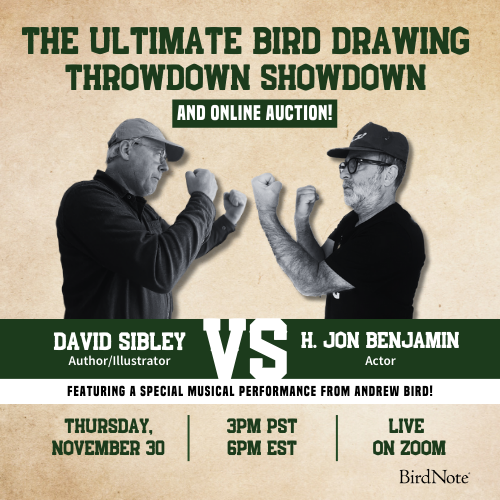
Join BirdNote tomorrow, November 30th!
Illustrator David Sibley and actor H. Jon Benjamin will face off in the bird illustration battle of the century during BirdNote's Year-end Celebration and Auction!
Hunting Is for You, Too (Pt. Two)
Bring Birds Back Season 8, Episode 5: Alex Troutman speaks on hunting as a person of color.

In part two of our hunting series, Dr. Deja Perkins speaks with biologist Alex Troutman about all things hunting – from the perspective of a Black hunter! But first, the two dive into Alex’s work as an outdoors educator and author. Then, Alex shares his personal history with hunting, as well as its historical purpose and presence for Black, Brown and Indigenous persons in the U.S. A strong proponent for people of color hunting, he introduces us to an organization called Hunters of Color and shares why similar spaces are important to encourage more people to get back into their roots, while also acknowledging why these reservations exist. Hunting for conservation is for everyone – including you! So tune in, now!
BirdNote is a nonprofit. Your tax-deductible gift makes these shows possible.
Want more Bring Birds Back? Follow us on your favorite podcast app and on Instagram @BringBirdsBack! For more about BirdNote, sign up for our weekly newsletter. For ad-free listening and other perks, sign up for BirdNote+ here.
And, learn how you can get involved in our From Love to Action campaign when you visit this page!
Bring Birds Back Season 8 is sponsored by Teton Science Schools and the Cornell Lab of Ornithology’s Bird Academy.
[Bring Birds Back Stinger]
Deja Perkins: BirdNote Presents.
[music starts]
This is Bring Birds Back and I’m Dr. Deja Perkins. Earlier this season, we talked about the complex history of hunting and its importance for bird conservation, from financial contributions to ethical and even moral factors. But we did not discuss the fact that hunting isn’t the same for everyone who takes part.
When you picture the average American hunter, a white man is probably the first to come to mind. And that’s fair. Data shows that the vast majority of hunters in the U.S. are white. So what’s it like for those who are not? To help us understand the hunting experience for Black folks and other people of color, I’m speaking with Alex Troutman, aka N8ture Al, wildlife biologist, author, hunter, and all-around nature lover. First, let’s get to know Alex as a bird lover and wildlife educator.
Deja: Hey Alex. Thank you so much for coming on the show today. Can you introduce yourself and your work
Alex Troutman: My name is Alex Troutman. I'm a wildlife biologist, author, and community engager. I have worked with several federal agencies in the conservation field as a wildlife biologist, as well assome private consulting firms and doing my own thing-- helping people explore nature in a fun way.
Deja: Nice. So, as a wildlife biologist and an environmental educator, you obviously have a love for animals and the great outdoors. So what did that evolution look like for you? What motivated you to become a biologist?
Alex: Yeah, so my last name is Troutman, so it was kind of destined for me. But in reality, like, I grew up fishing with my dads and brothers and uncles all the time. I also grew up in the era of Jack Hanna, Steve Irwin and Jeff Corwin. And like, I really enjoyed animals and knew that I wanted to work with animals in some capacity. I didn't know it was possible for me to be a wildlife conservationist or biologist because all the people growing up around me who were Black or people of color that worked with animals, they were either vets or farmers. And even working or living next to Zoo Atlanta, like there was no Black people working with any of the animals.
So for the longest time, I thought I would be a vet; went into first semester and realized that they deal with a lot of stuff working with animals; they're usually some of the last people in the room when animals are put down, financial stress, and things like that, and I decided I didn't want to do that. So during that time I realized that you can get paid to work outside and work with animals.
So, I actually switched my major to biology with a wildlife management focus. And that's when I realized, like, I'm gonna make it happen regardless of the situation. I was one of the few people of color, if not the only Black person in many of my classes. And that's also where I realized that something I had been enjoying my whole life, which is birding or bird watching, there was actually a name for it. Even with fishing growing up, I would get so enamored by the birds instead of actually trying to catch fish.
My spark bird was the Red-tailed Hawk, which I would see many times soaring through the air.
My spark bird was the Red-tailed Hawk, which I would see many times soaring through the air. And then, for me, that was like my version of a Phoenix because when the sun is shining through its red tail, it almost looks like the tail is on fire. So, I would see those birds as well as Great Blue Herons and they would out-fish me. And then I would be in the baseball game or practice and get distracted by vultures circling around and get in trouble. So that's when I finally connected that I had been birding or bird watching all along. I just didn't know the technical term for it.
Deja: Yes. I really love that. Those are some really cool stories that you dove into there. There are a couple things to unpack here. One, that being a birder doesn't have to look one specific way. Like, a lot of times we notice birds all of our life and then at some point we actually claim the title of birder. It's so interesting how, growing up in urban areas, all of us have this very similar start and lack of exposure as well. Yet we still have this kind of innate desire to want to be outdoors and to educate others. So I wanna ask, you gave us a lot of stories when it comes to the birds that you saw while fishing and the story of the Red-Tail. Do you have a favorite bird?
Alex: I have a couple favorite birds. Like, my favorite bird that I have not seen yet are penguins, moreso the penguins of Antarctica. I really love them because it's like they are dressed in black tuxedos and they toboggan or go sledding. And I just think it'd be cool to be able to go to like a black tie affair and then just whip out the Slip and Slide and go down it. But like, my favorite raptor are the Crescent Caracara and Ospreys. And then my favorite songbird is probably a- a Painted Bunting. And my favorite wading bird is a Roseate Spoonbill. Like, it's beautiful but it's also ugly at the same time, like the bald gray head. But it is still beautiful, like seeing the pink soaring through the sky.
Deja: Yes, those are some pretty cool birds. And it's crazy how long we've known each other because I feel like we've seen Roseate Spoonbills together. We've seen Painted Buntings together. And I don't know, maybe we'll see some penguins together in the future.
[music change/help distinguish the POV change to audience]
Deja: Alex and I both work in the outdoor education space, he as N8ture Al and my work as Naturally Wild, so we have often crossed paths. We both work to provide opportunities to increase representation of Black folks in birding, conservation, and the outdoors. And in the past, Alex has served alongside me as a fellow co-organizer of Black Birders Week and even as a co-presenter on conference panels. Alex holds a master’s degree in wetland and bird conservation from Georgia Southern University, so he’s also been instrumental in organizing Black Mammalogists Week and Black in Marine Science Week. I’m super excited to have a social media friend on the show, and so, I wanted to start by talking to you about your work as “N8ture Al…”
I know that you have published a series of field guides for several states, like the Critters of Alabama, Critters of the Carolinas. What is this Critter series that you've created? Talk to us about this series and let us know what has been the most rewarding and challenging parts of being an outdoor educator. [music ends]
Alex: Yeah, so the Critter series, it's a pocket field guide that has pictures and facts about animals, as well as like where you can find 'em. Each Critter book has 63 to 65 animals in it, and it is broken up into mammals, reptiles, amphibians and birds. And each animal profile has an interesting fact that I picked out for each animal. And it tells about where you can find the animal; like what to look for, the track size for the birds, where you can find it during different times of the year, as well as a pretty cool picture of them.
And each book, I wrote in a way that kids and people new to nature can understand it. I try to utilize words that they can recognize without prior knowledge of what it means. I think one of the best things about it, it has a checklist. So once you find the animal, you can actually check it off. And I think one of the coolest things to come from it is having parents message me or email me and tell me, like, how much their kids love it. And they are inspired.
I grew up with a lot of barriers being a person of color coming up in a mostly white field, being dyslexic, having ADHD and other neurodivergency.
It's kind of like a- a pat on the back or like triumph because I grew up with a lot of barriers being a person of color coming up in a mostly white field, being dyslexic, having ADHD and other neurodivergency. And just being able to write this book. And letting other people who are like me know, like, it's possible to overcome the things that have made you you, and be excellent at it. Growing up, messing up words, having a speech impediment, but now you're being able to speak in front of rooms full of people. It's definitely inspiring. I really love the book. There's about 15 or 16 out and I'm trying to cover all 50 states. I got two more states in the Pacific Northwest coming out early this year, and then heading back over to the East coast to work on two more states.
And then I am hoping to get out a different type of book that's geared towards kids that involves moreso wildlife, but in a storytelling way that they can actually read and use, without giving away too much. Um, so yeah, it's exciting times.
Deja: Super exciting. And you are inspiring. I know I look up to you and I'm sure many people look up to you and your story and can relate. And although I've known about your love for the animals and the outdoors, I was just recently made aware of your interest in hunting and your work with the organization Hunters of Color. So we also wanted to talk about the reality of hunting as a person of color, in general. And as a Black man, you are a champion for hunting, which we don't see very often.
Deja: Just in case you missed it: earlier this season, we sat with Ducks Unlimited Project Manager, Jared Henson, who taught us all about the organization’s role in waterfowl and wetland conservation from the perspective of hunters:
Jared Henson: “The North American Model of Conservation actually is a hunting based conservation model. It puts the bulk of the responsibility to fund conservation on hunters. That money is coming from a duck stamp sale, the Federal Duck Stamp program, which contributes about $40 million a year in conservation dollars. And 98% of that actually goes into conservation on the ground. Then it has excise tax on sporting goods through the Pittman-Robertson Act and so that is on guns, ammo, binoculars- all those sporting goods that you would use for hunting, a portion of that tax goes to the states and they can then allocate that into conservation funding. That money does require match money. And so that match money then has to come from, generally like, philanthropic aspects. And the last one is just through state and federal hunting license sales, all that goes back into conservation.
Deja: While funding for duck conservation comes from many diverse sources, the face of hunting itself lacks that same diversity. Historically, a long list of social factors have deterred many Black and brown people from hunting– and it has dramatically affected the stats we see today.
According to the 2022 US Fish and Wildlife participation report, only 4% of Black and Hispanic Americans went hunting that year, (about 1.5 million and 2.1 million people, respectively). As did only 800,000 or 7% of Asian Americans. Women make up only 2% of the entire participating population. But white American hunters remain the majority of the hunting population, accounting for over 11 million hunters nationwide. Yet and still, Alex is working to change that. So, I figured he would be the perfect guest to talk about the experiences of being a hunter of color. So Alex, how did you first get involved in hunting? Was it something that was passed down through your family or did you get into it another way?
Alex: Yeah. So, my granddaddy did it when I, I was younger or before I was born. I wanted to get into hunting, but no one would take me. I had a lot of white friends brag about going hunting and say, 'oh, you should come', but they never took me out. It was moreso them offering to say they offered. And then finally around 2010/2011, I went up to Alaska to do some youth work with kids up there. And one of the groups that came up to helm, they were like, 'oh, you should come hunting'. I was like, 'okay, well you want me to come, take me'. And then later on that year, I went down and was able to harvest my first deer. It was a doe. And I was hooked.
Deja: Nice. I've never been hunting before, so can you walk us through what some of your hunting experiences have been like? Let's talk: the good, the bad, and the most memorable.
[music selection begins]
Alex: So, my first experience was on a private-owned hunting club. Basically, like large land that people purchase and they can lease it out or they can just keep it for themselves and hunt on it. So, I went with my friend's hunting club and we set up two different properties. My first time that morning, I went and set up what's known as the power line trail. And it's basically where the power lines are, there's nothing growing up under them. It's a good spot for animals to forage in. I went to the afternoon session. That's when I was able to get my doe and it was just right before last light. I was able to take a shot and harvest it. And once you harvest a deer, there's many different rituals. Some people will go and thank the animal, pray over it. Others - if they're just about the meat - will take the meat, not even care for the animal. And then with this family I went with, it's the tradition that once you get your first deer, you have to mark your face with blood and do a silent prayer over it and thank the animal for its sacrifice for me. So that was my first deer hunting experience.
10 years later, I got to experience a different type of hunt, which is Snow Goose and Specklebelly, or White-fronted Geese hunting and it's a different setup. So with deer hunting, you're in the sand or in the blind, and you're waiting for the deer to come to you. Whereas with Snow Geese, you're moreso in like a open field. So with that, it's probably like six [to] eight people waiting for ducks or geese to fly over. And then another form of hunting is pheasant and quail hunting. That's also kind of like a team. It's usually three or four people and then you divide up the birds between the hunters. So it's like if you miss, you still get something. I feel like it's - I'm not gonna say more challenging - but it's more interactive. It is not as strenuous as walking up mountains to carry a deer and then having to walk miles back. [music ends]
Deja: Mm. That’s for sure. So, one thing that I did notice is that you're always going out with another individual or they seem community centered; The example of, even if somebody didn't shoot a bird, they still ended up getting a bird to take home. And so I'm curious, how have you been able to find your community when it comes to hunting? Hunting similarly to birding is predominantly white men, and so what have you used in order to be able to find that community for your hunts?
Alex: Most of my community for hunting has came through social media, like I went on my first goose hunt with Hunters of Color and I made a community from them. Like, I've been an ambassador for Georgia For Hunters of Color. We go out hunting together. So for me it's definitely about finding people through social media or people who are interested in other things and then being able to share my interests of hunting with them.
Deja: You mentioned one way for you to build community was through the organization Hunters of Color. Can you tell us a little bit about this organization, their mission and motivations in this space?
Alex: Yeah, so, many of us have been hunting for years. And when I say “us”, like, people of color and Indigenous individuals as well. It was our livelihood. So, Hunters of Color is a nonprofit organization that gets people into the outdoors through hunting and community engagement to help continue the tradition.
Deja: Hunters of Color was founded by Thomas Tyner, Lydia Parker, and Jimmy Flatts. The trio met at Oregon State University and quickly discovered that they shared a common desire for the same experience: a communal space to gather and educate around the outdoors. With a goal to reclaim nature recreation by increasing the number of Black and brown people hunting and fishing, they began holding educational sessions around conservation, hunting ethics, land access, gun safety and more. And in 2020, they acquired their 501(c)(3) nonprofit status. Hunters of Color ambassadors are now actively running programs in 14 states, and their membership claims representation in all 50.
Alex: I would say I joined Hunters of Color because of the friendship that they offer. It wasn't just about going out hunting; what's most important before you actually get out is forming that community. And that's what got me into not only joining but also led me to eventually become the ambassador for Hunters of Color here in Georgia. And with other hunting initiatives or nonprofits, a lot of time they preach about being inclusive or welcoming for all, but it's only welcoming to a certain point. Like, you can be a member, but you don't always feel like you're truly a member. And there's still, like, other collective cliques that are inside.
Another reason I joined is because of the mentorship. We believe in the philosophy of, ‘you teach one person, you'll reach someone else’. So that helps to grow not only the hunting community, but also the conservation community. And we believe that if you’re gonna harvest and take from the land, you should also give back to the land. And we do that through conservation efforts.
Deja: Conservation efforts by Hunters of Color have included removing invasive species; salmon fishing and harvesting; cleaning up riverbanks and national parks, as well as wildlife habitat restoration and management, among a wide-ranging list of others. They attempt to bake conservation into every event, so it’s part of their norm and provides as much ecological value to the land as possible. And their philosophy is “to treat the land better than it treats us”; one of the grounding principles that attracted Alex to the organization in the first place.
[musical shift begins]
Alex: Many times, looking at those other organizations, it lacked diversity. Not just in the members but in the leadership. And with Hunters of Color, it's people of color who have a similar background as you. And have that experience or know racial undertones that might not be understood in other hunting organizations.
Deja: When we return, Alex talks about the historical importance of hunting as it pertains to people of color, and he goes into detail about the top five barriers that generally scare newcomers away from hunting– and how to overcome them. We’ll be right back after these messages. [music ends]
MIDROLL
[musical shift begins]
Deja: We’re back! I’m Dr. Deja Perkins and we’re still here with Alex Troutman. We’ve talked about Alex’s work as N8ture Al, a wildlife influencer, and we dived into his love for birding. Now, we’re expanding a bit further into his passion for hunting and conservation.
Deja: I think your desire to be that representation, from your work to your recreational activities and hobbies, to wildlife biology and hunting and conservation– you also seem to connect to this idea of reclaiming things that we once did. And so, can you speak a little bit more to reclaiming these activities that it seems like we never did or weren't present in, but historically we have been a part of. [music ends]
A lot of people, don't know that some of the first national park rangers were actually Black men.
Alex: Yeah, so, a lot of things that people say we don't do is something that we have done and it was taken from us or told we couldn't do it in various ways. Like, a lot of people, don't know that some of the first national park rangers were actually Black men; they were Buffalo soldiers hired to watch the buffaloes in national parks. Or the fact that Black/African Americans actually helped to build some of the first national parks.
We have always been connected to nature, from Harriet Tubman using owl calls to help guide individuals on the Underground Railroad; Or even with our ancestors who were enslaved, the fact that the braids of their hairs were utilized to show where maps and rivers are or where you can find extra food. Like, nature has been a part of our everyday lives for centuries. We wasn't always given the best food, so hunting and fishing was a way to supplement that lack of extra meat that we didn't have. Especially here in Georgia, many of the rices and sugarcane that people grow and love and eat, the cultivation technique came over from our ancestors that was enslaved.
Relying on the fact that we have always known how to take care of the land, but also harvest from the land is something that we can be proud of. It's not only the connection that we always have had to nature, but being able to say we have always been here. And let's show the techniques that we have always utilized. And show that these are activities that we have always been a part of. And it's okay to do these activities; we're connected to it.
Deja: Yes, absolutely. I think all of those points are really key because all these barriers that exist, the financial barriers to even access to land– those are things that have been intentionally put in place so that we can't partake and be a part of this activity. It's even the thought about not wanting to be seen as violent or have a negative interaction with either a regular police officer or even maybe a game warden, and so I think it's really important for us to understand this has always been something that we've done and it's time for us to get back into it, if it is something that we are interested in.
Um, I know that we've been talking a lot about the importance of community and mentorship in this space. And just being able to do that with people who look like you, who talk like you, who have similar backgrounds and experiences as you, and then also talking about the importance of being able to kind of try a little bit of everything versus that lack of access that could potentially be a barrier. And so based on your experience, what do you think some of the present day barriers to participating in hunting may be?
Alex: Yeah, so, you don't really know what you don't like until you actually have a chance to try it. Especially for people of color, like we've been conditioned already - sadly because of what happens to many of us being hurt or killed by guns - to not like all guns in general. So our family don't want us hunting or think all guns are bad when that's not the case. Like, guns are not bad; it's the people who are bad. So our exposure is limited in those ways. There's many of us Black people that hunt but it is something that's not really spoken of.
[inquisitive harp music]
Deja: Hunting can be inherently dangerous if one does not follow proper gun safety. However, one worry of hunting as a POC, and in particular a Black man or woman, is likely centered around society's stigmas of Black gun ownership, often resulting in more public suspicion and an increased risk of police violence. Data reveals that Black people are disproportionately pulled over by law enforcement and additionally, account for 27% of Americans shot and killed by police since 2015. Data also overwhelmingly shows that Black people are more likely to be harmed by gun violence than any other racial demographic in America, another potential deterrence for gun ownership.
Still, Black gun ownership in this country rests around 24%, according to a 2021 PEW Research study. But those numbers primarily reflect the desire for protection. For example, while Black women arguably make up the fastest growing demographic of new owners, they also are among the lowest number of attendees to shooting ranges. But that appears to be offset by their increased participation in more Black-centered spaces, such as the National African American Gun Association; which points to the desire for safety while both handling firearms and being seen with them publicly.
Despite it all, Black and brown hunters are on the rise. In 2017, white Americans made up 97% of the total hunting population, with BIPOC hunters sitting just under 3%. By 2022, BIPOC hunters had significantly increased their presence in hunting, making up nearly a quarter of the total in under just 5 years, likely due to the creation of new community spaces like Hunters of Color and increased representation. But Alex says it goes beyond societal barriers.
Alex: A big one is still definitely access to land. A lot of land is owned by private people, but there are public WMAs which are Wildlife Management Areas, but those sometimes are private; in a way that people who live in those areas, they make up their own rules of who can be there or who can access and what part.
Deja: Wildlife management areas are state or federally-owned, but they’re intended to be public land use, open to us all. They were created to serve as protected areas for animals, to lower habitat disturbance. But, they also uniquely balance those ecological needs with public access for hunting, fishing, hiking or wildlife viewing. While ethical terms of use are required, Alex says some prejudiced mindsets can often get in the way.
Alex: It's not as safe to go hunting, much less bring out a group of new hunters on public land. You still have to be careful on federal-owned or state-owned because of those mindsets for WMAs. So that's why we work with first getting people to learn the ropes of hunting on private lands 'cause it is a controlled area and we don't have to worry about people coming up and the unexpected happening.
Anything involving weapons can be dangerous, but it's even more dangerous going to the areas that you don't know trying to scout it, and then eventually hunt on it. It could be people who don't want you there, or again, those people who are overprotective of a public land that they believe they have more right to. [music ends]
Deja: Alex says that although he’s experienced racism on many occasions while hunting, he refuses to let them ruin his joy of the outdoors. But another barrier, he says, can be the cost.
Alex: Hunting– it's expensive. Like, anywhere from a couple hundred to thousands of dollars for guns and ammos. And it really depends on what you get.
Deja: You bring up a lot of good points. And thinking about all of the different types of barriers that you mentioned: just access to hunt, access to the community or knowledge, just because it's not something that is commonly talked about; and then the finances was the biggest one for me. Just looking at the price of all of the equipment. You mentioned having to buy the actual gun, the ammo, the clothing, having to buy all of these things, it's like the price tag is extremely expensive. And then not to mention, having to buy the license.
So, did Hunters of Color help with any of those barriers, especially when it came to the financial aspect of that?
Alex: Yeah, my first hunt with Hunters of Color, I didn't have to buy a shotgun and ammo. I just had to purchase my hunting license. So they did help in that way. And then we do offer scholarships for our hunting events, as well as try to work with their Department of Natural Resources to be able to offer some type of scholarship for the actual hunting license. So it really depends on the state and the case. But we try to make it as affordable as possible.
We want to make sure you're learning the skills. So, come to this event, learn how to harvest an animal, learn how to field dress it, process it and be able to use those skills on your own, on your next hunt. And then we also like teaching people [that] you don't have to go out and get the high-end stuff. I've even hunted in just blue jeans and a camo shirt because I knew that the blind was gonna cover up most of my body. So, sharing those skills to help alleviate the cost. 'Cause some brands I have paid a little bit more for, but I know that that brand has a lifetime warranty and I can pay this one price and be set for years instead of buying this one at, let's say $70, and then having to buy it again in two years. Also again, community, people gain weight, people lose weight, so you can share and swap it off.
Deja: That's definitely a whole ‘nother topic that we can get into when it comes to inclusion and gear. You know, these companies actually making things that are for all different types of bodies.
I'm wondering, is there any last tips or advice or messages that you'd like to leave our audience in relation to hunting, sustainability or even building community in the outdoors?
Alex: Yeah, so I guess the first thing is to call people out. If someone offers to take you hunting, put 'em to the test. Like, don't just talk about it, be about it. And then also just remember to be safe. For me, like, I'll always share my location and where I'm going and even the people phone number and name of who I'm going with to (now) my wife, but in the past it's been my family.
...Get comfortable being uncomfortable, if you're gonna try something new.
And then a lot of times, growth and learning things, it takes you being uncomfortable. So get comfortable being uncomfortable, if you're gonna try something new. Just make sure you're respectful. If you harvest an animal, utilize every bit of the animal that was sacrificed for you. And don't just go for the biggest deer, only harvest what you intend to actually use and eat. And then again, just clean up after yourself and others. So if you see evidence of humans or, like fishing line or traps, just pick that up and throw it away and leave it better than you find it.
Deja: That is a wonderful way to sum up this episode and thinking about being a sustainable and ethical hunter. Leave it better than you found it. I just wanna thank you for coming on the show and sharing your story, your experiences. We really appreciate you.
[musical shift]
Deja: While many outdoor enthusiasts may contribute to conservation through hunting, there’s no denying that being a hunter of color presents a unique set of challenges. From financial barriers preventing access to gear and licenses, the lack of access to public or private lands, and especially the community culture and social safety — it all adds up, making the barrier to entry and repeated participation that much higher.
People like Alex and groups like Hunters of Color are instrumental in providing a safe space for the global majority to prosper. From birding to hunting and beyond, these challenging stories and experiences can be a great deterrent, but community will always be the answer. We hope this episode will be the encouragement you need to give it a try, if you’re curious!
Many thanks to Alex Troutman for taking the time to share his experiences and expertise as a Black hunter. And special thanks to Tony Ary and the Hunters of Color organization for their contribution to this episode. And, of course, thank you for listening!
To learn more about Alex and his upcoming projects, to connect with the Hunters of Color network, or to read some cited resources from this episode, look for our show on BirdNote dot org.
Follow us on Instagram @ Bring Birds Back and tell us some of your own stories about finding belonging in the great outdoors. We want to hear from you!
This episode of Bring Birds Back was created by our BirdNote production team, including Fact-checker Ariana Remmel; Producer Sam Johnson, Senior Producer Mark Bramhill; Managing Producer Jazzi Johnson; and Content Director Jonese Franklin. Our music is by Blue Dot Sessions and Cosmo Sheldrake. And this episode was hosted and co-produced by me, Dr. Deja Perkins.
Till next time!
[Music ends]
POST-SCRIPT
Deja: Do you take your wife with you hunting?
Alex: She has not been hunting yet. She doesn't know [if] she wants to shoot a deer yet because they're cute. So we're gonna work on a smaller game. We just gotta get her something that is not as cute as deer.
Deja: Yeah, definitely worried about Bambi.
Alex: Yeah. Yeah. [laughs]
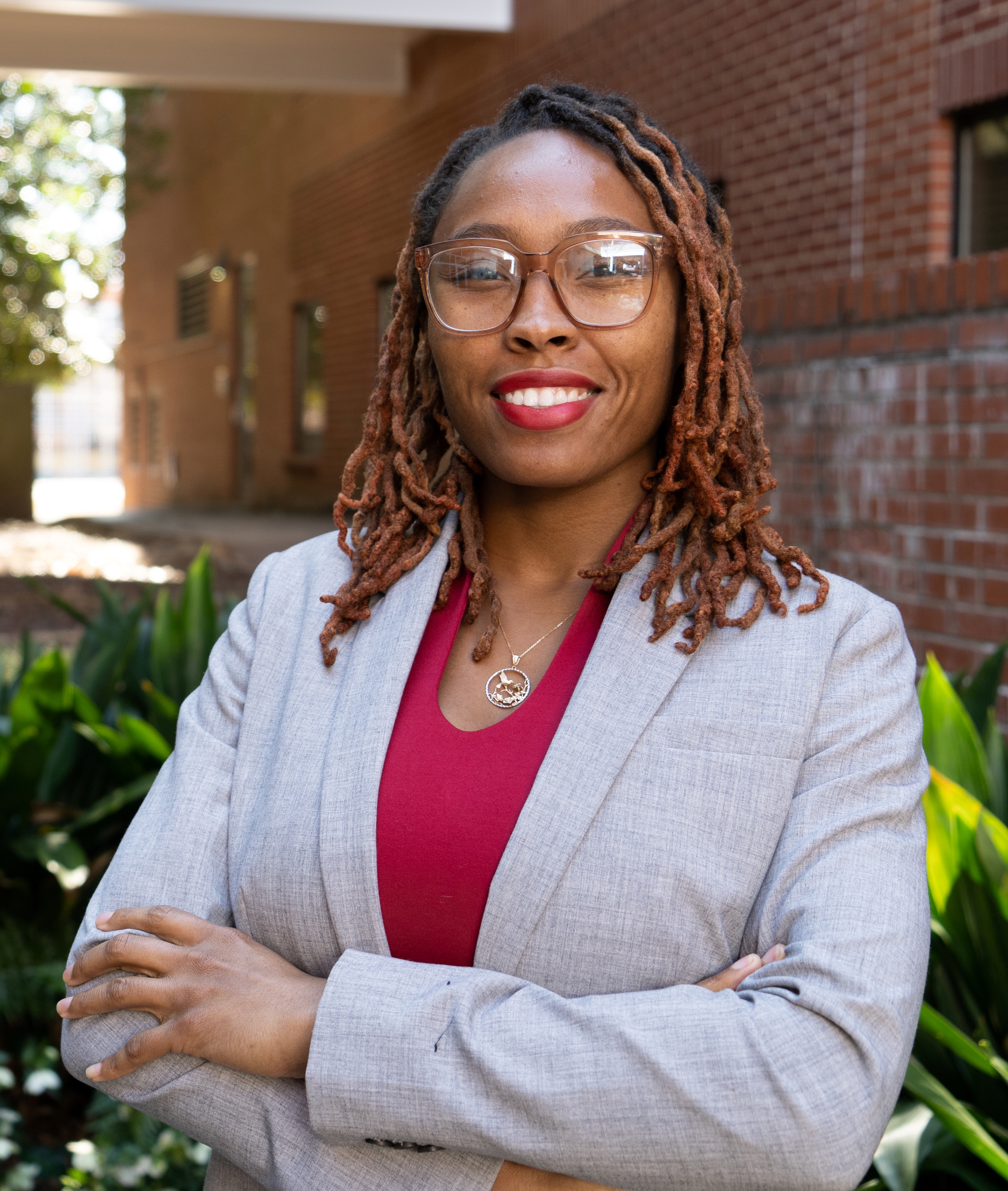
Deja Perkins
Host
Jazzi Johnson
Managing Producer
Mark Bramhill
Senior Producer
Sam Johnson
Producer
Ariana Remmel
Fact Checker
Jonese Franklin
Content DirectorCosmo Sheldrake
MusicBlue Dot Sessions
Music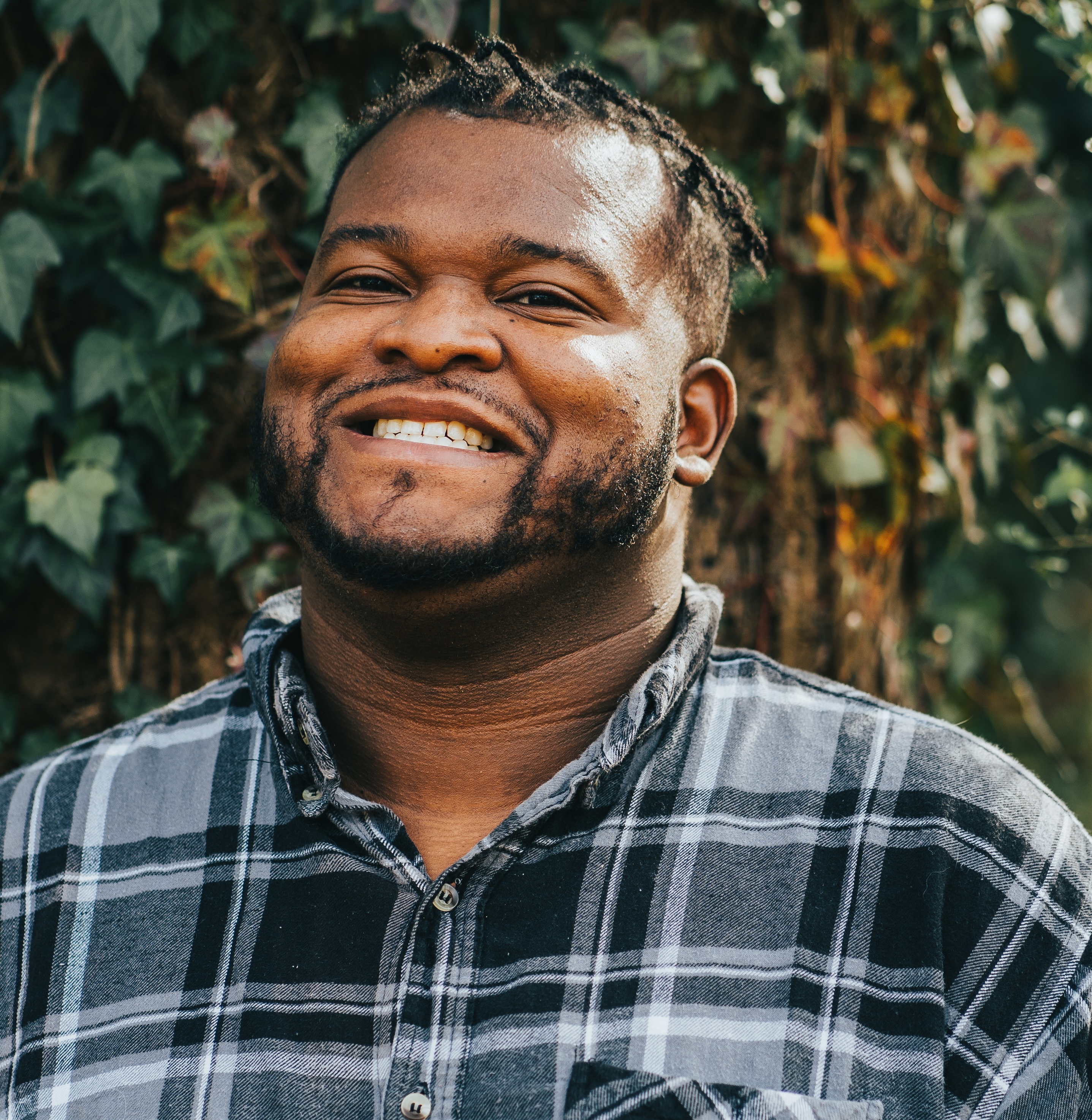
Alex Troutman, also known as N8ture AL. Is an author, wildlife biologist, environmental and social justice advocate, and science communicator. He has several years of experience in the field, working with various Wildlife species including endangered Species like Kemp’s ridley (Lepidochelys kempii) sea turtles and Karner Blue butterflies (Lycaeides melissa samuelis).
Alex shares wildlife facts and photos on social media as N8ture AL, in his free time Alex enjoys using his passion for nature to encourage youth and beginners to enjoy the outdoors. leading events that helps engage individuals into nature. These events range from birding, teaching individuals how to fish, engaging individuals in hunting, and leading nature walks.
He understands whats it like to grow up without “wildlife role models “ who looked like you. He dedicates time to fulfilling that representation for future generations of Black or POCs (people of color) scientists, endeavoring to instill similar passion by leading groups on nature hikes and through public speaking engagements.
Alex is currently serving as a Fellow for the Museum of Science Boston. Inaugural Digital Science Communication Fellowship.

