
Join BirdNote tomorrow, November 30th!
Illustrator David Sibley and actor H. Jon Benjamin will face off in the bird illustration battle of the century during BirdNote's Year-end Celebration and Auction!
Congratulations to all of the winners of BirdNote's 2026 Photo Contest!
Check out the top three winning submissions in both the General Bird Photography and Conservation Actions categories below. Thank you to everyone who participated in this year's contest!
General Bird Photography
First place: Jocelyn Anderson, Sandhill Crane
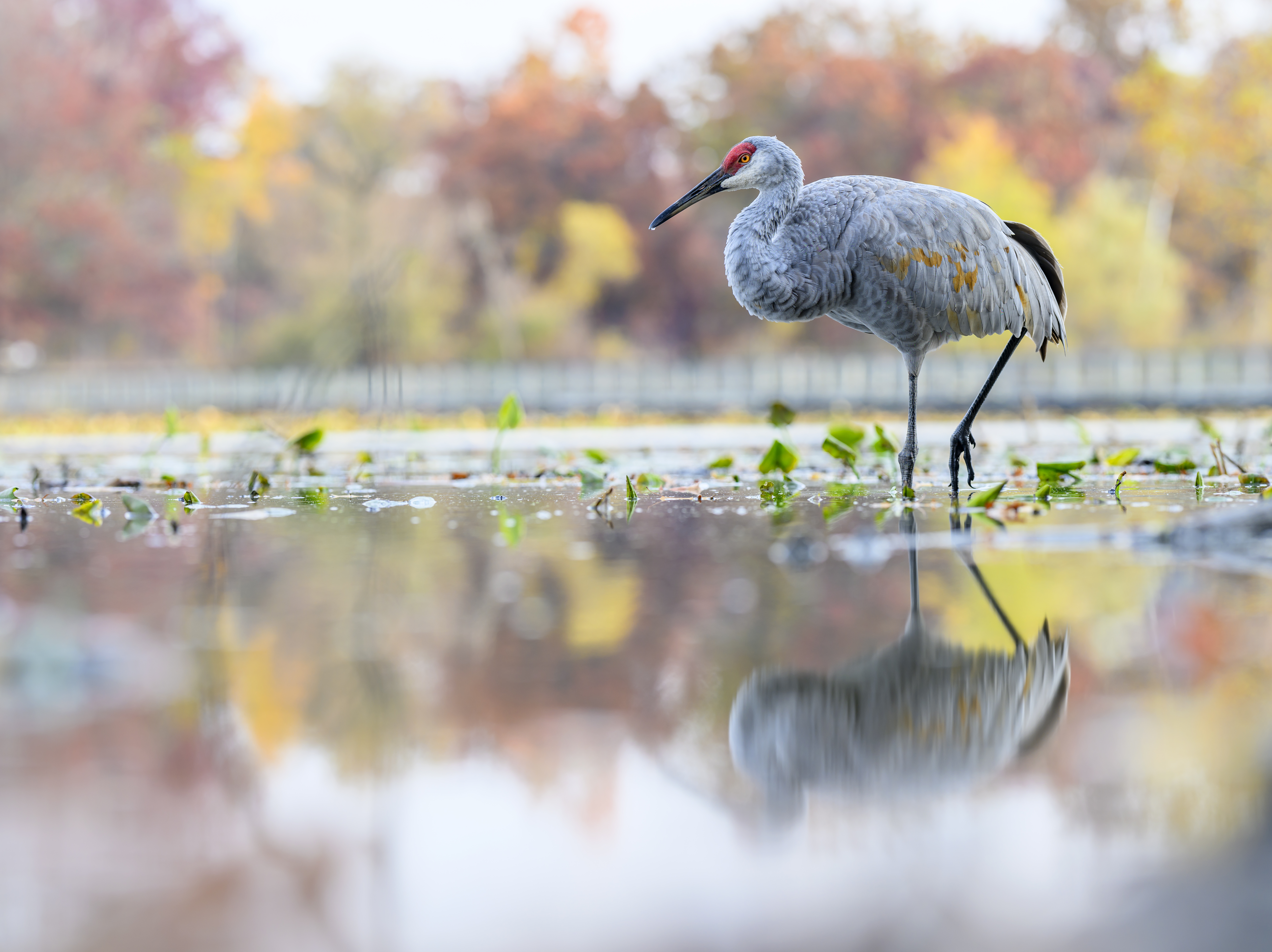
"I noticed a Sandhill Crane foraging along the shoreline of a lake during a Fall day when colors were at their peak. I positioned myself so the trees were behind the Crane, and lowered my camera so that it was just above the waterline to have the bird framed by the trees. The bright orange eyes, the red crown, and the few rusty feathers are a beautiful match with the Fall colors." —Jocelyn Anderson
Second place: Vincent Lee, Allen's Hummingbird
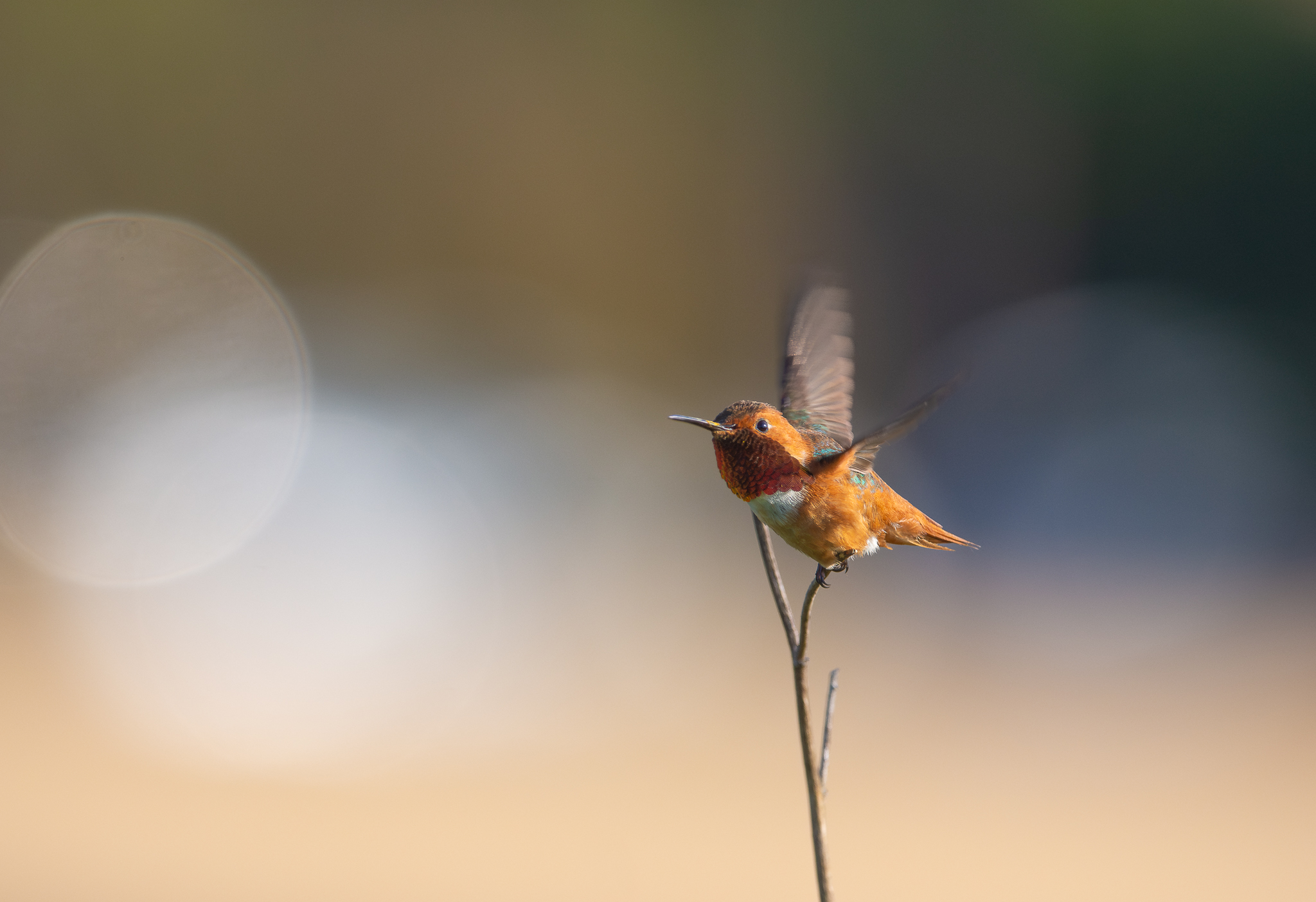
"I was walking through The Urban Forest in Huntington Central Park when a flash of orange stopped me in my tracks. An Allen’s Hummingbird sat proudly on his perch, surveying the world below like a tiny king. Behind him stood a farm and a row of parked cars, unmistakable signs of human development around him. Instead of shifting my angle to erase them, I leaned into the contrast. I framed him so the cars dissolved into soft bokeh, transforming hard edges into gentle light. In that moment, the scene became more than a portrait. It became a story about resilience. This brilliant little hummingbird thrived in a landscape shaped by humans. Wild doesn’t always mean remote. Sometimes, it’s perched quietly above a parking lot." —Vincent Lee
Third place: Charles Bergman, Emperor Penguins
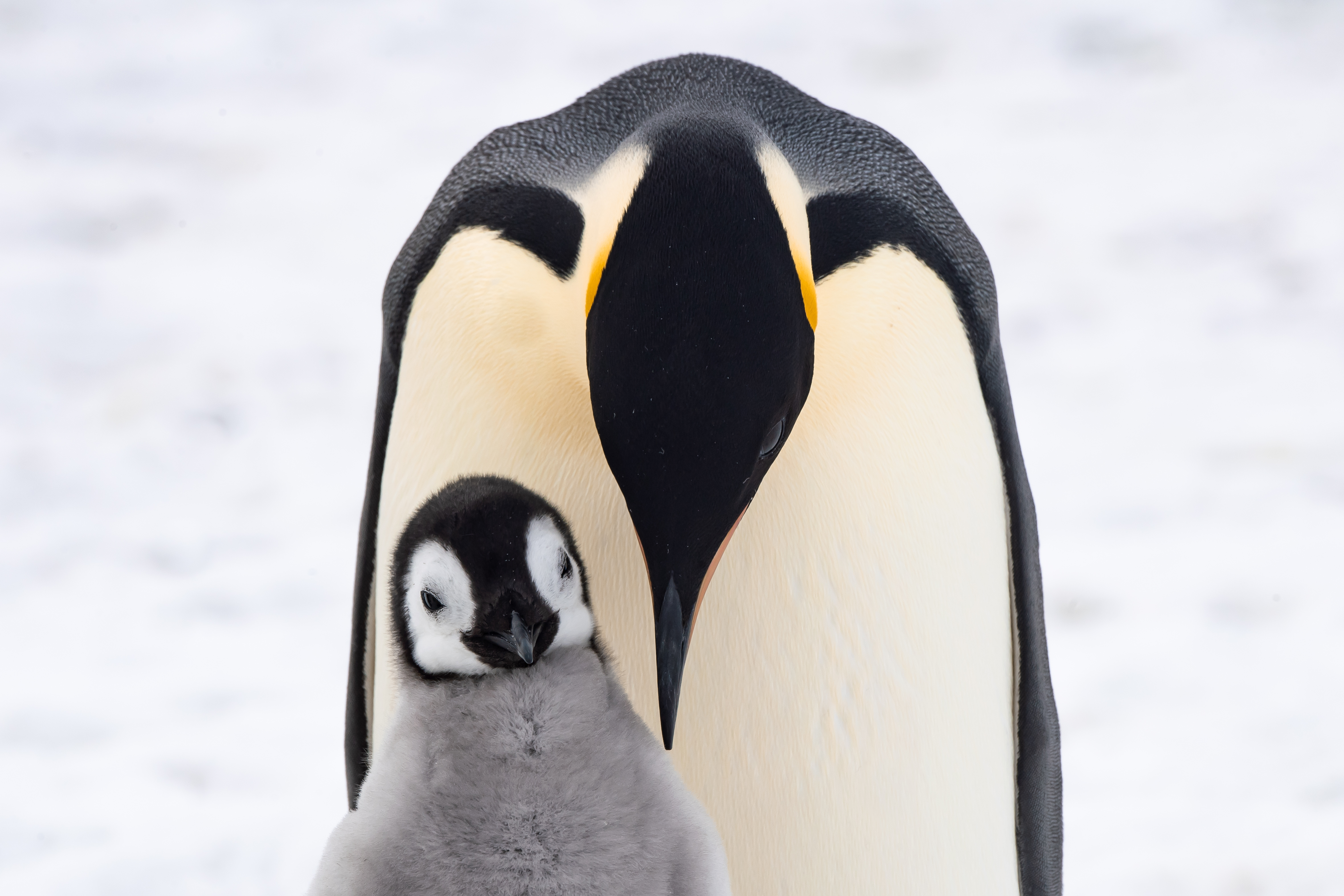
"For several hours one afternoon, I watched this Emperor Penguin chick at the colony on Snow Hill Island. It interested me because it was alone, and these penguins are typically quite social, Emperor Penguin chicks are among the cutest animal babies in the world. They look for all the world like they’re wearing pajamas—a onesie. This chick would approach the adults returning to the colony. It would flap its penguin wings, toss its head back and call. These penguin calls announce the chick’s identity. It is saying, “This is me.” It is how parents and chicks find each other in big colonies. But the chick had no luck. The adults ignored it. Some even smacked the chick with a flipper. It endured a long afternoon of rejection. Emperor Penguins have to be tough since only about a third of them will survive to their first birthday. Then, surprisingly, the chick approached an adult, gave its call, and the adult called back. A parent and chick reunion. I expected the chick to be fed. Instead, the chick turned and sank into the adult’s golden, pillowed chest. A look of complete contentment came over the chick’s eyes. The parent inspected the chick with an incredible gentleness, so surprising in the fierce conditions in which they make their lives. The experience of Emperor Penguins is like that of no other creature I know: it’s an exhilarating combination of awe and affection, tenderness and the sublime." —Charles Bergman
Conservation Actions
First place: Janet Lewis, Downy Woodpecker and Pileated Woodpecker
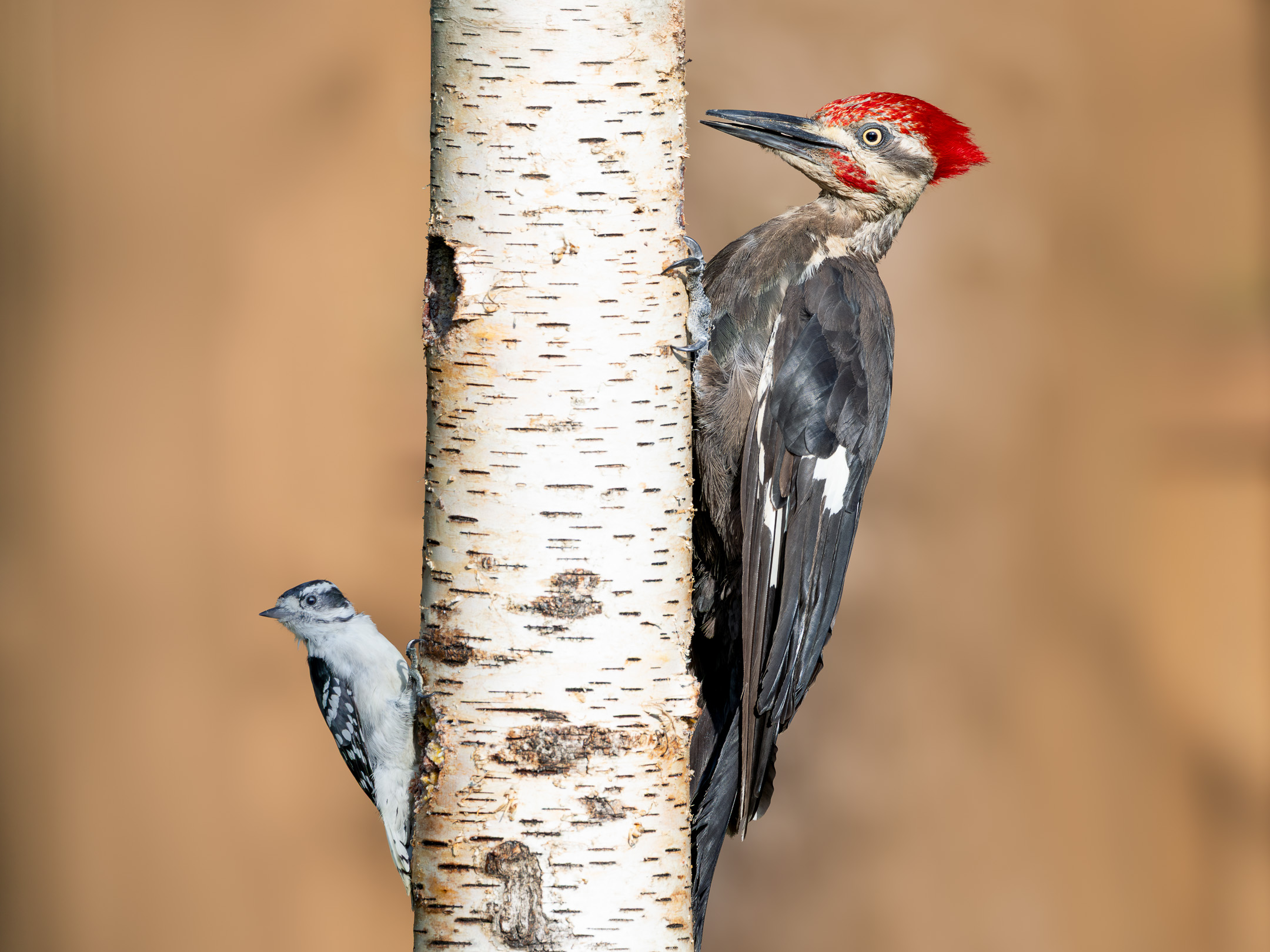
"I have several suet feeders in my backyard - a traditional cage feeder, and the homemade log feeder you see in this image. It is a 18-20" long birch bark log (about 4" in diameter) that my husband has drilled four 1.75" diameter x 1.5" deep holes into the log. I stuff suet into the 4 holes and hang it next to the smaller cage feeder. The birds LOVE it. I get Downy, Hairy, Red bellied, and Pileated visiting on a regular basis (as well nuthatches, sparrows, blackbirds, starlings and grackles) at this feeder. This last August I was watching a Downy Woodpecker feeding and the male Pileated flew in. Normally the arrival of the loud, boisterous Pileated results in the other birds quickly retreating. But this little Downy held her ground (You Go Girl!). I literally ran for my camera... and couldn't believe they stayed in position while I did so. I fired off a few frames (shooting through my deck sliding door at that!) When I looked at the results I was so excited. They could not have lined up better, with the base of both of their tail feathers aligned perfectly. The image really illustrates the huge difference is size between North America's smallest and largest woodpeckers! It's a real Davida (since the Downy is a female!) and Goliath story!!!" —Janet Lewis
Second place: Spencer Andersen, California Condor
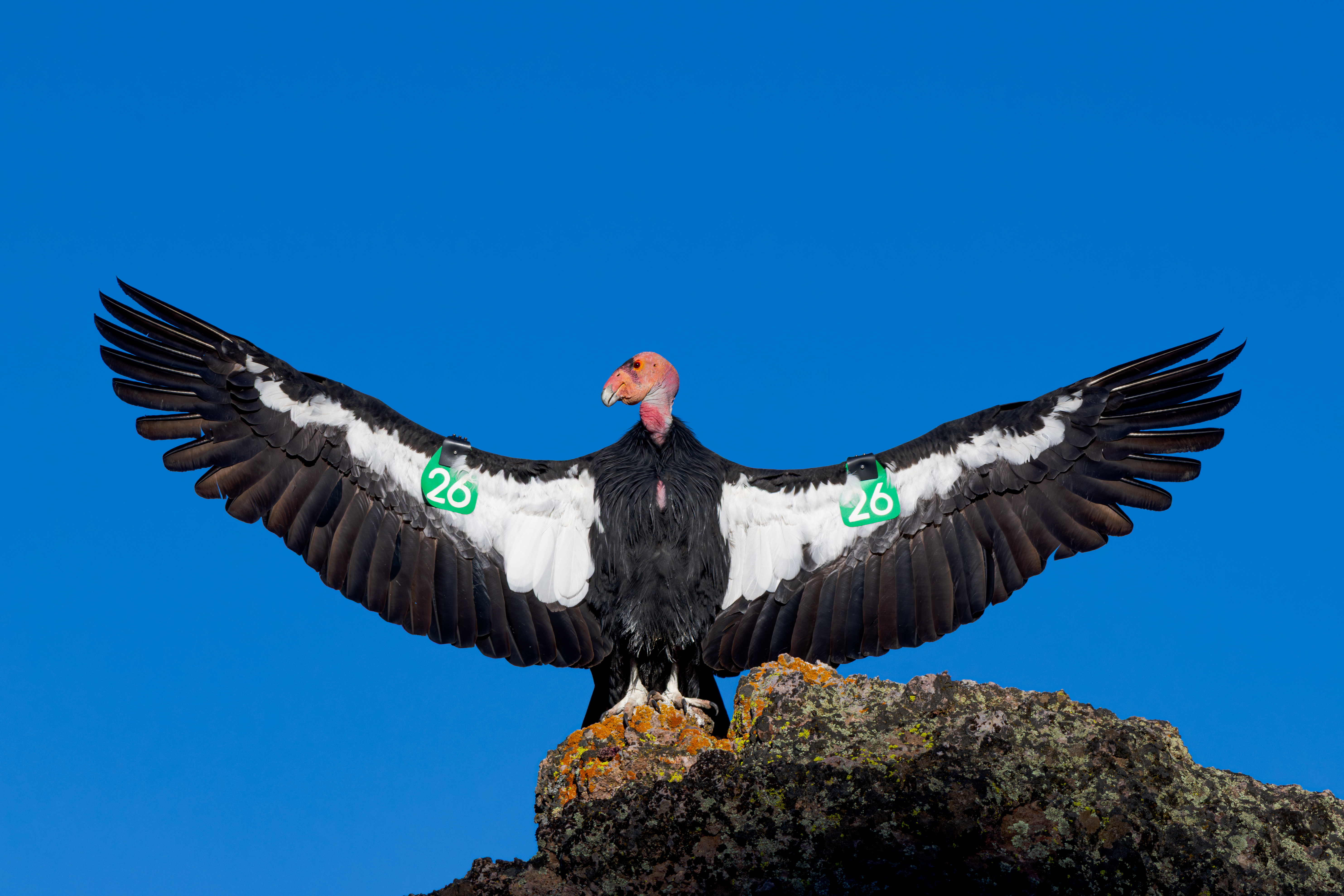
"Pinnacles National Park is, in my opinion, easily the most underrated of them all. It’s a place I’ve chosen to visit more than a dozen times. When I originally got my America The Beautiful Pass, all I hoped for was a shot like this: a full front-on view of a California Condor sunbathing in the morning light. On my most recent visit, I rounded a bend, coming face to face with four wild condors. All less than 30 feet away from me, perched on various cliff edges. My heart raced, my hands shook with excitement, and for the next 45 minutes I ran around like a rabbit, chasing every possible angle I could imagine. However, it wasn’t until I paused, set the camera down, and simply soaked it in, that the condors began to stretch their massive wings. The early sunlight kissed the edges of their wings as they slowly opened—spanning up to 10 feet from tip to tip. It seemed that this strange, magnificent bird was putting on a show just for me. This image portrays “Little Stinker,” a captive-hatched female California condor identified by her green #26 wing tags, at Pinnacles National Park. Driven to the brink of extinction primarily by lead poisoning from spent ammunition, the species declined to just 27 individuals in 1987. When the entire remaining population was brought into captivity. Intensive recovery efforts, including captive breeding at the San Diego Zoo Wildlife Alliance, where Little Stinker was hatched on March 18, 2014, made reintroduction possible. Today, approximately 570 California condors exist today, with more than 360 flying free. The visible wing tags in this photograph symbolize both the species’ fragile recovery and its continued dependence on human intervention. Pinnacles supports one of the largest free-flying condor populations in the world, serving as a critical stronghold in the ongoing effort to ensure this species does not disappear once again." —Spencer Andersen
Third place: Pádraig Duignan, Dark-eyed Junco
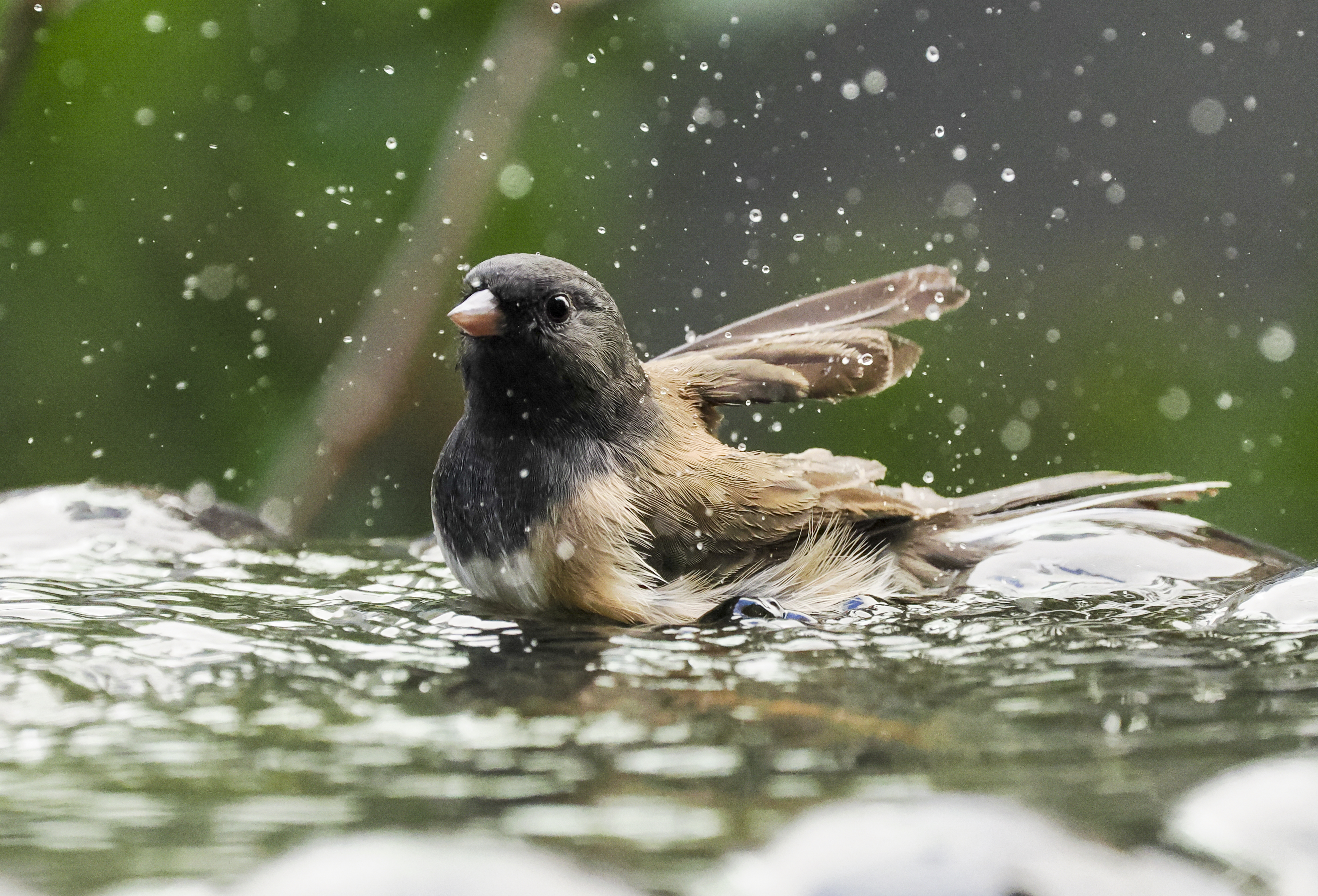
"Over the past 10 plus years, my husband and I have transformed our tiny apartment back yard into a wildlife garden packed with nectar laden plants and several bathing and drinking stations. One is a tall pedestal fountain with nearby shrubs for post-pool party preening and sun bathing. As the only such "green space" in the immediate area we are daily visited by many birds representing up to 16 species - probably more as we are still learning some of the migrating warblers. Choosing one individual was actually very difficult. Should it be one of the iridescent Anna's hummingbirds? the mourning dove perched on Buddha's lap, the striking Townsend's warbler probing for bugs in the vireyas by the fountain, or the tiny ruby-crowned kinglet? Too many choices. In the end I opted for one of our regulars, a dark eyed junco who shows up like clockwork to bathe right around lunchtime. He loves his bath and just seems so happy splashing about and is that a smile on his beak? He gives us a sense of joy in these dark times for wildlife conservation in the US." —Pádraig Duignan
Thank you to our lead sponsor, Kowa Sporting Optics!

And, a special thank you to our supporting sponsors!