

Join BirdNote tomorrow, November 30th!
Illustrator David Sibley and actor H. Jon Benjamin will face off in the bird illustration battle of the century during BirdNote's Year-end Celebration and Auction!
Seattle-based journalist and author Lynda Mapes grew up far from the Pacific Northwest – her childhood unfolded in New York on acres of trees, swinging on vines, digging holes and lighting fires. Birds were her earliest companions: cardinals brightening winter and Blue Jays calling from the branches. Her love of nature is what carried her to Alaska this year, to tell the story of “America’s Arctic” and the birds who call it home.
Below are her reflections from a recent trip to the Western Arctic, one of the most critical regions for the survival of wildlife.
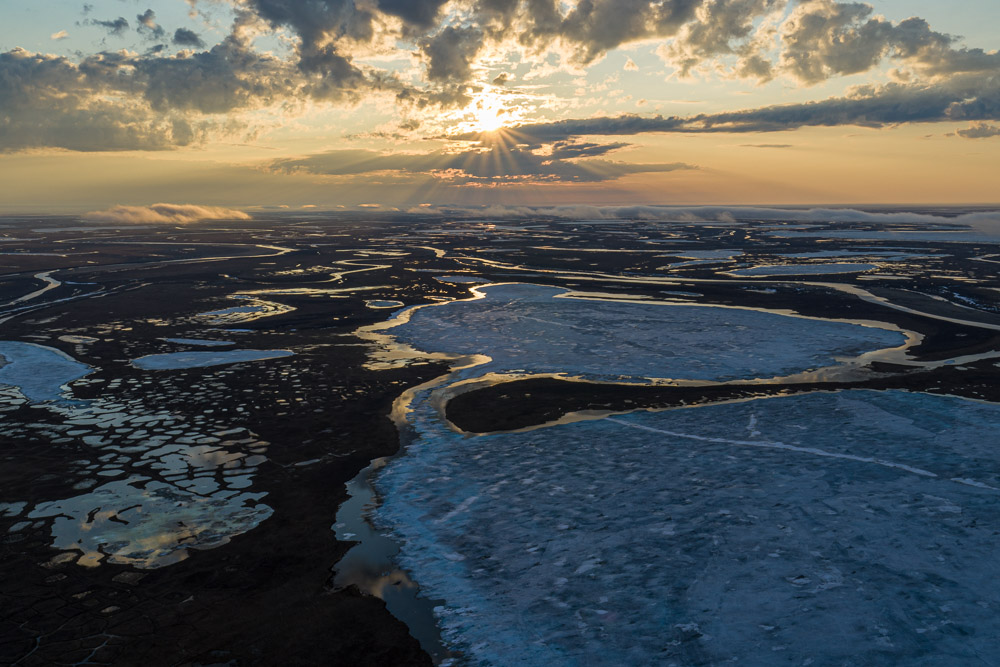
For most Americans living in the lower 48, the Alaskan Arctic is a vast unknown. Much of this region is managed as public land, like the renowned Arctic National Wildlife Refuge on the state’s eastern edge. But journalist Lynda Mapes and photographer Gerrit Vyn traveled west — to nearly 23 million acres of federal land known as the National Petroleum Reserve–Alaska (NPR-A). Despite its name, the region has remained “mostly untouched except by the hooves of caribou, the touch of bird feet, the wind, the kiss of the Arctic ocean,” Mapes said.
According to Mapes, the NPR-A has survived every type of political season since the 1900s. It was set aside as a petroleum reserve by President Harding in the 1930s, but only a few spots in the far southeastern edge have been developed since.
No roads cross this land. The only tracks belong to caribou, wolves, and wolverines. The only sounds belong to wind, water, and birds. “For me, going there was life changing. I had never seen anything like what I saw up there,” Mapes said.
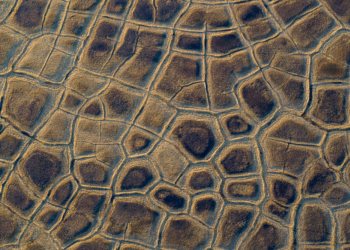
From the air, the landscape appears shattered into mirrors — millions of ponds, streams, rivers, and wetlands. It is more water than land, which is what makes the NPR-A one of the most important breeding bird habitats in the entire Alaskan Arctic.
Birds from every corner of the world raise their young here. Many species people think of as “local” — sparrows, shorebirds, ducks, geese — were born in these wetlands. They return generation after generation, flying astonishing distances to and from this region.
Protecting this public land means protecting the world’s birds, which is precisely why Mapes decided to make the trip out there. “I went to Alaska because like all of us, I've been hearing a lot about this stepped up, pressure to drill for oil and gas up in Alaska,” Mapes recalled, “and the idea of this wild, pristine place that's all public land…the stakes are so high, I just wanted to go see it for myself.”
Late last summer, she boarded a tiny three-seat bush plane — a craft small enough to fit inside a garage — and flew deep into the Western Arctic. There Mapes met up with wildlife photographer Gerrit Vyn of the Cornell Lab of Ornithology, who had already spent months documenting its birds and its beauty.
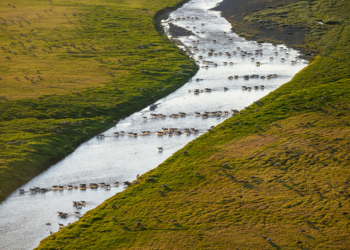
Mapes camped for nearly a week, hiking across the tundra where the only sound was the wind and the quiet conversations of birds. Most of her time was spent in the Teshekpuk Lake Special Area, an expansive wetland habitat within the NPR-A where the landscape is a mosaic of water, aquatic plants, and soft earth. Birds in this region have an endless supply of insects, relatively few predators, and they all have their strategies for survival. It’s “a perfect place to raise their young, fatten them up, get them strong, [and] ready for their journey,” Mapes added.
For decades, the Teshekpuk Lake Special Area was conserved for its essential importance to wildlife and Alaska’s native peoples. In 2024, the Biden administration reaffirmed these protections, shielding the wetlands from drilling after years of public outcry.
Standing there, Mapes said the reason was obvious: “You walk across this tundra landscape and you hear nothing but the voices of animals, everything from the call of the loon to the soft calls of the goose far overhead, the wind itself.”
The soundscape, especially the haunting call of the loon, imprinted itself onto Mapes. Like many nature lovers, Mapes has always associated the call of a loon with true wilderness. She had only heard them a handful of times. But in this region is a nursery for all five species of loons.
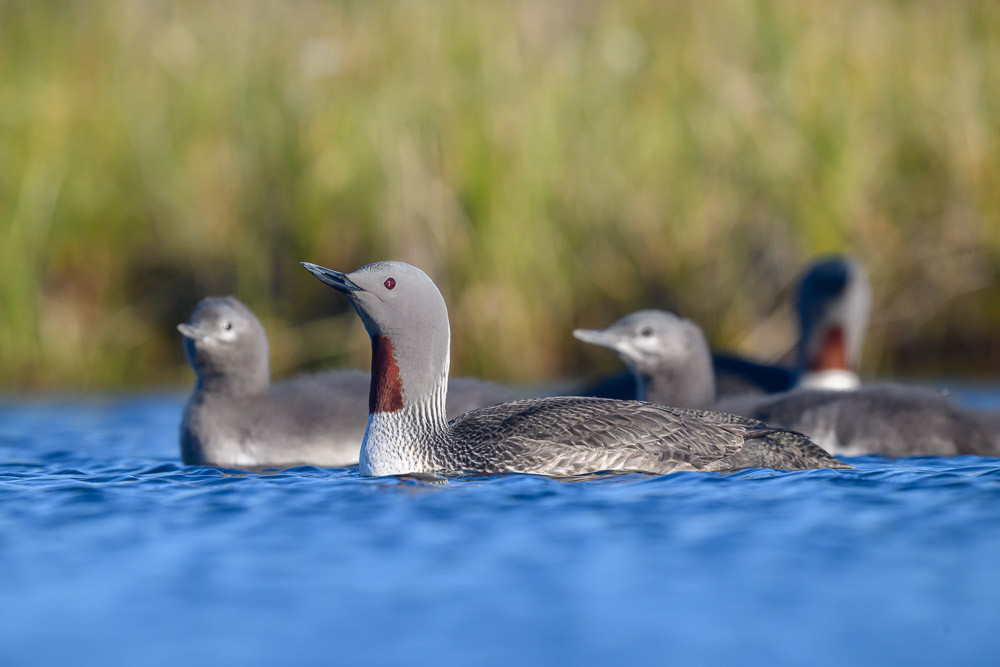
One afternoon, Vyn invited Mapes to see a family of Red-throated Loons. They walked toward a small, round pond, lavender and grey in the reflected sky. There, floating in the center, Mapes spotted two attentive parents and two fluffy chicks.
Mapes and Vyn watched as the parents tended to their young. As the father flew off, the chicks explored their surroundings under their mother’s cautious eye. Then — sudden motion. The male returned with a perfect silver fish, offering it gently to a chick.
The chick dropped it. The fish sank. The chick dove, returning empty-billed. Mapes recalled how the tenderness of that scene — the effort, the vulnerability, the tiny dramas that define a family — quietly rearranged something inside her.
While Vyn returned to camp, Mapes stayed by the pond a little while longer (with a can of bear spray for good measure). Lying down in the mattress-soft tundra, listening to the soft conversations of this family of loons, a stillness settled over her.
The loons murmured on their still pond. Insects buzzed through the air. The wind whispered, and the water moved gently. Mapes felt surrounded by life — powerful, fragile, and wholly dependent on the protection of this place.
Now, the protections that safeguard the Teshekpuk wetlands from fossil fuel extraction are on the chopping block.
She asked, “Will they be here next year? Will they survive the migration? Will they come back next year to the same pond? Will any of this still be here?”
These questions lingered in the Arctic silence.
The Arctic is warming nearly three times faster than the rest of the planet, and Alaskan ecosystems are already suffering the consequences, according to the United States Environmental Protection Agency. Climate change is thawing permafrost, melting sea ice and glaciers, warming oceans, and increasing the frequency of extreme weather events, among many other threats to wildlife and people. As fossil fuel consumption continues to drive global warming, the extraction required to obtain those fuels risks inflicting even more damage on these sensitive landscapes.
And yet — against all odds — the Western Arctic remains one of the most vital bird habitats in the entire world.
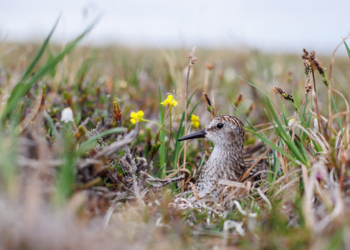
Why? As Mapes puts it, “birds are emphatically creatures of place, and this has been the birth house [and] the nesting grounds for millions upon millions of birds since the ice melted.” White-fronted Geese from Texas, Brant from California, Tundra Swan from Maryland, Snow Geese from Kansas, Whimbrel from Panama, American Golden-Plover from Argentina, Sabine’s Gull from Ecuador — researchers have traced all of them back to the NPR-A. “This is where they are born and this is where they must come back to raise the next generation because it has everything they need,” Mapes said.
As Mapes reminds us, everyone is connected to birds in : “whatever happens in the Arctic is going to affect the entire world. We’re connected by the miraculous threads of the paths, the flight lines of these tiny birds that make their way all the way there.”
As an environmental reporter, Mapes has covered countless stories of loss — ecosystems damaged, species declining, habitats fragmented. Through this trip to the Alaskan Arctic, though, one lasting belief stands for her: we are the last generation with the power to decide whether it stays that way.
If the songs of these birds could be translated, Mapes believes they might simply say: “There's no plan B, there's no other planet. This is our home. Protect it.”
Resources
About Lynda Mapes

Lynda V. Mapes specializes in coverage of the environment and Indigenous cultures and governments. Over the course of her 27-year career as a reporter at The Seattle Times she earned numerous awards, including twice winning the international 2019 and 2012 Kavli gold award for science journalism from the American Association for the Advancement of Science, the world’s largest professional science association. She and a team of journalists at the Seattle Times were finalists for the 2025 Pulitzer Prize for local reporting.
She has written seven books, including most recently The Trees are Speaking, Dispatches from the Salmon Forests published by the University of Washington Press. She is the winner of the 2021 National Outdoor Book Award, and 2021 Washington State Book Award for non-fiction. She is an associate of the Harvard Forest, and lives in Seattle.