
Join BirdNote tomorrow, November 30th!
Illustrator David Sibley and actor H. Jon Benjamin will face off in the bird illustration battle of the century during BirdNote's Year-end Celebration and Auction!
Chicago’s Windy City Bird Lab
Bring Birds Back Season 8, Episode 2: Technology, birding and community finds a common cause.

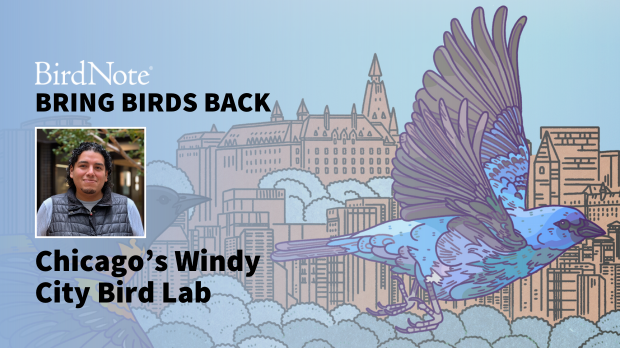
Chicago has been in the spotlight quite a lot as of late, but one of its most remarkable attributes can be seen in the night sky: nocturnal bird migration. In this episode, our host Deja Perkins speaks with J’orge Garcia of the Windy City Bird Lab about how he’s integrating technology and birders to build stronger community ties. In collaboration with several local organizations and projects, J’orge and his supporters are creating new spaces for social growth while implementing tried and true methods for conservation. Learn more about one of the quickest growing city-wide initiatives and how you can get involved, too! Listen in now.
Want more? Stay up to date by following us on your favorite podcast app and on Instagram @BringBirdsBack!
For more about BirdNote, sign up for our weekly newsletter. And for ad-free listening and other perks, sign up for BirdNote+ here.
Learn how you can get involved in our From Love to Action campaign when you visit this page!
BirdNote is a nonprofit. Your tax-deductible gift makes these shows possible.
Bring Birds Back Season 8 is sponsored by the Cornell Lab of Ornithology’s Bird Academy.
[Bring Birds Back Stinger]
Deja Perkins: BirdNote Presents.
[sounds of Chicago winds and nature/birds]
This is Bring Birds Back and I’m Dr. Deja Perkins.
The last time we visited my hometown of Chicago, we covered a story about the fight to legislate bird-safe glass and decals. Chicago lies within the “Mississippi Flyway,” a critical migratory route for the hundreds of millions of birds that can pass over the state of Illinois in a singular migration season. And McCormick Place, a historical convention center in the city, became the focus of the issue in 2023 when its windows were the cause of 1000 bird deaths in a single day.
Since then, new bird-safe glass was installed at McCormick Place during the summer of 2024, thanks to the advocacy of many Chicago-based bird lovers. And get this… it’s resulted in a 95% decrease in bird collision fatalities! There have only been 45 bird deaths documented since fall migration 2024. Though not perfect, it’s an amazing feat.
Chicago has shown us what can happen when people come together to advocate on behalf of birds. While things are looking up for Chicago’s daytime sky, there’s equally exciting news rumbling about the nighttime sky– and it all starts with our guest today, J’orge Garcia. J’orge is the founder and director of the Windy City Bird Lab, an organization bringing tech, birds, and community together like no other.
For one, it’s currently leading a new local nocturnal monitoring group. Nocturnal flight monitoring helps scientists and researchers better understand migration behavior, like social cues and group dynamics. Therefore helping to improve conservation efforts, including: aiding in endangered species listings, and recognizing human-made hazards.
This data collection is key to protecting birds. But that’s not all J’orge is up to – he’s here to tell us all about this project – and others, that are leading the way for local Chicagoans … to learn about and contribute to bird conservation.
Deja: It's really great to be here with you today, J’orge. Can you introduce yourself and tell us what it is that you do?
J'orge Garcia: Yes. Hi Deja. My name is J’orge Garcia. I'm a native Chicagoan, I would say I study bird migration specifically, but I work with birds just generally across Chicago.
Deja: Awesome. And can you tell us how you became involved in the world of birds?
J'orge: Absolutely. Uh, it was really outta curiosity and it was just before the pandemic. I was always into technology in some way, a technologist more generally. I worked at the Chicago Public Library Maker Lab helping different maker organizations across Chicago. And that's things like teaching people or giving people access to tools like 3D printers, laser cutters, desktop, CNC milling machines – all sorts of tools that allow people to make things.
Deja: I know people get involved or interested in birds through many different pathways and they go birding for many different reasons and in many different ways. What is it that excites you the most about birds?
J'orge: When I got curious about birds, there was this tool that I used called the Finch Robot. And with the Finch Robot, I was teaching teachers how to teach kids how to code. I knew that a finch was a bird, but I didn't know what kind of bird it was. And so I got curious to know if I could find a finch around my neighborhood.
And it was really accelerated around the pandemic when we had more free time and we were stuck at home. And I started to get curious about how I could see more birds. The streets were really quiet with less cars moving around and I, I started exploring and I was drawn to the different sounds that I was hearing.
And I would hear, for example, the sounds of a cardinal. And after a few times I've seen one and seen it sing, I would hear the song again– whether I was inside of a library, inside of a store, or just driving around or in my house– I would hear it. And so I would step out and confirm that what I was hearing is what I thought it was. And as time went on, I would hear more sounds of different birds and I didn't have any binoculars and so with a 3D printed adapter on an old vintage lens on my sony camera, I would take photos of the birds then go back home and research and figure out what it was that I saw.
Deja: That's awesome that you've just been able to be so creative in the ways that you've been able to go birding. So can you tell us a little bit about what the Windy City Bird Lab is? When did you start it and why?
J'orge: Yeah, the idea for the Windy City Bird Lab started around that time when I transitioned out of the library and I was looking for my next step. And you're right, I was always thinking creatively on how I could make things. Making things brings me probably the same amount of joy as going birding, really. And, it was around this time too in the pandemic that I was thinking about how I could use my skills in creating these different spaces where people can explore how they can promote healthier environments and richer biodiversity.
And the one thing that I quickly realized is that I should probably get more involved with a birding community at large in Chicago. And through meeting people in this new environment, that I might be able to find a good mix of folks to really make the best of this idea. And it wasn't until I landed a job at Openlands for the Birds in My Neighborhood program that I started to really meet folks that could deliver on this vision.
I met a few individuals that asked me if I could start recording from rooftops. And this was the birth of, uh, a project that really highlighted the thing that I wanted to do, which was bring technology and birds together in some way.
[music ends]
Deja: That's really cool. I know that I haven't come across very many people who use birds and technology together at this intersection. When you started the Windy City Bird Lab, did you yourself see any other individuals working in this tech and ornithology intersection, or was there some specific niche that you saw that needed to be filled?
J'orge: I do see it now, um, one thing that I found common were running into developers, uh, engineers and designers of all sorts who had a variety of skills that they wanted to apply to birds, but they didn't really see an avenue for that. And that I saw as an opportunity to build a space where we could build a community of practice that invited not just ornithologists, but developers and designers to come together and move birding forward from a different perspective.
At the time when I started, the first thing that I was exposed to was the Old Bird, uh, nocturnal flight call monitor. And that was a bucket. And when I saw that thing, I, I got curious about how it was made to optimize for nocturnal flight calls. Outside of that, I didn't see very many applications then. Uh, but as time went on, I started to see the way different folks were starting to make tools.
Cornell had their own Swift recorder and there was the Song Meter tools and the Old Bird microphone, but I saw that there was still opportunity to build on those things, uh, particularly with the Old Bird.
[music selection starts]
Deja: The Old Bird 21c is a microphone specifically designed for recording the flight calls of migrating birds at night. The nonprofit organization of the same name was founded by Bill Evans in 1998. In collaboration with a contracted bioacoustics programmer, Old Bird developed new software that allowed transmission to PC computers with a higher range of frequencies for calls. This early automated detection software could recognize a wider diversity of birds, like thrushes and the Dickcissel.
The software became popular for being inexpensive and its waterproof DIY material, using flowerpots and saran wrap for recording at home. In the year 2000, Old Bird established the very first automated night call recording network using their microphones across high schools in southern Texas. Though that network has been defunct since 2012, the technology lives on and continues to dominate the market for hobbyists and ornithologists. In recent years, J’orge has taken on the task to create a network of his own, the Chicago Bird Migration Monitoring Network, building on the influential technology of the past.
J'orge: When we first started this project to record birds at night from Chicago rooftops, it was Old Birds that were delivered here to Chicago. And when I saw them, I saw an opportunity to improve on them immediately, understanding that buildings were probably not going to want to have buckets on top of them. And so I saw an opportunity to start working on a solution.
[music selection ends]
Deja: So what was that solution? Can you talk to us a little bit more about the different forms of technology you incorporate into your work?
J'orge: Absolutely. So, when I met the folks who were also interested, these were individuals like Benjamin Van Doren and Madison Chudzik.
Deja: Van Doren, a migration biologist and professor at the University of Illinois, and Chudzik, an ecology PhD student at Duke University, are both affiliate members of the Windy City Bird Lab.
J'orge: They were familiar with the Old Bird and something like the Song Meter. But the bucket, again, was not going to work, from Old Bird. It was also failing on us. The second season that we deployed them, several of them tilted over. The biggest struggle is that we were duplicating a project that came outta Beijing, where they were recording birds from rooftops, a singular point. And we wanted to do this across Chicago a little bit more broadly. But when we put up a bunch of recorders all across Chicago, there were a couple different challenges. Primarily that, if these buckets were going to be failing, then we could come back in six weeks, 15 weeks, and have nothing.
Deja: Can you tell us what it means to have a bucket fail? Like how does that- how does that happen?
J'orge: Yeah, so, Old Bird, they are buckets with a prism inside of it that holds a microphone. Just these two gallon buckets that you buy at Home Depot or any hardware store. And we were securing them down using bungee cords and these bungee cords really were just going through the little hoops of the bucket. And that's plastic, and that's just a small piece of plastic at that, and it was just snapping.
But a bucket failing would mean that the hole that the bungee cord is attached to has broken and it's fallen over. Or simply that the plastic was not just right and that water got through it. So, one solution would be to go back and check every week or every other week. But with an increasing amount of sites as we wanted, this just wasn't going to be feasible.
And again, I did see an opportunity to make something a little bit better that was gonna be a little bit more appealing, and that ended up becoming the Grosbeak Horn Microphone, uh, which is what we use now across the Chicago Bird Migration Monitoring Network to capture all of our nocturnal flight calls. So we replaced the Old Bird with this tool, which is really a passive amplifier that creates, uh, a bubble in the sky above it, and tries to muffle as much as possible the sounds coming from the sides and below it.
Deja: Oh wow. That is way more intricate than what I thought was happening on the technology side of it all. So, what changes did you specifically address with the Grosbeak Horn Microphone
J'orge: I took all those considerations into the design of the Grosbeak, that these things really do need to be connected to the internet so that we can monitor them and that we can see if they're failing. My first thought was that this has to be on a Raspberry Pi; a Raspberry Pi's a small, credit card size computer that you can build apps on and build programs and set up things remotely. And we've been able to build that.
Deja: Your monitoring network began in 2023 with support from Cornell and the Chicago-based conservation nonprofit, Openlands. What’s even more impressive to me, is that you’ve added dozens of partners and some historic sites to the network like the Accenture Tower and the Willis or as we Chicagoans know it as the “Sears” Tower – which is also the third-tallest building in North America. Not to mention a few in Mexico! That’s amazing. You’ve done so much in such a short time. What would you say you’ve been learning from this work so far?
J'orge: The Chicago Bird Migration Monitoring Network, it's two years of recording so far, two falls. And we are starting to see a couple patterns of, like, what are the busiest stations for these calls. And there might be some bias there with the amount of noise that there is on some of these, but it actually seems pretty, pretty centered around particular areas.
[music selection]
What I think is really driving that, though, is just a lot of excitement about this new technology where we're able to monitor birds and monitor them live. It's also, as far as I know, the first of its kind network that is monitoring this broadly and this collectively. I know folks are recording from their yards and rooftops, but that's all scattered. There's always been a dream of building out a big network and I feel like we're finally delivering on that.
Our network is now, I think, 48 stations. Most of them are online and we're able to monitor them. We're able to see when they have issues and know when we need to go service one. It is just exciting to uncover nighttime migration. Even many birders that I talked to aren't too familiar with the sounds at night. And recently, I put out a video with a thermal camera where I could show nighttime migration tied with the sound and with the amplifier, you can really hear all those sounds. Uh, but it takes some effort to be reminded that there's bird activity at night. We don't really think about birds at night. That's when they're not visible.
But yesterday, for example, you could step out at 11:30 PM and you can hear just a flurry of bird sounds as they're making their calls. Even my son, he's seen me and been excited by me doing this. But it wasn't until last night that we stepped outside that he could really hear what it was that I was working on. And I think that that was so enlightening for him too.
Deja: It definitely brings a new perspective. and also kind of ties into the Lights Out campaigns and getting people to kind of realize that birds do migrate at night, they are active at night.
Um, so let's, let's dig a little bit deeper into this. I know you said you all have 48 stations, that is really impressive. Um, but you also talked about people doing recordings in their backyards versus your rooftop recordings, but, how might your rooftop monitors, or recorders differ from what's used in a backyard or, like, from Merlin, let's say?
[end music selection]
J'orge: Let's start off by maybe talking about Nighthawk, which is a machine learning model developed by Benjamin Van Doren. It's built on the same basis of Merlin. Uh, but it allows you to capture a little bit more data and, uh, allow for a little bit more error so that if you can't define the exact species, at least you know what kind of bird it was. And that's been really powerful for us, without that I don't think that this work would be possible. And this project has really been able to accelerate the training of that model as well, to improve its accuracy.
A lot of folks are using things like the Old Bird buckets or flower pot microphones. The difference in our network is that we've standardized it across the board, so we're using the same microphone and this horn microphone that we call the Grosbeak. And so with that distributed throughout, we know that our recordings are consistent with one another. Maybe their environment is different. I also think back to the episode that you had a little while ago. It was on the amount of noise pollution there is through the city, right? We are capturing some of that. We're not analyzing it, so I know that there's room for collaboration when there's time for that.
There are sites where there's less noise, as you can imagine, the noise interference and can include things like road noise. Things like A/C humming, in the background. And sometimes there are vents in buildings. So we try to be cautious about where we're placing it as well. But with 48 stations all using the same microphone, the same amplifier, we're really confident about how consistent our recordings can be, even if the environmental noise can be a little bit different.
Deja: Mmm. Okay. And so for all of this data that you're collecting across all of these sites, is it publicly available? How can we see what y'all are doing in real time? I know you mentioned that that's possible.
J'orge: Yes, we have a dashboard on ChicagoBirdMigration.net. Uh, and it's near live. It used to be every 15 minutes, and we're working to get that back. The dashboard displays near-live information about what's flying through on a variety of our sites. I think we have maybe 40 sites that are on that website. A few other ones are still running on these battery and offline units. You can click on different dates to see the activity for that night. And you can also search by species to see where they're tagged. Maybe one of the more surprising occurrences throughout Chicago is the Upland Sandpiper and just how frequently they're flying over at night.
[Upland Sandpiper calls]
That's a species that's rarely seen on the ground. But yeah, anyone can explore our dashboard, can see what we're uploading and tagging at chicagobirdmigration.net.
Deja: And so how would you say your dashboard and program differs from something like eBird?
J'orge: Our dashboard tells you the amount of calls that are heard, so it doesn't tell you how many birds are flying.
Based on the calls, you can hear just so many firing off.
[Nighttime calls begin]
These recorders help expand our knowledge about bird migration far beyond what is possible with volunteers and the human ear alone. By mid-October, the dashboard accounted for over… 230,000 documentations of Swainson’s Thrushes during the 2025 fall migration. It also included Rose-breasted Grosbeaks, Veeries, Palm Warblers, Solitary Sandpipers, Wilson’s Snipes and so many more.
We have been deploying these units where we're allowed to, there's more and more interest every season. It isn't a collection of all the birds that are flying across the area. That's what BirdCast is really great at, it uses radar to quantify birds. The nice difference that comes from our network is that we're able to tell who's flying through. And different than eBird is that we're really trying to see who's flying over, not necessarily who is observed by people. And those on-the-ground reportings really do help our data set as well, just to confirm and ground truth what we're observing.
[Nighttime calls stop]
Deja: Yes, absolutely. I think this is, kind of, introducing a new way for people to think about even how they bird.
[Sandhill Crane calls begin]
I know for me, a bird like Sandhill Cranes, those are a species that I've mostly heard as they've been migrating. I'll, like, hear their chatter and I'll look up and I'll be like,’ oh my God, look at this, this huge flock,’ flying overhead. But it's not something that I've often seen on the ground, um, in the places that I've been. But I think it's, it's so cool to think about, not just using our eyes, but using our ears and all the data that we can collect.
[Sandhill Crane calls stop]
J'orge: Yeah, there's so many fields in biology right now that I think are being amplified by bioacoustics. Uh, there's bats, right? They’re another one that are really in demand right now for trying to capture them using ultrasonic microphones. Um, there was this one site where we were recording, where we were worried about capturing too many frog sounds that might impede our bird recording, but that just presents another opportunity to study another animal even if it wasn't us, right? If we're recording them, then there are certainly ecologists that would be interested in those sound archives, for sure.
Deja: Yeah, absolutely. Have you had any thoughts about data sharing and open access or other platforms where audio acoustic data is uploaded. Have you kind of thought about what to do with the data on the backend?
J'orge: Yeah. We have, right now, our own backend. In large part, the backend is developed by the University of Illinois, and the three main partners involved in the creation of this network would be the Windy City Bird Lab, the Migration Biology Lab of Van Doren at University of Illinois and Sara Lipshutz Lab at Duke University.
And right now, in these early years, there is a data sharing agreement between this group but we're collecting so much data and we want to make sure we get it right before we start sharing it out.
We have the dashboard right now that people can peek into all of our data sets. But as I mentioned earlier, the amount of collections that we're doing is allowing us to retrain the model. The researchers are constantly working on that...
[music transition]
Deja: After these messages, we’ll return with J’orge Garcia. We’ll talk specifics about the history of bird care and protection in Chicago, the ways Windy City Bird Lab is uniquely engaging community, and what J’orge has in mind for both short-term and long-term expansion. Bring Birds Back will be right back.
[MIDROLL]
Deja: And we’re back, talking with J’orge Garcia, Founder and Director of Windy City Bird Lab, a Chicago-based tech organization with a focus on bird migration and monitoring through communal gatherings and activities.
Deja: One of the things that stands out most to me about what you've been talking about is just how we need so many different intersecting interests when it comes to monitoring birds. And how you can turn something that is a nature related hobby and combine that with what your career interests are and kind of build this new thing. So that's really amazing and inspiring.
J'orge: One thing that I see really valuable in my experiences, you know, I didn't grow up with birds. I didn't go to school for environmental science. But because of that, I have had the time and opportunity to develop a whole ‘nother subset of skills that, when I entered the birding world and being as engaged as I have been, I've been able to bring those skills with me and I can see the challenge of observing birds or protecting birds from a different perspective. Together we can accelerate that and that's what I want to be able to provide for other folks, for them to use their skills and help birds out using their specializations.
Deja: Absolutely. I think as a professor, that's one of the things that I try to convey and instill in my students is that you can have multiple interests and you have to figure out how they intersect. Like everybody doesn't have to study environmental science in order to be in the conservation world, you can be an engineer, you can be a computer scientist, you can be a data analyst, you can be in marketing. Uh, we need all of these varieties of roles in order to make conservation work. The Windy City Bird Lab is involved in migration monitoring using audio recorders, but what would you say is the overarching goal of the Windy City Bird Lab, and how much has it grown since then in mission and in size?
J'orge: So we've been officially operating for about a year now. Uh, but it's been a fast growing year. At our core, our mission is to bring awareness to birds in Chicago using technology, but also bringing together these folks with different skillsets to be able to create new ways of talking about birds, about advocating for birds.
And the monitoring network is a big part of that but it, thankfully, has not been the only way and we're diversifying what it means for the Windy City Bird Lab to engage the Chicago community.
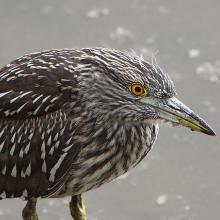
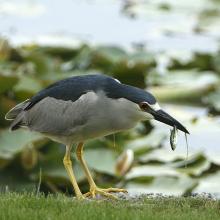
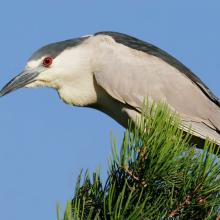
One other project that we support is the Chicago Black-crowned Night Heron Project that works with the Lincoln Park Zoo and the University of Illinois Urbana-Champaign in trying to support Black-crowned Night Herons here in the state of Illinois.
[music selection starts]
Deja: In collaboration with J’orge and the Windy City Bird Lab, conservation organizations and researchers came together to save the birds.
J'orge: Uh, in Chicago, we have one large roosting site at Lincoln Park Zoo that gets over 700 adult Black-crowned Night Herons that come and nest here. And that can be a big problem. And one way we support that is they do conspecific attractions. So they've set up a couple different sites where historically the Black-crowned Night Herons have nested and we're trying to bring them back to those spaces, uh, so that they're not all centered here in the Lincoln Park Zoo. If some kind of outbreak were to hit them, maybe bird flu were to affect them, it would really decimate not just the population there but across the entire state.
Deja: In an attempt to promote more wide-spread nesting areas for the species, J’orge knew exactly who to call for help.
J'orge: His name is Tommy Stanton and we worked on creating a new realistic decoy for the Black-crowned Night Herons. We used our 3D printer again for that. It was faster and cheaper than trying to create a mold right away. Tommy is a former character artist and a good friend so he helped model that and then I helped make it printable and also usable for the researchers who wanted to be able to mount this. And so what we ended up building was this two piece Black-crowned Night Heron that is then assembled, we glue it, prime it, and then we held these painting parties across the city. We invited folks to come and engage directly with the project, painting it and then giving it back to the scientists for deployment.
And they look fantastic. They have fooled a couple birders. You can see it on the Illinois Discord. Um, and it comes up in conversation every once in a while about when they see it and then they see the real bird, right? The Black-crowned Night Heron is used as a decoy, a scientific tool to attract the birds to come in and nest in these sites. And we'll see in a couple years how well they are at that. Our birds are kind of prominent out there. If you get a chance, do look it up. It's a Chicago Black-crowned Night Heron decoys. I think that's a good way to find them online.
[music selection ends]
Deja: That's awesome. I think It's really amazing how you've been able to not only make this connection between ornithology and technology, but you're also involving the community and bringing in art as well. So you kind of have, like, a true STEAM project and lab that you're working with.
J'orge: Yeah, that's a big drive, ensuring that we can involve all of it and make it meaningful to the individual. Maybe one way that I have put it is experiential learning, and that was a big goal of the work that I did at the library. People can learn by experience, and birding really relates to that as well. And also exciting to share that we've been working on a new decoy. Our painting parties have been so successful that we've been requested to give a shot at the Piping Plover, which has been a celebrity here in Chicago.
Deja: Yeah, really nice. I don't know if you wanna share a little bit about the story of the Piping Plovers in Chicago.
[music shift]
[Piping Plovers calls]
J'orge: So for the Piping Plovers, it's a little bit different than the Black-crowned Night Heron, in that there is a fandom around Chicago. So after several decades of no Piping Plovers in the area, two little plovers made it first to the Waukegan area where they tried to nest and were unsuccessful.
Deja: The last time the endangered birds had nested in Chicago was around 1950. It wasn’t until 2018 when these two unexpected plovers would return to the city.
J'orge: Um, and then, the next year that they came they ended up coming to one of the most visited hotspots in the U.S., that's Montrose Point Bird Sanctuary.
Deja: Fittingly, the two birds - one male and one female - were affectionately named Monty & Rose. Quickly, they began to attract an audience of plover lovers.
J'orge: They were actually on the beach and so people were running around and playing games. And they were setting up and preparing to nest and thanks to a bunch of local activists and a group that is now the Chicago Piping Plover Monitors, they successfully campaigned to seal off a part of Montrose Beach where those plovers nested.
Deja: The famed birds continued to return to the sanctuary and successfully nest through 2022. Though they are no longer with us, their impact remains. It's just been revitalized into this natural area that's fantastic for all sorts of species.
Deja: I really love the story of Monty & Rose. It showcases how people and birds use the same spaces and the importance of protecting our environment.
[music ends]
Aside from the decoys, are there any other unique ways that the Windy City Bird Lab works with communities and tech?
J'orge: That's one thing I'm really excited about right now. The Windy City Bird Lab, again, we've just been operating for one year and we've been running out of mHUB and we're starting to grow. Working with a few partners to develop what Windy City Bird Lab is supposed to be. We just moved into a space that's empty right now, but it will become a sort of center for environmental technology or community led science. We want to bring people in regularly from all different aspects to meet and gather and build things together. With that, we're also expanding what we can offer.
So we're excited to work with youth as well and welcome them into this space. We're looking for ways that we can have a teen internship program in the summer and Chicago is a great city for that with a lot of great programs that already support youth employment. And so we really want to not just bring in professionals from other industries that can support birds, but also provide a space where young adults can start to see themselves in these career paths as well and explore the different opportunities for careers in environmental science or bird conservation, ornithology, as, as you may have it. And so, we'll be opening our doors soon, maybe by the time this podcast is out we will have our first couple of events. There's a couple meetings lined up, but there's a lot of conversation happening around this right now for us, uh, and we're really excited about it.
Deja: That sounds super exciting. Congratulations, and I look forward to seeing more about the many projects that come out of this space. So you all have only been operating for about a year, but you've been able to grow so much. And so I'm wondering how has the community responded to this approach of incorporating technology and birding? Would you say your programs typically attract the traditional birding audience or are there all varieties of people who participate in your programs?
J'orge: Again, I've been at this for a couple years, but the Windy City Bird Lab has been operating for a year and the nice thing about just getting started is that it gives us an opportunity to really experiment and find what people are most responsive to. So while technology really drives us, there's a lot of other ways that I want to engage the public, and so I've collaborated with Cornell's Celebrate Urban Birds, and we have a bird walk in Riis Park which is a historically underserved park. I wouldn't say “under-birded” necessarily, only because I don't like that term. I think people are out birding in some of these parks, they're just not using eBird and that's a different thing.
And I'm not blasting my bird walks. I'm targeting specific neighborhoods in Chicago: Belmont Cragin, West Lawn, in particular, right now. And I'm there on the ground and reaching out to organizations within those communities to invite their people to our birdwalk. Last year, a really great example of that, we led a birdwalk at what is considered an under birded park. And it was all locals, all people within a mile, two miles from the park. What I was able to provide in that instance was a new perspective to all the local residents who use the park, but may not be seen in terms of just how much biodiversity or bird diversity there is in their neighborhood.
Deja: Yes, absolutely. You are doing true community engagement and I think you are accomplishing things that a lot of organizations strive to do, but have not yet figured out the key to doing.
So, we've talked about a couple of different projects that you all have been involved in or that you've started, um, the nighttime monitoring, we've talked about the Black-crowned Night Heron Project. Like, you're providing so much for the community, but how would you like to see the Windy City Bird Lab grow in its projects and its community and the type of technology that you all use in your work?
J'orge: Yeah. As we continue to expand, we're going to make the device more readily available for folks. Uh, whether that means that we find a partner or a vendor that can help us sell these units, or if it means that folks can come and check these things out. Adding more stations across Chicago or in other cities will just give us a better picture of what migration looks like.
[music selection]
And what we're trying to showcase is how birds are using the Chicago environment for all of its industrial corridors, all of its urbanization and greenways, equally, that we have across the city.
We wanna showcase how birds are moving throughout the airspace and the more stations we have out and the more people we have submitting to this database, then the better of a picture that we get.
Right now, one vision for these nocturnal flight call monitors is that we might be able to ship 'em out to folks as well to contribute to the network or to be able to check out for, let's say, a night out camping. Beyond that we wanna see folks come into our space and build with us. If you're traveling anywhere near Chicago, we want people to come in, we want people to visit. We're trying to offer a different type of third space. One that if the weather's bad or if the sun has gone down, especially maybe in the winter or maybe it's just a time that we've dedicated to come together for birds, we wanna see you here or at least experimenting with the tools that we've developed.
Uh, if you wanna support our work, you can visit our website, windy city bird lab.org, one for our newsletter and to donate through our fiscal sponsor, Illinois Audubon. The goal is to operate under fiscal sponsorship for these first three years and validate the existence of the Windy City Bird Lab. And in this first year, that's already been true.
[music selection ends]
Deja: awesome. I just, I wanna say thank you so much for just giving us insight into the work that you do and, just sharing about the amazing work that the Windy City Bird Lab does and getting our listeners hopefully excited about the intersections of technology and ornithology.
J'orge: Well, thank you, Deja. It's always great to talk to you. I hope to catch you next time you're in Chicago and that our doors will be open for you to come in. It really excites me that programs like BirdNote are captivating platforms that excite birders alike and make it easy to get more people involved. I just think that, the more people are interested in birds or are aware of birds, the easier it will be to create new policy in cities like Chicago. So thank you for all that you do here and, uh, looking forward to the future.
[music transition starts]
Deja: Perkins In recent years, third spaces - or locations outside of home and work for social gathering, learning, and building community - have become scarce. However, with their strong communal presence and their new physical space, J’orge and the Windy City Bird Lab are cultivating that environment for birders and technology lovers alike; an important reminder that we must create the spaces we desire, and that we each bring something unique to the conservation puzzle. Whether it's technology, science, art, advocacy –or whatever your niche. It will take all of us to ensure we are monitoring and protecting the environment so that people and nature can thrive– building solutions in community.
Many thanks to J’orge Garcia for taking the time to share his passions with us today, and a special shout out to the Windy City Bird Lab and all associated communities and partners for reminding us what’s possible when we come together. And, of course, thank you for listening!
To learn more about the Windy City Bird Lab, their night flight call monitoring program, or to become locally involved, check out the resources for this episode at BirdNote dot org. And follow us @ Bring Birds Back on Instagram for the latest updates about the show!
This episode of Bring Birds Back was created by our BirdNote production team, including Fact-checker Ariana Remmel; Producer Sam Johnson, Senior Producer Mark Bramhill; Managing Producer Jazzi Johnson; and Content Director Jonese Franklin.
Our music is by Blue Dot Sessions and Cosmo Sheldrake. And this episode was hosted and co-produced by me, Dr. Deja Perkins. Thanks for listening!
[Music ends]
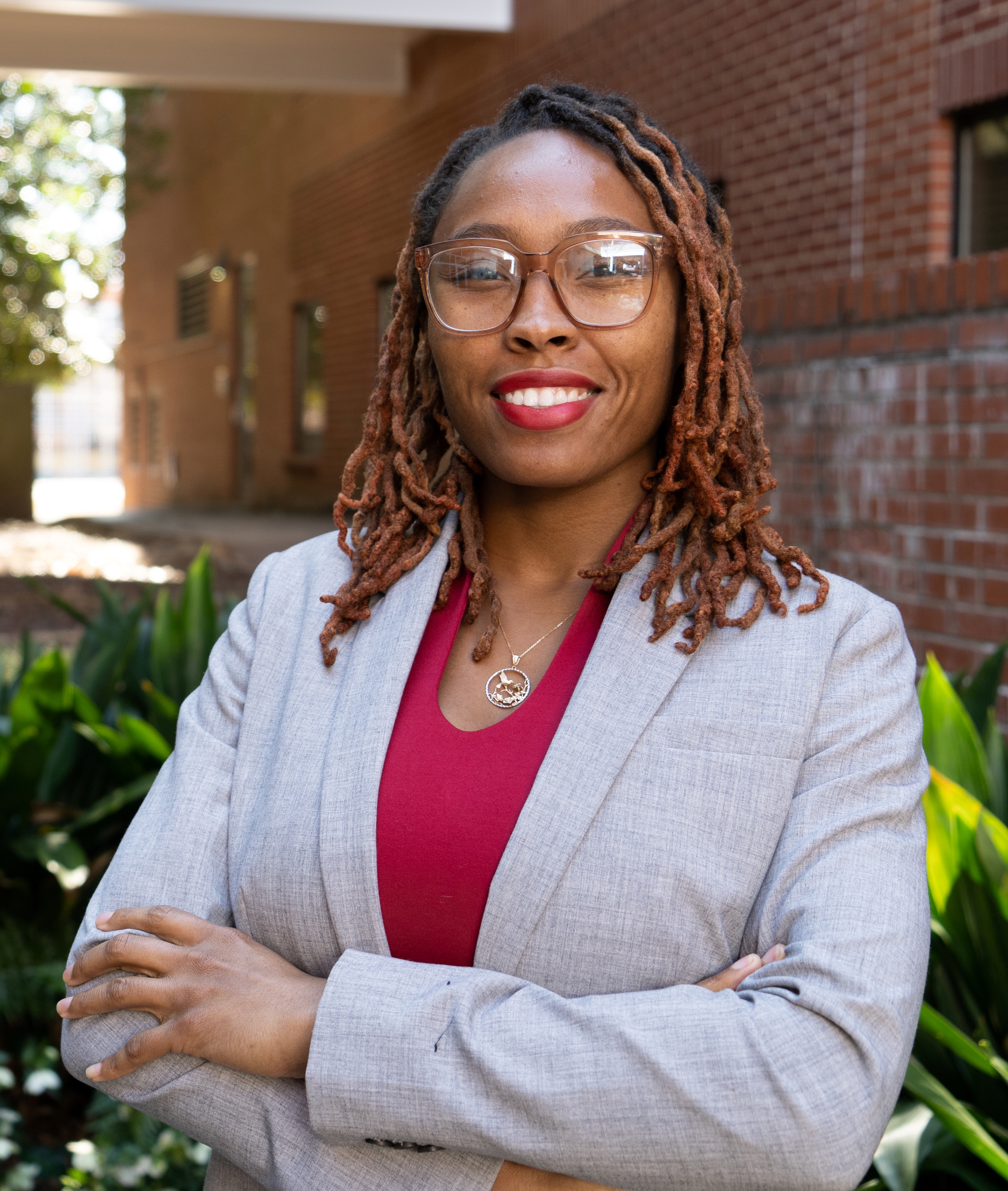
Deja Perkins
Host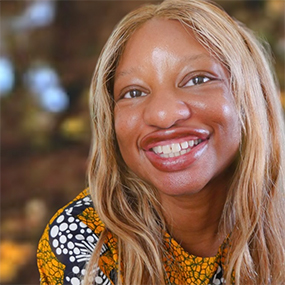
Jazzi Johnson
Managing Producer
Mark Bramhill
Senior Producer
Sam Johnson
Producer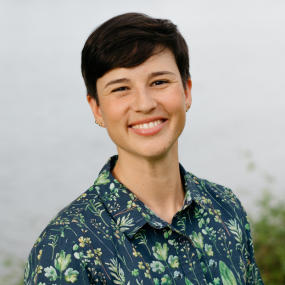
Ariana Remmel
Fact Checker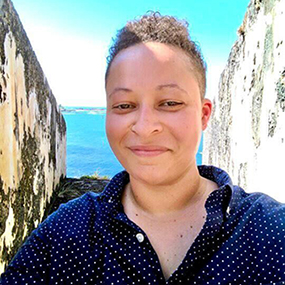
Jonese Franklin
Content Director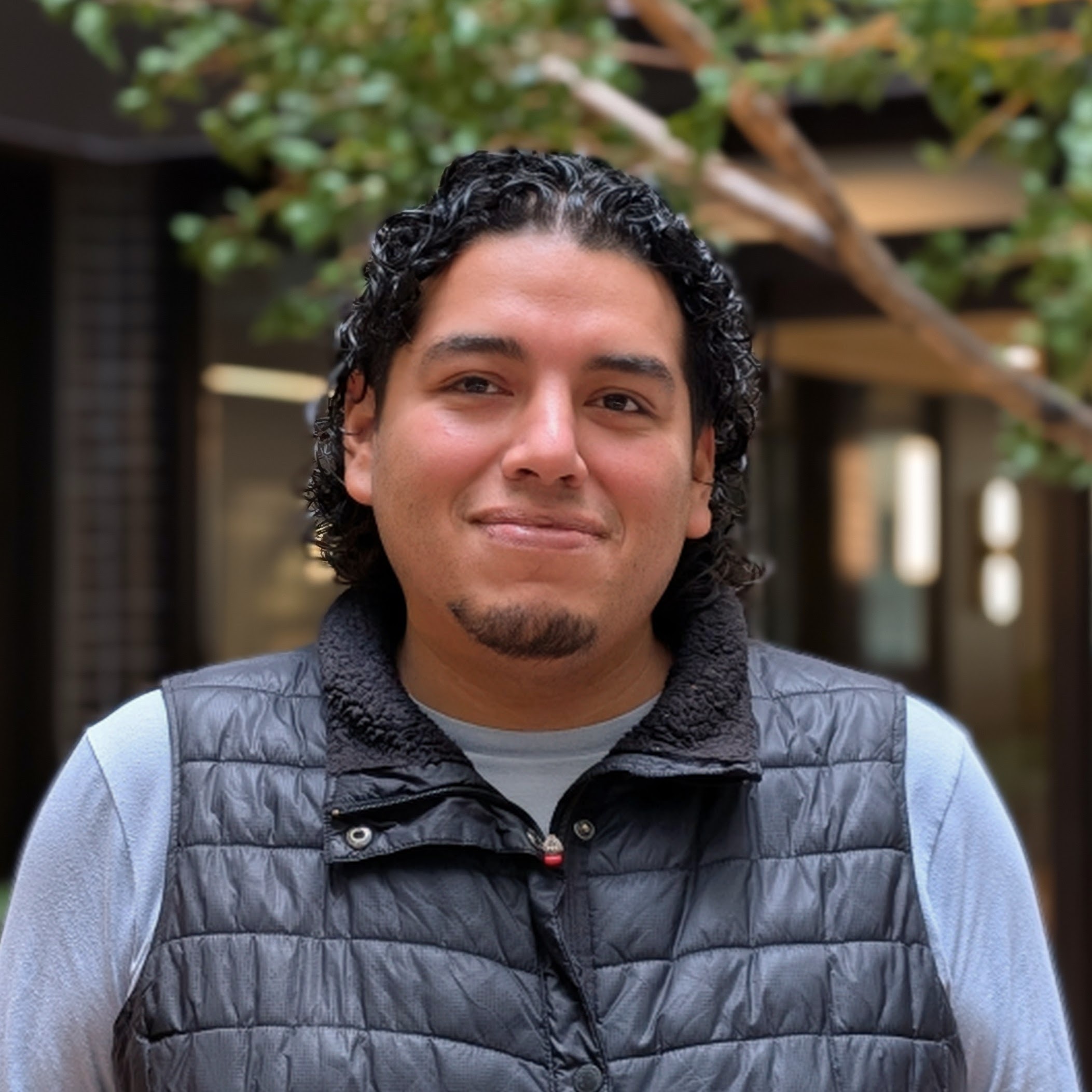
J’orge Garcia is a Chicago-area birder who brings his unique skillset from working to support Chicago's maker community into our great birding community. He first discovered birding after modeling a 3D-printed lens mount to attach vintage lenses to a mirrorless camera. Jorge shared his birding journey online through Twitter as he explored printing postcards and learning about Chicago's avian diversity. Sharing online led J'orge to become increasingly involved in the local birding community.
Today, J’orge serves as Director of the Windy City Bird Lab, leading projects such as the Chicago Bird Migration Monitoring Network, which studies bird migration across the region and has expanded to support monitoring in Minnesota, California, Colorado, and Mexico. The Windy City Bird Lab is soon opening its doors to a new collaborative space on Chicago’s Near West Side, creating a hub for community-led science and the development of new technologies for bird conservation.
Sights & Sounds