
Join BirdNote tomorrow, November 30th!
Illustrator David Sibley and actor H. Jon Benjamin will face off in the bird illustration battle of the century during BirdNote's Year-end Celebration and Auction!
Attack on the Endangered Species Act
Bring Birds Back Season 8, Episode 1: Let’s talk the ESA, the plight of the Lesser Prairie-Chicken, and more.

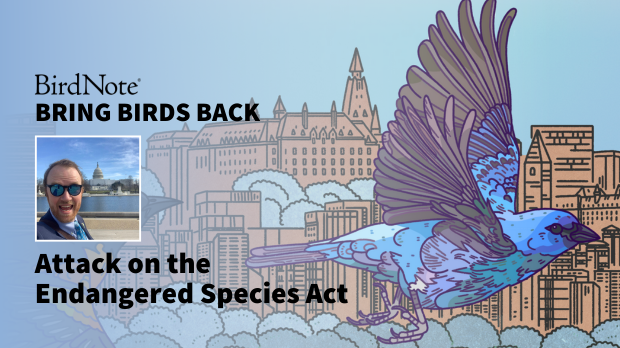
In this season 8 premiere of Bring Birds Back, host Deja Perkins returns with legislative strategist from the American Bird Conservancy, Hardy Kern. Hardy shares the history of the Endangered Species Act, how the legendary law is being challenged by the current administration, and what we’re due to lose should these proposals pass. Then, he talks specifics about the plight of the Lesser Prairie Chicken– and why they need our help today. Tune in right now!
For general General ABC questions regarding how to get involved, (membership, etc.), reach out to [email protected]. For anyone who has questions specifically regarding the Endangered Species Act, Hardy encourages you to directly contact him at [email protected].
Want more? Stay up to date by following us on your favorite podcast app and on Instagram @BringBirdsBack!
For more about BirdNote, sign up for our weekly newsletter. And for ad-free listening and other perks, sign up for BirdNote+ here.
Learn how you can get involved in our From Love to Action campaign when you visit this page!
BirdNote is a nonprofit. Your tax-deductible gift makes these shows possible.
Bring Birds Back Season 8 is sponsored by the Cornell Lab of Ornithology’s Bird Academy.
Deja Perkins: BirdNote Presents.
[music starts]
Deja: Welcome to Season 8 of Bring Birds Back. My name is Dr. Deja Perkins. I am an assistant professor of Forestry at Tuskegee University. I’m a birder, researcher, and community builder, you also may know me across social media as Naturally Wild or as the co-host from season 6.
This season, we’ll explore how bird conservation benefits from technology, legislation, and even hunting. We’ll dabble in the variety of careers it takes to make conservation work, and no surprise here, the possibilities are endless– no matter your niche. We tap into cycles of resilience and the communities coming together to monitor and protect birds and the habitats we both share.
In this premiere episode, we’re talking policy, collective action and activism. In 2024 and 2025, there was an explosion of Instagram posts advocating on behalf of the environment in the face of many proposed policy changes at the state and federal levels. On the state side, the protests surrounded hundreds of acres of land being destroyed for sports recreation. Federally, many were bringing light to some key changes to a piece of legislation called the Endangered Species Act.
Today, we’re diving deeper into the cause and effect of these proposed federal changes. And we’re speaking with legislative strategist for species on the brink, Hardy Kern.
[Music transition]
------------------------
Deja: Hi Hardy. Can you introduce yourself to us and our audience? Tell us who you are and what you do.
Hardy Kern: Hey, Deja. Yeah, I'd be happy to. My name is Hardy Kern. I am Director of Government Relations for American Bird Conservancy. And my job is to help birds through laws, through regulation, through policy at the federal, state, and local levels. I specialize in environmental contaminants and the Endangered Species Act.
So I am a work-from-home bird policy specialist, which is the weirdest job in the world, but I'm so, so lucky to have it.
Deja: Wow. Can you share a little bit about the American Bird Conservancy, the organization's overall goal and maybe a little brief history?
Hardy: For sure. American Bird Conservancy was founded in 1994, and our tagline is that we take bold actions for birds and we conserve birds in their habitats across the Americas. We are technically an international non-profit. We do work all the way up in Canada and then all the way down through Latin America and the Caribbean because birds that are migrants need somewhere to go when they are not breeding up in North America. And we have staff in 34 of the 50 states in the USA. We are all over the place doing everything we can think of to help birds.
We have field staff that are out monitoring bird populations. We have folks that work in the Gulf of Mexico cleaning up beaches for sea birds. We help land owners that are taking voluntary conservation measures to help birds. We have people that work in South America and Central America trying to make things like coffee farms and cacao farms more bird friendly.
We have a whole team of people that help to reduce birds colliding with windows by training architects and testing glass. We have a gentleman whose whole job is to try to get people to keep their cats indoors so that they're less of a threat to birds. So we are ingrained in so many different bird conservation efforts.
Deja: That's awesome. Y'all seem like the bird conservation organization.
Hardy: Well, we try, we try. We have a lot of great partners we get to work with. But yeah, I think, I think we're pretty cool. We like it.
Deja: So how did you get involved in a bird organization yourself? Are you a birder or what is your origin story into the bird world?
Hardy: I was a kid that loved nature. I loved wildlife. And I thought I was going to grow up to be a veterinarian. So I went to Ohio State University and I studied zoology. And after one internship at the vet school there, I went, ‘Okay, yeah, I, I don't think this is for me.’
And I thought I would maybe be a researcher, so I started taking a bunch of courses centered around research of wildlife. And as part of that, I took a field ornithology course. It was really the first time I was exposed to the fact that there's more than just robins and cardinals and Blue Jays.
If you had asked me in college when I started, ‘Oh, are you a birder?’ I would've said, ‘Yeah, you know, birds are fine. They're not really my thing’. And then I woke up one morning, clutching my field guide and excited to wake up at 5:00 AM to go out and look for birds. And I was like, ‘Oh my God, I'm a birder, I became one of them’.
And by that time I had realized my favorite thing was getting people excited about wildlife and seeing what they could do to try to help them. And then this opening came up at American Bird Conservancy to work on policy that would help advance bird conservation. And I was lucky enough to get it. So that's- that's how I got here.
Deja: No, that's great. I see so many parallels to my own story and yes, I agree. You know, one day you just wake up and it's like, ‘Oh, birds are everywhere and they're beautiful.’
Our, so our focus today is really on the Endangered Species Act, which makes you the perfect guest. And that's something that you and your team work on extensively. So can you share with us: What is the Endangered Species Act? And can you walk us through a little bit of its history?
Hardy: Very gladly.
[Music starts]
So the Endangered Species Act is a federal law that was signed in 1973. There was a big national celebration in 2023 for the 50th anniversary of the ESA, you can say to impress your friends at parties. And the Endangered Species Act was not the first law in the United States aimed at wildlife conservation. There were a few different laws starting in the ‘20s and ‘30s for bison, there were some protections trickling in for birds, some around marine mammals as well.
But it became pretty apparent that all of these different approaches were not helpful. It was really hard to plan for what constitutes a species that needs a lot of support. And this was also coming at a time when we were seeing human impacts really starting to deplete wildlife populations, particularly around a chemical called DDT: Dichloro-diphenyl-trichloroethane. (Try saying that five times fast.)
But we had scientists like Rachel Carson and we had amateur birders actually starting to notice that there were fewer and fewer Bald Eagles and Peregrine Falcons. And because people started to raise the alarm, this connection was made between humans using this particular chemical, DDT, and wildlife populations going down.
But Congress decided that the best way forward was to have one law that would help set rules and policies and a process for when species in the US or when habitats needed a little bit of extra help.
[Music stops]
Deja: So, how does a species get protection status under the ESA?
Hardy: It essentially said that for a species to get federal protection it needs to have a demonstrated depletion in its historic populations, be on the verge of going extinct or about to become extinct, and a plan put in place for recovering it from its current status.
And so an individual or a group or a government agency like the Fish and Wildlife Service can say, ‘We have all this data that shows that the species is in decline. We are going to formally petition the government to say, we think that this species needs to be listed.’ And then get some extra protections.
That gets reviewed. And if the Fish and Wildlife Service says, ‘yes, your data looks good, we think the species warrants protections under the Endangered Species Act,’ it then gets a designation of either threatened or endangered. And once a species is listed under the ESA, you also have to say what its critical habitat is, which means where are the areas it really needs to be restored or protected in order for this species to bounce back.
And once you have all of that laid out, a bunch of new protections kick in. So there is access to federal dollars to fund recovery efforts. There are additional checks and balances that you have to go through before you were to start a new construction project or start digging for fossil fuels or other resources in the areas that they live.
And the ESA also says you need to have a concrete plan in place with checks every five years to determine how well your plan is working and what challenges you might need to overcome. So, it's been very successful since 1973. My favorite stat to share is that 99% of species that have been listed under the ESA did not go extinct. And that's pretty flipping phenomenal.
Deja: Yes. That's amazing. It seems like that is a landmark piece of legislation, a huge win for birds and other species. Can you give us an example that illustrates the difference between endangered and threatened?
Hardy: Great question. So a species that is listed as threatened is typically a species that has its populations going down over time. So, these are usually species where we have five years to multiple decades of data that say their populations are going down and here's a few of the reasons that we think are contributing to it. But this species isn't so depleted that it's on the verge of going extinct or functionally extinct, which means they could live in human care but they will not survive in the wild anymore. Then you have an endangered species, which is a species that is on the verge of going extinct.
[Music begins]
Deja: So, I've heard a little bit about what's going on with some potential changes to the Endangered Species Act. Can you walk us through what are the primary proposed changes now in 2025?
Hardy: Yeah, so it's been a really interesting year for the Endangered Species Act. The Endangered Species Act says if you want to build a highway, if you want to build a warehouse, if you want to drill for natural gas, you need to look and see if the actions you are about to take might harm a species or might threaten their critical habitat. So there's some really, really key elements built in there, a lot of checks and balances that the administration is trying to take off the books.
One of the big ones is the administration is trying to redefine "take" and take in a legal sense meant someone that was going out to harass or trap or kill or take in as a pet. So you're taking an intentional action to remove a species. Then, later on, people started to realize, ‘well, there's a lot of things that might happen where your intent is not to hurt that animal or kill that animal, but you might build a house, you might dam up a river which interrupts its habitat,’ and that got a second designation, which is called harm. "Harm" means you do an action and the results of that action have a negative impact on an ESA listed species. Any action that could have a negative impact on the species down the line needs to be brought up and thought through.
The current administration is trying to redefine harm to mean the same thing as take. Essentially, what they're hoping is that the only actions that would be considered harmful to an ESA listed species are ones where your goal is to go out and hurt or kill or trap that animal.
And if you are doing something like building power lines or drilling for oil, you might remove the lekking grounds that the Lesser Prairie-Chicken needs, and that would no longer constitute harm, which means you're not violating the Endangered Species Act. You might take an action that isn't going to kill a specific species of woodpecker, but you might knock down the trees that they build their nests in, or you might pollute the river that produces a lot of the bugs that they eat. And those actions are going to deplete the species, it's just not your intention when you start doing them.
What the administration is trying to have happen is say, ‘unless your express goal is to hurt that species, you're fine and you can do whatever you want.’ And we don't think that's a great idea.
[Music ends]
Deja: I one hundred percent agree with you. Unfortunately, I feel too often when we have the intersections of industry and environment and even science, we are retroactive and reactive instead of being proactive about things. And so, it's so important that we try to be proactive, um, so that we don't have to work so hard on this work and put all of this money into reestablishing their populations.
Hardy: Could not agree more. I think that's the perfect way to think about it because the way that the law is set up, it is to prevent a species from needing all of these extra considerations and all of this extra time and funds poured into it. But if a species reaches the point where they're gonna go extinct if we don't start to do something drastic, that's when the ESA works really, really beautifully. And there's even other proposals that have been announced, that would say you have to take an economic consideration into account when you're thinking about whether or not to list a species. AKA [also known as], will listing the species potentially be bad for a business, and that's not how the ESA is supposed to work.
There's a proposal that says, if you're threatened, you don't get all the same considerations as an endangered species. Which seems like it's gonna save time and money in the short term, but in the long term it's gonna be way costlier. There's even one proposal that says if a species is not currently occupying an area, physically living in an area, then that area cannot be considered its critical habitat. But if you think about species like birds in Hawaii that are having to move habitat due to climate change, or if you think about species that might use one part of the habitat for feeding and one part for breeding, are we able to say, ‘well, they're not in this forest right now, but we know next year they will be’?
If we can't protect that area, they've got nowhere to go. And then they're gonna need even more time and money later on. So you're- you're preaching to the choir here, but it's exactly right. The way that the ESA is set up, it's to prevent us from needing to do a ton of investment in species later on. And those are the very things that are being attacked right now.
Deja: Yes, I absolutely agree. It's– It's not a zoo. The Earth is not a zoo.
Hardy: Yeah, yeah, exactly.
Deja: They're not gonna stay in one location, especially when you have taxa like birds that have wings and they use stopover habitat.
Hardy: Yeah.
Deja: They have a habitat in the winter and a habitat in the summer. And they travel for such long distances. And so it's just so important that we take all of those things into consideration. Especially with climate change and how ranges are shifting with the increase in temperature.
And so, I really hope that none of these proposed changes come to pass. But I do have to ask, have any of these changes been accepted or is advocacy and voting still ongoing?
Hardy: As of now, they have not yet come to pass, but we know that they will. In the first Trump administration, these were the exact same things that they did then. They tried to redefine harm - you know, habitat designation, economic consideration, the threatened versus endangered status - and it was challenged in courts. And then under the Biden administration, it was turned back over.
That, on the good side of things, [it] shows me that when we use our voices, when we reach out to our elected officials, when we participate in comment periods that our government has, it works.
Deja: That- that gives me a couple additional questions in my head. I've been seeing a lot of comments floating around on social media – especially during this kind of unprecedented time, this unprecedented administration – about whether these tactics still work.
I know people are wondering, is calling your representative, are those things still working? When it seems like our congressmen and women may not be actually representing us at this current point of time. Like, is this strategy still working, as a way for the public to advocate for birds?
Hardy: I completely hear you. And don't, don't you miss precedented times a little bit? I am, I'm getting tired of unprecedented times. I'm ready for some precedent again. [Laughs] Uh, but to your question, as someone whose full-time job it is to interact with these staffers and members of congress and agency officials, it does feel like what we're doing might be futile, but I can promise you: it absolutely is not. If they're not hearing anything from their constituents about how important bird conservation is or the Endangered Species Act or habitat preservation, then they don't know what they need to do. They don't know that that's something that their constituents care about.
[Music begins]
Deja, I want you to guess how many calls it takes from a constituent before an issue gets put before a member of Congress on average.
Deja: Whew. I– I'm gonna guess, uhm, maybe a- a couple thousand?
Hardy: Right. That's what I thought too (before I started doing this). It can be as few as five or 10. If they hear five or 10 phone calls about an issue, that's enough for a staffer to start running it up the chain and say, ‘This is something that we're hearing about’.
Even just recently, the bill that says how much money the EPA gets, how much money Fish and Wildlife gets, [it] had a lot of language in there about delisting certain species or preventing Sage Grouse from having habitat designated as critical habitat for them.
That was all written in there and people started doing a ton of outreach. People started calling the representatives, calling their senators, and then when the Senate version came out, it didn't have any of that in it. It didn't have any language targeting endangered species. And the House version of the bill, even when it did start to get voted on in hearings, a lot of those things were stricken from the record. Because people were saying, ‘I heard a lot about this particular Endangered Species Act provision and the people who voted me in here are gonna be really upset if it stays’.
I think especially in times like this, it can be very hard to know what to focus on because it seems like there's so much coming at us all at once and we're hearing about all these things happening and all these areas that we might care about. But even if you'd pick just one thing every month, and say, this is important to me. I'm gonna speak up about it. I'm gonna send an email, I'm gonna make a call – and I'm happy to help any of your listeners do this. That is going to make a difference because they work for us, they represent our interests. And I see these things work every single day. Wildlife can't speak for itself, it's up to us to do that.
[Outro music begins]
Deja: After this short break, Hardy will talk about the ongoing fight for the rights and protections of prairie-chickens– and why they and their habitat are so important. Plus, a few other birds that should definitely be on your local radar. And later, we’ll get into the real culprit behind these issues- like big corporations- and what you can do to fight back.
Be right back.
MIDROLL
Deja: Welcome back. I’m Dr. Deja Perkins and I’m with Hardy Kern from the American Bird Conservancy. We’ve been talking about the Endangered Species Act, and the proposed changes that could drastically change its effectiveness, having a tremendous impact on at-risk wildlife. We’ve explained the potential changes to the law itself, but now, let’s get a little more specific.
[Bubbly Sounds of Lesser Prairie-Chicken]
There are so many issues that go in front of Congress and there are so many important issues to cover that we definitely all have to do our part in making sure that they understand why these different issues are important. So, let's talk a little bit more about the Lesser Prairie-Chicken.
[Crowing of Lesser Prairie-Chicken]
I wanna know what's the deal with the Lesser Prairie-Chicken and what is the most concerning litigation happening around the prairie-chicken that everybody should be aware of?
[Mischievous music begins]
Hardy: Yeah. Deja, these poor little birds- these poor little prairie-chickens! So, they were initially petitioned a little over 30 years ago to need Endangered Species Act protections. And for decades, they received a status called “warranted but precluded,” which means they deserved endangered species act protections but we have other stuff to do and we don't have time or resources to list them right now. So, their can was kicked down the road for years and years and years. And groups kept petitioning and biologists kept weighing in and saying, ‘yeah, these birds need our help’. So, finally, in 2022, they received Endangered Species Act protection with some being threatened and some being endangered.
And so Fish and Wildlife did something it hadn't done in a long time, which was put out their listing decision in 2022 and then wait a whole year before they started enforcing it because they wanted to give all the voluntary conservationists time to adjust; all the landowners that were working with groups like American Bird Conservancy and our partners to do the right thing for Prairie-Chickens and to make sure that they weren't gonna get in trouble, that they had time to adjust to the ESA protections – and they did it beautifully.
And then there was a huge effort undertaken to remove them from the Endangered Species Act. That can happen either through a court decision or because the species has gone extinct, or because the species has recovered enough to where they no longer need protection. The birds just got listed so we know that they haven't recovered yet; the birds haven't gone extinct, thank goodness, so that's not a reason. They started having laws introduced in Congress that said, ‘we're gonna pass a law that prevents the Lesser Prairie-Chicken from ever receiving endangered species protections’.
And then, this year, we saw that a lawsuit was brought and the lawsuit said, ‘Hey, Fish and Wildlife made a big mistake in 2022. Because of that, we are invalidating all 30 years worth of work that went into listing this bird’. This is years and years of work that is being completely sidestepped for a bird that really needs our protection. So, you wanna talk about unprecedented? We had Congress voting on bills that said this beautiful little bird does not deserve to be saved anymore because we want to build stuff in its habitat - that's never happened before. So yeah, like I said, I need some precedented, I'm done with unprecedented.
Deja: Those poor, poor prairie-chickens.
Hardy: I know. Ugh.
Deja: Why do they have so many enemies?
Hardy: It’s mostly energy development. The biggest enemy of the Lesser Prairie-Chicken is where they live and how they live their lives. So Lesser Prairie-Chickens are lekking birds, which are birds that will hang out in really big open prairies and then they dance for each other. And sometimes the ladies, and sometimes the gentleman, will wander through and check out everybody's dance or their habitat. And then once they partner up, they disperse over a wide area to raise their chicks away from a lot of other disturbances. So they like it quiet. And because of that, even though there aren't that many Lesser Prairie-Chickens left, they need a lot of area in order to recover. And a lot of that area is places where people might want to put oil wells or wind turbines or build a highway or start grazing cattle or something like that.
And if these birds get Endangered Species Act protection, doing all those things becomes a lot harder. It becomes a lot more cumbersome for those companies which have other options which could build their things or do their activities in other places. But they want the land where the prairie-chickens are. And it is much, much, much easier to do it if they don't have Endangered Species Act protection. So, these birds are living their life in the place that they have always lived it, in the place that they are literally built to live it. And that is their biggest downfall right now.
[music selection ends]
Deja: Mmm. I feel like the prairie-chicken is going through a lot of similar things to some human communities as well when they're kind of getting kicked off of their lands. And, you know, new developments coming in and pushing them out of their home ranges.
Hardy: Yeah, totally.
Deja: So I have to ask: In knowing the harms that can result from these changes, what is the biggest hurdle when it comes to fighting these major corporations and advocating for the prairie-chicken?
Hardy: I think the biggest hurdle is probably making a case that people who don't just care about birds want to hear about. You know, certainly me and I think you and a lot of your listeners are like, ‘well, it's a beautiful bird, it deserves to be there, you know, it adds biodiversity to an area and we came into its habitat’. And that's more than enough argument for us.
But when you go up against corporations and energy developers who are saying, ‘well, no, we wanna bring cheaper energy,’ or ‘we wanna bring more jobs or business to an area’- I'll admit, that's a hard narrative to fight against. But when you start thinking about what it means to have a Lesser Prairie-Chicken in that area, that means that you have a prairie that is supporting thousands of different species, which are helping control pests; which might be pollinating crops; which are ensuring soil health; which keeps dust reduced; which means that you're gonna have fewer dust storms; which means that there are greater species diversity feeding other species that people might want to hunt or pay money to come in and see. So, you're supporting a local economy.
When we have Lesser Prairie-Chickens in an area, it means that we have protected spaces for people to go out and maybe recreate in or that can be a bastion for other species to move into as well. If you have safe prairie-chicken habitat, it means that you have safe prairies, which means that if you are building a housing development somewhere else, all of those species need somewhere to go, and these areas protected for the prairie-chicken might be a refuge for them as well.
So it can be hard to build that narrative, but there was this beautiful survey done by the Fish and Wildlife Service two or three years ago, and it found that 96 million Americans self-identify as birders. 96 million Americans. That's about one-third of all Americans identify as birders, and they spend billions. Billions with a ba-ba-ba-B in dollars every year, driving around, flying around, spending money in restaurants and hotels and cafes and local stores while they're out there looking for birds. So there's an economic argument to be made. Birds are the species that help eat the bugs that we don't want to bite and sting us.
Birds pollinate crops, birds poop places, which helps to fertilize other plants and spread native seeds. Birds do all of these things that benefit us economically, and I think it's important to sometimes make those arguments. I know it should be enough that they're beautiful and we have 'em out there and they're hanging out, but birds do so much for us. This is the very least that we can do for them.
Deja: Absolutely. So what are some of the other primary bird species that conservationists and organizations like the American Bird Conservancy are worried about being impacted by these changes to the Endangered Species Act?
Hardy: One that really comes to mind are the endangered and endemic - which means only found there - Hawaiian species. Hawaii is an island, which means a lot of the species that live there are very, very specialized to that area. So there are some birds that only live in a certain area of forest, but if due to climate change or human activities, they need to leave and go somewhere else, we need to make sure that we can protect a wider area than just where they're living. So the honeycreepers and other native birds in Hawaii are definitely up there with birds that we're worried about.
There's, uh, California Condors, another big one. Big birds with big wingspans and big ranges. They are built to go for miles and miles, and we're seeing them due to successful recovery, start to go further out into Oregon, and into Arizona and some of the other desert states. So we might need to put in a few additional protections and habitats for them outside of where they're currently found.
And then another species is these beautiful little shorebirds called Red Knots. And Red Knots, they have some of the longest migratory pathways of any birds that go between the Americas. They'll go from basically the tip of South America all the way up into the furthest reaches of Canada. And to get there, they need that stopover habitat that you were talking about, which are typically seashores that have open areas of water and a lot of horseshoe crab eggs that they can feed on to fuel up on their migration.
As we are seeing commercial fishing increase and over-harvesting of crabs increase, we're seeing fewer and fewer Red Knots. And so, that's another species that we're very worried about. But the thing that gives me hope is this stuff works. The Kirtland's Warbler, which is found up in Michigan, came off the endangered species list because we started proactively replanting their habitat and protecting areas. Bald Eagles used to be endangered. They came off the endangered species list because we got rid of the chemicals and the environment that were softening their eggs, and now they've bounced back. So we know this stuff works. We know what can happen, and that's what gives me hope.
Deja: I love that. On that note, what should our audience be doing to advocate and fight against these changes and show that they care?
Hardy: You should be talking about it, just in your everyday lives. You know, when you go out birding or if you're having a cup of coffee. You know, I'm not saying, you know, the doctor says: What's wrong with you? And you say ‘the Endangered Species Act is under threat’. Although if you can work it in, that's great. We'll take it.
Um, but when you are talking to other people who are interested in this stuff, or if you're seeing somebody in a park, let them know what's happening. If you are in a position to write to or call your representatives, I think that that is huge. A lot of them have portals online where you can, uh, go online, find out who your member of Congress is, leave them a message right there.
And if you really want to go all the way, participate in public comment periods. Groups like ABC, we like to make that easy. Literally two or three clicks, and you can have a very specific concern raised because it's our job to keep track of 'em, and it's our job to make it easy for you to participate. And I even have some stuff that I prepared to help your listeners, some scripts and some resources that they can look at to make that outreach a little bit easier.
The biggest thing is just keep your hope up and know that we can make big changes. It is possible to reverse these things in a lot of ways if they do come to pass. And [sigh] I, you know, again, it's cheesy. I'll just take my binoculars, I keep 'em hanging here next to my desk. I'll take a five minute walk around my block. I'll see what species I can see, and sometimes even if it's a Blue Jay or even like a House Sparrow and it's doing something cool, I go, ‘okay, that's why I'm doing this’. And that's enough to keep me coming back and fighting.
Deja: You make a lot of really great points. And I wanna add that, I think a lot of bird guides and walk leaders, they serve a really important role in advocating. And, just like you said, having these conversations with the folks. If you're stopping and looking at a bird and someone comes up and says, ‘oh, what are you looking at?’ That could be a great entry point. So we have to continue to have these conversations so that we keep the conversation circulating and things up to date.
[Gentle, hopeful music begins]
Um, I don't know, I feel like there have been a lot of moments of darkness, of sadness, of joy in this episode. And so, I guess, to end on a high note, what keeps you going? What keeps you in a joyful space to keep doing this work.
Hardy: It’s the people. It's the people that I get to work with, the people that I hear from that care about these issues. It's the random person that will write in to the American Bird Conservancy general line - [email protected] if you need it - and say, ‘there's something happening in my neighborhood. I'm concerned about the birds that live here’. Or, ‘I want to write a letter to my congressperson, will you help me?’ And just knowing that people are concerned about these things to the point where they are taking the time to reach out or to want to do something about it. Even the small little wins that we can get of a single line of language tweaked in a bill or a small court decision, or something like that, can have these huge impacts. And it all starts with people that care about birds and care about their habitat because they felt connected to them. That's really what, what keeps me coming back and what keeps me happy.
[Music fades out]
Deja: Well, I wanna thank you so much for coming on the show and sharing your expertise with us. It’s been a joy to talk with you and I think that you've made this very hard conversation fun and light, even though there were a lot of sad and dark moments. So I do wanna ask, is there anything else you wanna share with our audience?
Hardy: I would just like– I wanted to ask you Deja, um, if you had to live a full life as a bird, what species would it be?
Deja: Ooh, I've never gotten that question before. That is really difficult. Um, oh my goodness. I love birds of prey, but they have such a hard life in the beginning and so many of them don’t make it.
Hardy: I know, right?
Deja: So I'm like, I can't pick those. You know, migration is such a difficult journey. I don't know if I could do that. Um, so I think I'd have to go with maybe the Pileated Woodpecker.
[Pileated Woodpecker call]
Hardy: Oh, good one.
Deja: That's one of the birds in my top five. Because I'm such a large bird, people always get excited to see me and sometimes people mistake me with my extinct cousin. And I think that they- they have a- a pretty decent range and I don't have to go too far, so.
[Both laugh]
Hardy: That's a great answer. I always say, for myself, Black Vulture because I think that they're so beautiful. They're so funny and interesting and they're problem solvers. They can scavenge, they can hunt, they can fly really far, or they can never leave a one square mile territory. They're so underrated, you know, and a lot of people give 'em a wide berth until you start to get to know 'em, and then you say, ‘wow, this is such a cool bird’. So, I don’t know, you're kind of selling me on Pileated Woodpecker, too.
Deja: I think we both got some pretty good species there.
Hardy: We would be friends. Our, our, our bird selves would still be friends. And I would still, I'd come on your Pileated Woodpecker podcast if I got the invite, so no problem there.
Deja: I love it. I love it.
Hardy: Yeah.
Deja: I just, I wanna thank you again for coming on. It's really been a joy to talk with you and have you on the show.
Hardy: Thank you so much for the opportunity. I'm so honored to have, uh, been given the chance to talk about this and really appreciate the fabulous questions and the great crew that you have here too.
[Outro Music Begins]
Deja: In this episode, Hardy reminds us of the importance of using our voice to share the issues we care about. Congress has so many pressing matters to discuss, from healthcare and SNAP, to energy and infrastructure, immigration, and the environment. We can’t expect our representatives to be an expert in every topic that crosses their desk.
That’s where you and I come in. We each play a part in shining a light on the issues we care about, because there are a lot of them! Whether you’re sharing via social media or over a cup of coffee, now is the time to have conversations that matter.
Tune in next time for J’orge Garcia of the Windy City Bird Lab. I’ll be talking with him about his unique approach to bridging the gap between birding and tech communities in Chicago to monitor bird migration.
Many thanks to Hardy Kern for his delightfully enthusiastic telling of such an important topic. And the phenomenal work he and many others contribute at the American Bird Conservancy.
And, of course, thank you for listening! To learn more about Hardy Kern, the American Bird Conservancy, and ways you can help save the Endangered Species Act — look for this episode on our website at BirdNote dot org. And follow us @ Bring Birds Back on Instagram for the latest updates about the show.
This episode of Bring Birds Back was created by our production team, including Fact-checker Ariana Remmel; Producer Sam Johnson; Senior Producer Mark Bramhill; Managing Producer Jazzi Johnson; and Content Director Jonese Franklin.
Our music is by Blue Dot Sessions and Cosmo Sheldrake. And this episode was hosted and co-produced by me, Dr. Deja Perkins.
Thanks for listening!
[Music ends]
Post-Credit Blooper:
Deja: Can you play it back, like, one line before he says that?
Hardy: And that’s pretty flipping phenomenal, flipping phenomenal, flipping phenomenal.
Deja: [laughs] Oh! I was like, not the back-to-back like she a DJ?! [Imitates Hardy] “Flipping phenomenal, flipping phenomenal.”
[*Hardy and Deja’s phrases turn into a brief and hilarious DJ mix by Mark Bramhill*]

Deja Perkins
Host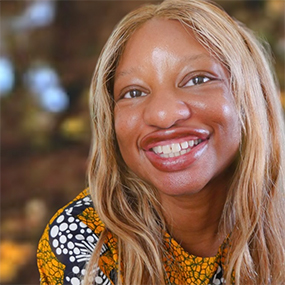
Jazzi Johnson
Managing Producer
Mark Bramhill
Senior Producer
Sam Johnson
Producer
Ariana Remmel
Fact Checker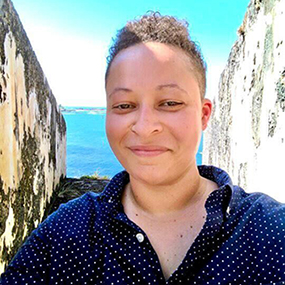
Jonese Franklin
Content Director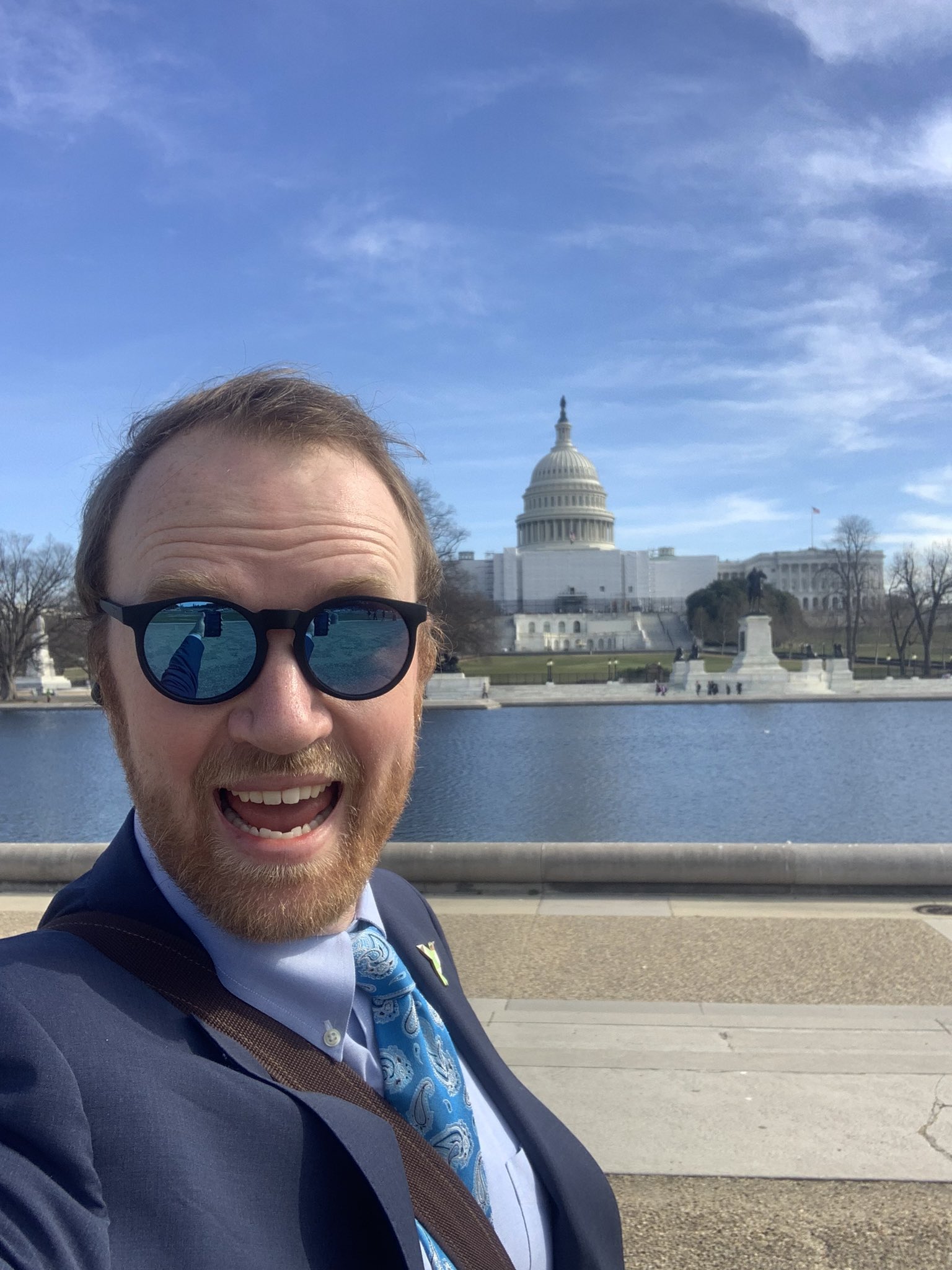
Hardy Kern is Director of Government Relations for American Bird Conservancy. He leads ABC’s Pesticides and Birds Campaign as well as environmental toxicity, public lands protection, and Endangered Species Act policy. Hardy holds a Master of Public Administration from Kent State University and a B.S. in Zoology from Ohio State University. He lives in Columbus, Ohio with his wife, pets, and houseplants. Hardy is an avid birder, native plant gardener, reader, and hiker.