
Join BirdNote tomorrow, November 30th!
Illustrator David Sibley and actor H. Jon Benjamin will face off in the bird illustration battle of the century during BirdNote's Year-end Celebration and Auction!
Waterfowl heritage with Kelsey Leonard
Decoys carved by Indigenous hunters record changes in wetland biodiversity.


© Victoria CC/Flickr
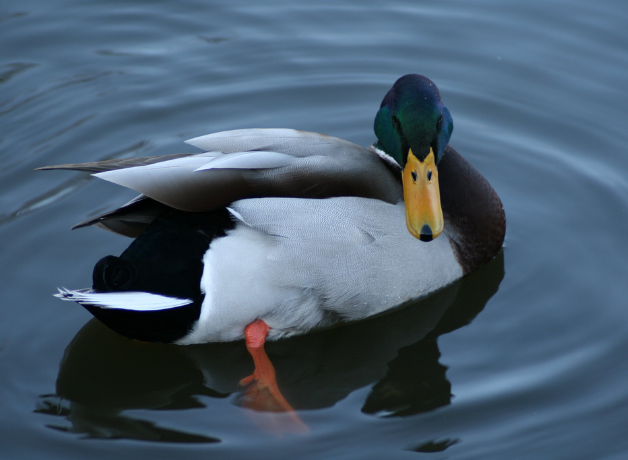
Kelsey Leonard is a leading scholar in Indigenous water governance, climate justice, and Earth law. In the latest season of Bring Birds Back, Kelsey explores the storied relationship between Indigenous people, wetlands, and birds. Kelsey says waterfowl hunters have helped to document that natural history. In many Indigenous hunting traditions, duck decoys are crafted to look so life-like that they can lure free-flying ducks to wetlands where hunters lie in wait. Some of the decoys carved at Shinnecock are more than 100 years old and depict species that are no longer found on Long Island.
Listen to the full conversation in our episode about Indigenous Water Justice in season 7 of Bring Birds Back!
BirdNote®
Waterfowl heritage with Kelsey Leonard
Written by Ariana Remmel
This is BirdNote.
[Duck sounds and wetland ambi throughout]
The Shinnecock people have a long and storied relationship with the wetlands and birds of what is now Long Island, says Indigenous water scientist Kelsey Leonard.
Kelsey Leonard: Birds are our witnesses, their presence or absence signals whether the water, the land are being cared for properly.
Kelsey says waterfowl hunters have helped to document that natural history. In many Indigenous hunting traditions, duck decoys are crafted to look so life-like that they can lure free-flying ducks to wetlands where hunters lie in wait.
Kelsey Leonard: We at Shinnecock, we carved those out of different varietals of wood — and they represent just this broad swath of shorebirds, waterfowl, different types of duck. We have some of those still in the culture material record that are over 100 years old.
Some of these Shinnecock decoys depict species that are no longer found on Long Island.
Kelsey Leonard: These carvings, they're not just artifacts, they're a testimony to that relationship and how just one individual had to have such a unique relationship with that bird to understand how to draw with such meticulous care that they confused and, and deceived other birds. [sound break; then 0:51] And that relationship is very important for how we document a loss of biodiversity and a loss in relationship to climate change.
Learn more about indigenous science and practices in the latest season of Bring Birds Back, available in your favorite podcast app. For BirdNote, I’m Jonese Franklin.
###
Senior Producer: Mark Bramhill
Producer: Sam Johnson
Managing Producer: Jazzi Johnson
Managing Producer: Ariana Remmel
Content Director: Jonese Franklin
Bird sounds provided by The Macaulay Library of Natural Sounds at the Cornell Lab of Ornithology, Ithaca, New York. American Black Duck ML456438771 recorded by Jay McGowan. Mallard ML282279391 recorded by James Remsen.
BirdNote’s theme was composed and played by Nancy Rumbel and John Kessler.
© 2025 BirdNote October 2025
Narrator: Jonese Franklin
ID# PodBBB-41-2025-10-03 PodBBB-41
Jonese Franklin
Narrator