
Image: The Ultimate Bird Drawing Throwdown Showdown Graphic featuring images of David Sibley and H. Jon Benjamin

Join BirdNote tomorrow, November 30th!

Illustrator David Sibley and actor H. Jon Benjamin will face off in the bird illustration battle of the century during BirdNote's Year-end Celebration and Auction!
RESERVE YOUR SPOT

Shows With Contributions by Ariana Remmel

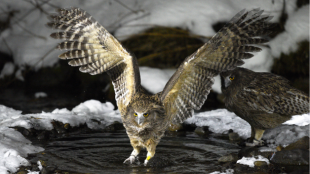
A Blakiston's Fish-Owl catching a fish in a stream with wings spread

An Amazing World of Owls

Owls are magnificent animals that share our cities with us, and live in some of the most extreme environments on Earth. They range in size from huge, like the Blakiston’s Fish-Owl of Eastern Asia, to the songbird-sized Elf Owl, weighing less than half a deck of cards. Owls play key roles…
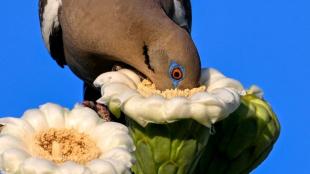
A White-winged Dove with its face in the white, pollen-rich flower of a Saguaro Cactus.

White-winged Doves and Saguaro Cactuses

White-winged Doves are common throughout Central America, the Caribbean, and North America’s Desert Southwest. Like the closely related Mourning Doves, they primarily eat seeds and grains. But in the Sonoran Desert, White-winged Doves time their migration to sync up with the Saguaros’…
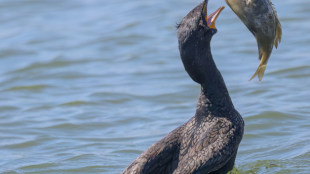
A Double-crested Cormorant tosses a fish it has just caught into the air to swallow it

Cormorants Dive During the Day

At midday, it might seem like the birds that were so active in the morning have gone silent, maybe even vanished. But cormorants rally in the afternoon, offering a second chance to see and hear them. During the breeding season, Double-crested Cormorants have two peaks of fishing activity…
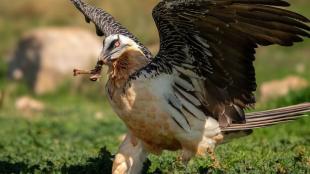
A Bearded Vulture walks across the green ground with wings outstretched and carrying a bone in its bill.

Bearded Vulture Nests are Natural Museums

Bearded Vultures have lived alongside humans for thousands of years. Though these majestic raptors are mostly found in Asia and Africa today, they were once abundant in Europe, too. While Bearded Vultures have vanished across much of their original range, their nests remain like time…
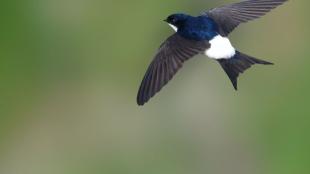
A House-Martin flying with wings outstretched against a blurred green background.

Spark Bird: Olya Weekley And The House-Martins

When wildlife conservationist Olya Weekley was a little kid, she noticed something incredible from her grandmother’s kitchen window: a pair of House Martins had built a mud nest in the eaves of their third floor apartment. That experience sparked Olya’s life-long love of birds. Now she…
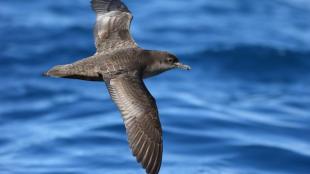
A Short-tailed Shearwater glides above calm water.

Pick Up Plastic for Seabirds

Billions of pounds of plastic end up in our global oceans every year. Birds – like this Short-tailed Shearwater – that mistake this pollution for food often die from malnutrition, poisoning, or damage to their digestive systems. We can all make the world a safer place for birds and people…
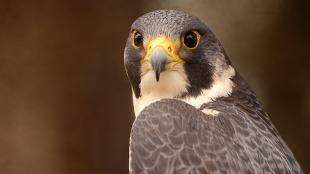
Peregrine Falcon looking toward the camera over its left shoulder.

Rock Climbing Among the Peregrines

Eagle Cliff in New Hampshire’s Franconia Notch State Park is an important nesting site for Peregrine Falcons. Each year, popular climbing routes in the area close temporarily to give nesting falcons their space. After peregrines disappeared from the northeast due to the pesticide DDT…
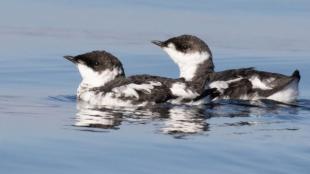
Two Marbled Murrelets in black and white, non-breeding plumage. The birds are floating on the surface of calm water.

Clean Up Crumbs For Birds

Marbled Murrelets are secretive little birds that spend most of their lives at sea — but they breed in redwood forests! While North America’s remaining redwoods are protected in parks, predators are moving in. Stellar’s Jays and Common Ravens are just two opportunists that thrive on our…
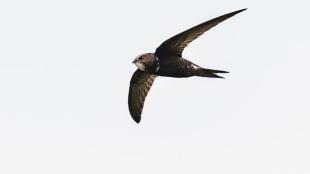
A Common Swift flies across an open, grey sky.

Spark Bird: Adriaan Dokter And The Common Swift

Adriaan Dokter is an aerial ecologist who designs tools to study how birds migrate. On the Bring Birds Back podcast, Adriaan traces his fascination with flight back to an early experience with common birds. Listen to the full episode here and on your favorite podcast app.
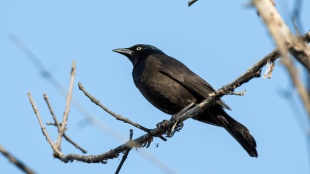
A Common Grackle perched on branch high in a tree with the blue sky in the background

Taking the Bus for Birds

By carrying more people in a single vehicle, mass transit can use less energy than cars. Taking steps to reduce greenhouse gas emissions can help the hundreds of bird species put at risk by climate change. Not to mention, you can do a little birding on the commute – on the way to the bus…