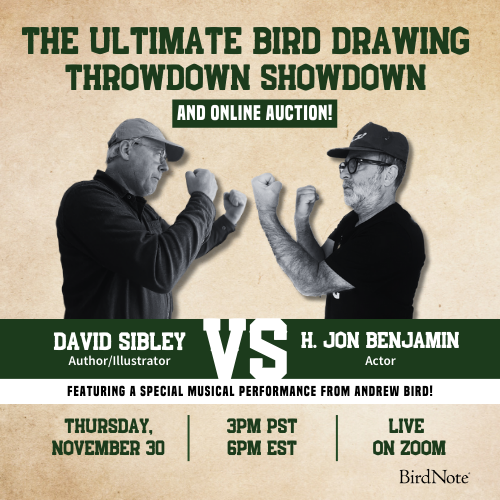
Image: The Ultimate Bird Drawing Throwdown Showdown Graphic featuring images of David Sibley and H. Jon Benjamin

Join BirdNote tomorrow, November 30th!

Illustrator David Sibley and actor H. Jon Benjamin will face off in the bird illustration battle of the century during BirdNote's Year-end Celebration and Auction!
RESERVE YOUR SPOT

Shows With Contributions by Conor Gearin

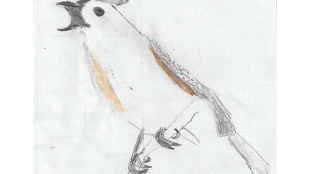
A colored sketch of a Tufted Titmouse perching on a twig and calling

Learning More About Birds by Sketching Them

Many people take an interest in birds as they get older. But others start very early, like one young BirdNote listener named Ben Bradmon. He has been learning how to identify birds by their calls. His favorite is the Tufted Titmouse. He has also begun deepening his knowledge of birds by…
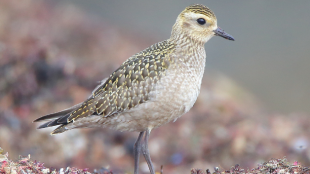
An American Golden-Plover in nonbreeding plumage on the beach.

For Shorebirds, Summer Ends Early

We often think of birds migrating south in the fall. But many species kick off their big trips surprisingly early in the year. Shorebirds nesting in the Arctic tundra are an extreme example. Birds like the American Golden-Plover have a small window of time to build a nest, find a mate, and…
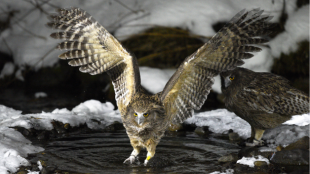
A Blakiston's Fish-Owl catching a fish in a stream with wings spread

An Amazing World of Owls

Owls are magnificent animals that share our cities with us, and live in some of the most extreme environments on Earth. They range in size from huge, like the Blakiston’s Fish-Owl of Eastern Asia, to the songbird-sized Elf Owl, weighing less than half a deck of cards. Owls play key roles…
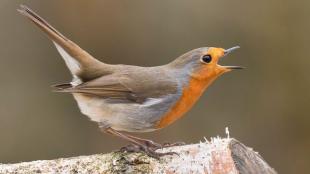
A European Robin singing on a log.

Singing Under Streetlights

Some birds have always called nocturnally, but other species are relative newcomers to the nighttime music scene, specifically in urban areas. Birds such as European Robins often sing well into the night. Scientists are studying what environmental cues might lead to this behavior. While…
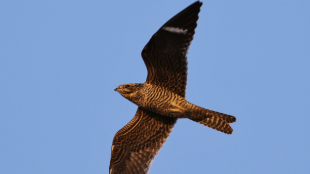
A Common Nighthawk in flight with wings outstretched and vertical white wing stripes visible

Common Nighthawks at the Ballgame

An evening baseball game isn’t the only thing illuminated by the bright stadium lights. High in the air, countless flying insects are drawn to them. And those insects are a perfect snack for the game’s avian attendees! Common Nighthawks swoop with their wide mouths open to hoover up the…
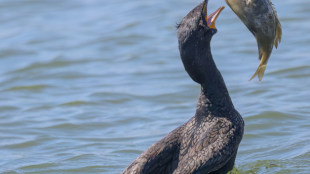
A Double-crested Cormorant tosses a fish it has just caught into the air to swallow it

Cormorants Dive During the Day

At midday, it might seem like the birds that were so active in the morning have gone silent, maybe even vanished. But cormorants rally in the afternoon, offering a second chance to see and hear them. During the breeding season, Double-crested Cormorants have two peaks of fishing activity…
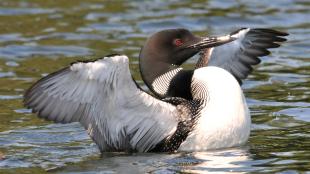
Un colimbo común (Gavia immer) que flexiona sus alas desde el agua

Las aves buceadoras son densas

Mientras muchas aves tienen huesos huecos que facilitan el vuelo, las aves buceadoras están diseñadas de otra manera. Los huesos de buceadores como el colimbo común (Gavia immer) son más densos que los de las aves canoras y otras expertas en el vuelo. Si tuvieran un esqueleto ligero…
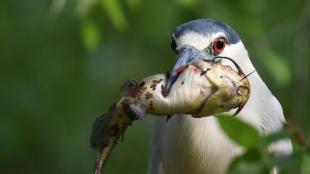
A Black-crowned Night-Heron holding a catfish in its bill.

Zoos as Night Heron Habitats

Zoos can be great places to see birds, and not just in an aviary – wild birds sometimes feel right at home in these urban green spaces. For example, Black-crowned Night Herons love nesting near bodies of water where they can catch fish, frogs, and other prey. They may find that the pond…
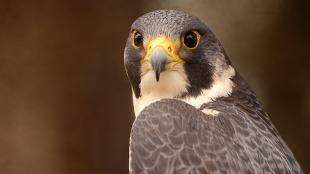
Peregrine Falcon looking toward the camera over its left shoulder.

Rock Climbing Among the Peregrines

Eagle Cliff in New Hampshire’s Franconia Notch State Park is an important nesting site for Peregrine Falcons. Each year, popular climbing routes in the area close temporarily to give nesting falcons their space. After peregrines disappeared from the northeast due to the pesticide DDT…
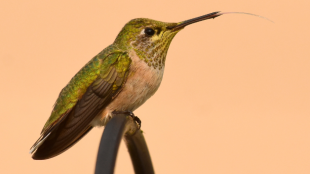
A Calliope hummingbird with its tongue out

The Surprising Secret of Hummingbird Tongues

Hummingbirds use their long tongues to sip nectar from flowers. They’re able to roll their tongues into a tube-like shape. Since the 1800s, scientists thought those tongues worked through capillary action, like how water instantly rises into a straw in a full cup. But when scientists spent…