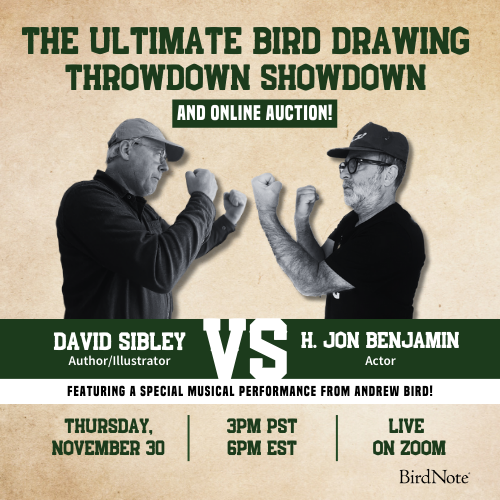
Image: The Ultimate Bird Drawing Throwdown Showdown Graphic featuring images of David Sibley and H. Jon Benjamin

Join BirdNote tomorrow, November 30th!

Illustrator David Sibley and actor H. Jon Benjamin will face off in the bird illustration battle of the century during BirdNote's Year-end Celebration and Auction!
RESERVE YOUR SPOT

Shows With Contributions by Mick Thompson

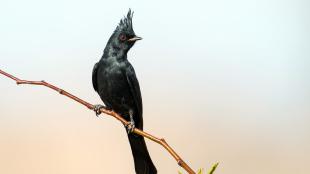
A male Phainopepla glistens in the sunlight, its black plumage including a crest atop its head, and red eye, striking against a clear neutral background.

Phainopeplas Glisten

A slim, sleek bird with a spiky crest, Phainopepla comes from the Greek for “shining cloak.” The name refers to the male’s glistening, inky black feathers, which are set off by piercing red eyes. And if the Greek name isn’t helping you picture it, a common nickname might: the goth cardinal…
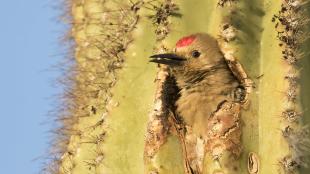
Gila Woodpecker nesting in Saguaro cactus

Making a Home Among the Saguaros

In the arid Arizona desert, where cacti thrive but trees are scarce, the Gila Woodpecker and Gilded Flicker carve out nest cavities in living saguaros. Tall, old saguaros may be pocked with twenty or more nest holes, bearing witness to decades of woodpecker families. The woodpeckers…
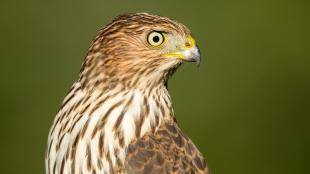
Cooper's Hawk in sunlight, head turned to its left, showing bright yellow eye.

City Hawks Versus Country Hawks

Resident Cooper’s Hawks that nest in the urban areas of Albuquerque, New Mexico, are thriving as the populations of doves, their prey, have exploded. The easy prey gives the urban birds a competitive advantage over hawks in more natural habitats, where prey is less concentrated. The…
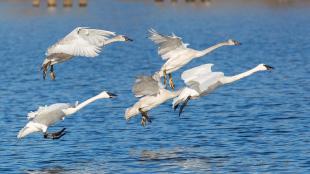
Trumpeter Swans flying in for a landing on a lake, their long necks and beating wings reflected in rippled blue water

Trumpeter Swans Rebound in Arkansas

Trumpeter Swans weigh over 25 pounds and measure about five feet from beak to tail. They were nearly hunted to extinction by the turn of the twentieth century. In Arkansas, a small flock of Trumpeter Swans began spending the winter at Magness Lake in the 1990s. It has now grown to one of…
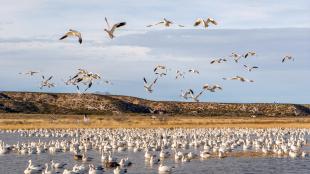
Flocks of Snow Geese, some sitting on a body of water, some in flight, with mountains and cloudy sky in the background

Using Machine Learning to Forecast Bird Migration

PhD student Mikko Jimenez and his colleagues are using machine learning to improve our ability to forecast bird migration. Machine learning is a type of artificial intelligence that can find patterns in huge amounts of data much faster than a person can, and then use those patterns to make…
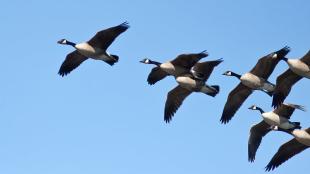
Canada Geese in flight

Canada Geese - Migratory or Not

It's the time of year that geese migrate south for the winter. Isn't it? So why are there so many geese still hanging around, setting up housekeeping on our parks and golf courses? Did they decide to forgo the long trip north? In the early 1900s, non-migratory geese were brought in by the…
A Great-Horned Owl stands facing the viewer, showing its bright yellow eyes, and the tufted feathers ("plumicorns") atop its head.

Great Horned Owls in the Neighborhood

Not all owls live in the deep woods. Many Great Horned Owls make their homes in urban areas. Though mostly nocturnal, Great Horned Owls are also active early in the morning and just after sunset, offering a chance to see them hunting for rodents and other prey. Look for their distinctive…
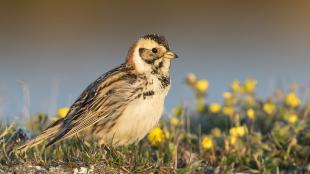
A male Lapland Longspur bird in sunlight on the tundra

Spring Birdsong in the Arctic

Spring has reached the Arctic. Low-growing wildflowers carpet slopes of tundra, and arriving migratory birds begin to sing: Lapland Longspurs, Hoary Redpolls, Snow Buntings, Bluethroats, and more.
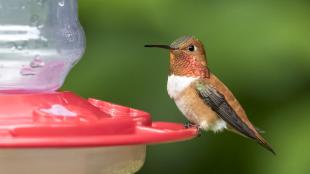
A male Rufous Hummingbird with buff-color breast and reddish orange throat is perched at a nectar feeder

Thirsty Rufous Hummingbird

Hummingbirds need to consume five times their body weight each day. This Rufous Hummingbird of the West is looking for flowering plants to quench that mighty thirst on its spring migration. A feeder would work, too. Put a hummingbird feeder up in your yard, and see who turns up!
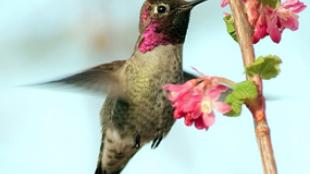
Anna's Hummingbird drinking from flower

A Natural Feast for Hummingbirds

Hoping to attract hummingbirds to your yard or balcony? One way is to grow native plants. Native plants provide cover, and they offer nectar in spring and summer. They also attract insects, the most important part of a hummingbird’s diet. Just add a source of water for drinking and bathing…