
Image: The Ultimate Bird Drawing Throwdown Showdown Graphic featuring images of David Sibley and H. Jon Benjamin

Join BirdNote tomorrow, November 30th!

Illustrator David Sibley and actor H. Jon Benjamin will face off in the bird illustration battle of the century during BirdNote's Year-end Celebration and Auction!

RESERVE YOUR SPOT

Shows With Contributions by Ariana Remmel

Yellow-green Vireo showing pale breast, yellow-green body and wings, and bright red shining eye

Migrations: You're Going the Wrong Way!

During migration, some birds change orientation and travel almost the same distance — but in the opposite direction — as the rest of their species. The phenomenon is called misorientation. First-year birds are particularly susceptible. Many vagrant birds never find their way back on course…
A Black-and-white Warbler perched on a small branch against a green background.

The Black-and-White Warbler

Black-and-white Warblers are tiny songbirds that breed in North America’s deciduous forests and winter as far south as Colombia. They feast on insects gleaned from leaves or plucked from cracks in tree bark. You’ll often find them clinging to tree trunks or the undersides of thick branches…
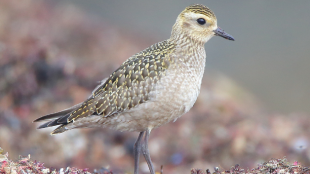
An American Golden-Plover in nonbreeding plumage on the beach.

For Shorebirds, Summer Ends Early

We often think of birds migrating south in the fall. But many species kick off their big trips surprisingly early in the year. Shorebirds nesting in the Arctic tundra are an extreme example. Birds like the American Golden-Plover have a small window of time to build a nest, find a mate, and…
Two Fish Crows flying over water against a city in the background.

BirdNoir: That Crow Sounds Fishy

Every good investigator knows to stay vigilant for suspicious behavior. But not every unfamiliar bird is caw-se for alarm. In this episode of BirdNoir, Private Eye Michael Stein reveals that there’s more to a crow than meets the eye.
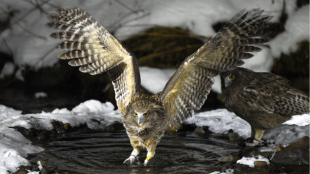
A Blakiston's Fish-Owl catching a fish in a stream with wings spread

An Amazing World of Owls

Owls are magnificent animals that share our cities with us, and live in some of the most extreme environments on Earth. They range in size from huge, like the Blakiston’s Fish-Owl of Eastern Asia, to the songbird-sized Elf Owl, weighing less than half a deck of cards. Owls play key roles…
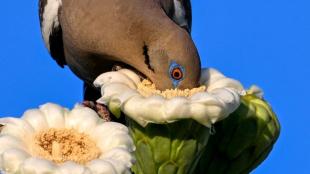
A White-winged Dove with its face in the white, pollen-rich flower of a Saguaro Cactus.

White-winged Doves and Saguaro Cactuses

White-winged Doves are common throughout Central America, the Caribbean, and North America’s Desert Southwest. Like the closely related Mourning Doves, they primarily eat seeds and grains. But in the Sonoran Desert, White-winged Doves time their migration to sync up with the Saguaros’…
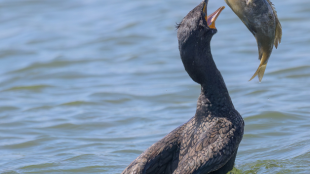
A Double-crested Cormorant tosses a fish it has just caught into the air to swallow it

Cormorants Dive During the Day

At midday, it might seem like the birds that were so active in the morning have gone silent, maybe even vanished. But cormorants rally in the afternoon, offering a second chance to see and hear them. During the breeding season, Double-crested Cormorants have two peaks of fishing activity…
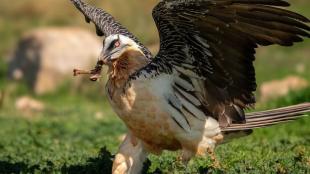
A Bearded Vulture walks across the green ground with wings outstretched and carrying a bone in its bill.

Bearded Vulture Nests are Natural Museums

Bearded Vultures have lived alongside humans for thousands of years. Though these majestic raptors are mostly found in Asia and Africa today, they were once abundant in Europe, too. While Bearded Vultures have vanished across much of their original range, their nests remain like time…
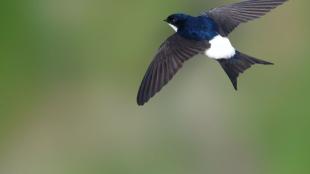
A House-Martin flying with wings outstretched against a blurred green background.

Spark Bird: Olya Weekley And The House-Martins

When wildlife conservationist Olya Weekley was a little kid, she noticed something incredible from her grandmother’s kitchen window: a pair of House Martins had built a mud nest in the eaves of their third floor apartment. That experience sparked Olya’s life-long love of birds. Now she…
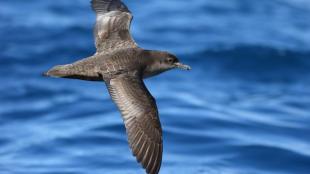
A Short-tailed Shearwater glides above calm water.

Pick Up Plastic for Seabirds

Billions of pounds of plastic end up in our global oceans every year. Birds – like this Short-tailed Shearwater – that mistake this pollution for food often die from malnutrition, poisoning, or damage to their digestive systems. We can all make the world a safer place for birds and people…