
Florida

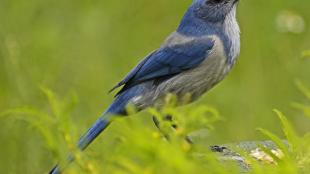
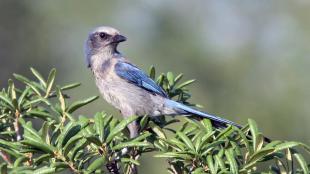
Florida Scrub-Jay

Thousands of years ago, rising sea levels isolated much of the Florida peninsula as an island. During that long isolation, a unique oak-scrub ecosystem developed. The Florida Scrub-Jay is one of many special animals and plants that evolved with this habitat. Because they depend on acorns during... read more »

Corkscrew Swamp Sanctuary

National Audubon's Corkscrew Swamp Sanctuary is birdy at any time of year. But in winter, this mixture of cypress swamp and pineland comes alive with migratory songbirds. On a warm, sunny morning, birds are active all around, from the tops of the tall cypresses to the shrubs along the boardwalk.... read more »

RELATED
Topics & Themes:  migration

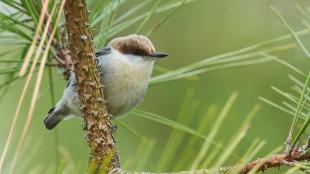
Brown-headed Nuthatches of Apalachicola National Forest

Many Brown-headed Nuthatches make their home in the tall longleaf pines of the Apalachicola National Forest in Florida. Twittering constantly, the birds probe for tiny insects or extract seeds from cones in the trees’ upper branches. Forests of longleaf pine once dominated the sandy coastal plain... read more »

RELATED

Red-cockaded Woodpeckers - Sunrise Vigil in the Pines

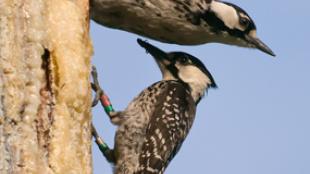
Red-cockaded Woodpeckers require large, old pines in which to nest. They breed cooperatively, and a family of these birds may have several nests in one area. They may also forage together, chattering and flying from tree to tree. The destruction of their preferred habitat – mature southern... read more »

RELATED

Okefenokee Swamp and Prothonotary Warbler

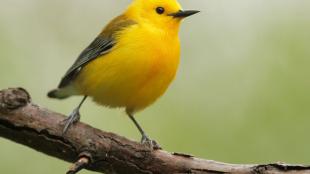
The Okefenokee National Wildlife Refuge was set aside to protect the fabled Okefenokee Swamp of Georgia and Florida. Tall cypress trees and Spanish moss give the swamp a prehistoric appearance. The Prothonotary Warbler is one of the most striking of the swamp’s denizens. Having wintered in the... read more »

RELATED

The White-crowned Pigeon

The Florida Keys extend from the state's peninsula like a string of pearls, and pearls they are, in their uniqueness and value. Stands of hardwood trees rise above the islands' level ground. These trees draw many birds of the Caribbean to the keys' tropical habitat. One of these is the White... read more »

RELATED

Dry Tortugas Archipelago

From a bird's perspective, the Dry Tortugas in the Gulf of Mexico can be a life-saver. Millions of migratory songbirds fly north across the Gulf and Caribbean each spring, headed for North America. If they run into heavy wind and rain blowing down from the continent, the Dry Tortugas provide... read more »

RELATED
Topics & Themes:  migration

When Birds Ruled the Earth

A bird known as Titanis walleri made its home in Florida just a few million years ago. Titanis, as its name suggests, was titanic indeed - a flightless predator, ten feet tall, with a massive hooked bill. Titanis and other birds related to it belong to a group some paleontologists call the ... read more »

RELATED
Topics & Themes:  fossil, science

Wood Storks and Climate Change

Wood Storks nest in trees, often in big colonies, and only when conditions are just right for them. Because of their feeding technique, they thrive in the early part of the dry season, when receding floodwaters concentrate fish in small pools. But this method of feeding is effective only when the... read more »

RELATED
Topics & Themes:  nesting

Snail Kite - Bird of the Everglades

When Florida became a state in 1845, the legislature declared the Everglades, America's largest wetland, totally worthless. In 1905, Napoleon Bonaparte Broward was elected governor on a campaign to drain them. So over the years, the slowly flowing "River of Grass" has been replaced by a series of... read more »

RELATED

Pages