
South America

Plan Your Next Birding Trip!

Planning a trip? We’ve pulled together some online resources that can help you find that special place for birdwatching—or special bird—on that family vacation across the state or that business trip to the other side of the world. read more »

RELATED
Topics & Themes:  birding, birdwatching

Kingdom of Rarities - Featuring Eric Dinerstein

Why are some creatures rare and others common? What forces – natural and manmade – cause rarity? Eric Dinerstein of the World Wildlife Fund travels far and wide for answers. He wonders how different the world could be with a few changes: “. . . what if we started caring about rare wildlife with... read more »

RELATED

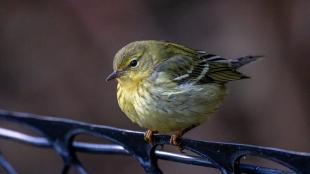
Blackpoll Warbler Migration

Blackpoll Warblers make the longest migration of any North American songbird, an annual round trip of eleven to twelve thousand miles. In August, the warblers leave Western Alaska and head east across Canada to the Maritime Provinces and the coast of New England. Then, the tiny songbirds fly over... read more »

RELATED
Topics & Themes:  migration

Galapagos Archipelago - Melville's Encantadas

Herman Melville, author of Moby Dick, described the Galapagos, a group of volcanic islands in the Pacific, as: "an archipelago of aridities, without inhabitant, history, or hope of either in all time to come." Charles Darwin also found the Galapagos' stark landscape on first view hellish to... read more »

RELATED
Topics & Themes:  science

Dancing with Birds - With Heather Murphy and Rhona Baron

Like migratory birds, the dances of North America travel from nation to nation. Beautifully colored songbirds may breed in the far north, but they winter in Central and South America. During a Zumba class, Heather Murphy realized this combination of dance, music, and culture might be used to... read more »

RELATED
Topics & Themes:  migration, music

Trogons Nest with Wasps

The Violaceous Trogon, which nests in Mexico, Central America, and northern South America, often excavates its dwelling within a large, active wasp or termite nest. It begins by devouring some of the insects, then digs a cavity large enough to accommodate the birds and their eggs. While they may... read more »

RELATED
Topics & Themes:  nesting

When Birds Ruled the Earth

A bird known as Titanis walleri made its home in Florida just a few million years ago. Titanis, as its name suggests, was titanic indeed - a flightless predator, ten feet tall, with a massive hooked bill. Titanis and other birds related to it belong to a group some paleontologists call the ... read more »

RELATED
Topics & Themes:  fossil, science

Short-eared Owl

Flapping with deep, slow wing-motion, a Short-eared Owl appears almost to float above the ground. This owl has an extensive world range, including North and South America, Europe, and Asia. Still, it's declining, due to development, agriculture, and overgrazing. American Bird Conservancy and... read more »

RELATED

Buff-breasted Sandpiper

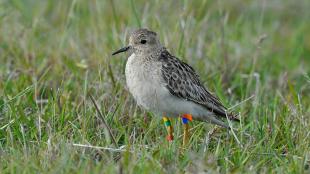
A male Buff-breasted Sandpiper courts a female on their breeding grounds far north of the Arctic Circle. He raises his wings, flashing their silvery-white undersides, as he sings his clicking serenade. These birds spend much of the year on grasslands in Argentina, migrating to the Arctic in late... read more »

RELATED

Franklin's Gull

Gulls are often called "seagulls," but many spend a lot of time far away from the sea. The Franklin's Gull breeds in freshwater wetlands more than 5,000 miles from its winter home at the ocean. After the breeding season, they ascend high in the sky for their long flight across the Equator to the... read more »

RELATED
Topics & Themes:  migration

Pages